LNG Prices in 2026: From Seller’s Market to Buyer’s Advantage
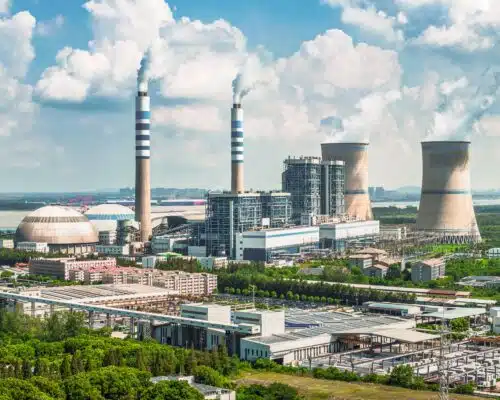
Photo: Shutterstock / Spreewald-Birgit
11 March 2026 – by Heba Hashem
LNG prices are poised for a period of sustained downward pressure in 2026 as the global market prepares to absorb the largest supply wave in the history of the industry.
Analysts at brokerage firm Bernstein forecast that global LNG demand will rise to about 441 million tonnes per annum (mtpa) in 2026, marking an annual increase of about 8.5%. This growth is expected to be driven almost entirely by emerging markets in Asia, while Europe’s LNG imports are projected to stabilise near 120 mtpa, assuming only a limited return of Russian pipeline gas to the continent.
The shift in market dynamics is underpinned by a massive expansion of production capacity. Bernstein highlights that about 45 mtpa of new liquefied natural gas capacity began ramping up in 2025, with another 48 mtpa scheduled to start up throughout 2026. Major projects reaching milestones include the Golden Pass LNG facility in Texas, Qatar’s ambitious North Field Expansion phases, Scarborough in Western Australia and Nigeria LNG Train 7. Combined, roughly 93 mtpa of new capacity is expected to enter the market across 2025 and 2026, fundamentally altering the global balance of power between producers and consumers.
What is the cost of 1 tonne of LNG in 2026?
The financial reality for importers currently varies significantly by region, with the cost of 1 tonne of LNG reflecting a fragmented global landscape. In Europe, natural gas futures and spot conditions suggest early 2026 prices translate to about USD 536 to USD 643 per tonne, based on reported figures of EUR 30-36 per megawatt-hour.
Meanwhile, Chinese domestic wholesale prices have fluctuated more dramatically. While they hit five-year lows of roughly USD 497-540 per metric tonne in late 2025, a recent cold spell and increased heating demand pushed those figures back toward USD 574 per tonne by mid-January.
Downward Pressure on LNG Prices Triggers A Buyer’s Market
As a result of the looming surge in LNG production, Bernstein expects the market to revert to a “net long” position from 2026 onward, with supply additions averaging around 50 mtpa per year through 2028.
Adjusting for various project ramp-ups, the broker calculates that about 150 mtpa of incremental LNG supply will hit global markets between 2026 and 2028. That is equivalent to adding roughly 35% of current global demand in just three years. “This will get absorbed by the market, but at lower prices,” the analysts wrote, according to Investing.com. “This shift from a seller’s to a buyer’s market benefits downstream gas companies over upstream suppliers.”
The scale of this influx is further corroborated by data from Kpler, which expects the global supply of LNG to rise to 475 million tonnes in 2026. This represents a 10.2% gain over the 431 million tonnes forecast for 2025. To put that in perspective, the expected increase (of over 46 million tonnes) is roughly equivalent to the total annual demand of South Korea, which remains the world’s third-largest LNG importer behind China and Japan.
Similarly, the International Energy Agency (IEA) projects supply growth to exceed 7% in 2026, its fastest pace since 2019, which should incentivise a 2% rise in global gas demand as prices become more competitive.
“As IEA anticipated two years ago, a huge wave of LNG supply is coming to market — mainly from US, Qatar and Canada — putting downward pressure on prices. Up to 75% of this LNG has no fixed destination, boosting flexibility and security. LNG is going from a seller’s to a buyer’s market,” Fatih Birol, executive director of IEA, said.
Export Terminal Operators like Cheniere Energy Remain Well Positioned
Despite the looming glut, major export terminal operators such as Cheniere Energy have remained well-positioned due to high utilisation rates and robust service revenues.
Cheniere reported exceptionally strong Q4 results on Feb. 26, driven by record production and a total of 670 cargoes for the full year. The company announced a Q4 net income reaching USD 2.3 billion, significantly surpassing analysts’ expectations.
LNG Price Forecasts and Benchmarks
However, the weight of new supply is expected to pull benchmark prices lower. Kpler forecasts that benchmark Asian spot prices will average USD 10 per million British thermal units (BTU) in 2026, down from about USD 12 in 2025. Bernstein analysts offer a similar outlook, predicting that spot prices will average roughly USD 9 per million BTU over the 2026-2028 period.
While spot prices may start the year at a premium due to winter heating needs, they are forecast to weaken in the second half of 2026 as the market absorbs the new supply.
China’s Pivotal Role in Natural Gas Absorption
As the world’s largest LNG buyer, China remains the decisive factor for the 2026 market. Following a sharp contraction driven by high prices, trade tariffs and unseasonably mild weather, a recovery is on the horizon. Wood Mackenzie forecasts a 5% demand rebound (roughly 6 million tonnes) for 2026, while Reuters analysts anticipate import growth ranging from 3-10% on year.
This recovery, driven by infrastructure projects and a recovering real estate sector, will be pivotal in absorbing the global supply surge. New gas-fired power stations and regasification capacity in Taiwan, Bangladesh and Vietnam are also expected to contribute to regional demand growth.
“As we watched LNG prices fall in November and December and into January, we saw a rapid increase in Chinese LNG imports, highlighting the at-the-ready price-sensitive depth of demand for LNG,” said Anatol Feygen, executive vice president and chief commercial officer of Cheniere Energy, during the company’s Q4 2025 earnings call. Feygen noted that while short-term dynamics fluctuate, he expects China to eventually become the first market to meaningfully surpass 100 million tonnes per annum.
Gas Prices Between Geopolitics and Renewables
The forecast for a well-supplied market faces immediate threats from escalating geopolitical tensions. On March 1, global oil prices jumped by as much as 13% following US and Israeli attacks on Iran, while natural gas prices rose to USD 2.91 per million BTU, up 1.73% in a single day.
Markets are now closely monitoring the Strait of Hormuz, a vital chokepoint handling 20% of global LNG trade. “While much of the focus is on crude oil, Qatar is the second largest exporter of [LNG] behind the USA,” industry analyst Andy Lipow told NBC News. “LNG tankers are also being diverted away from the region. A disruption in LNG would result in higher natural gas prices, especially in Europe.”
Beyond immediate conflict, the long-term viability of the LNG boom faces stiff competition from the energy transition. Thomson Reuters editor Antony Currie has cautioned that falling costs for renewable energy and storage could turn the current LNG glut into a “sinkhole”.
With hardware backlogs and the price of gas turbines tripling per kilowatt-hour, some analysts warn that the industry is overextending. As IEA Director of Energy Markets and Security Keisuke Sadamori observed, the unfolding LNG wave will improve liquidity and interconnectivity, but volatility remains a constant shadow over the market’s expansion.
Our Publications