Is Natural Gas a Fossil Fuel and Can it Be Renewable?
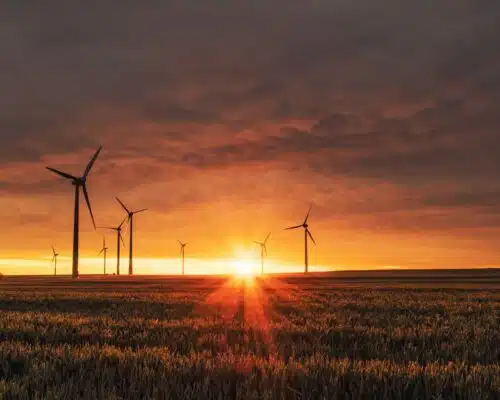
wind turbines in Oiz eolic park. Basque Country
25 March 2026 – by Heba Hashem
With marketing terms such as “natural” and its reputation as a “cleaner” alternative to coal, it’s easy to see why many people ask: Is natural gas a fossil fuel?
The short answer is yes — natural gas is a fossil fuel, and understanding its role in the modern world requires a closer look at how it forms, how it is extracted and the complex shadow it casts over the global energy transition.
Is Natural Gas Considered A Fossil Fuel?
Composed almost entirely of methane, natural gas is formed from the remains of plants and animals that lived millions of years ago— the literal definition of a fossil fuel. Trapped in underground rock formations — often alongside crude oil — this organic matter was subjected to intense heat and pressure over aeons, gradually transforming into hydrocarbons.
Today, energy companies extract these gases through deep-well drilling, processing them for transport through vast pipeline networks or as liquefied natural gas (LNG).
Is Natural Gas Renewable?
Because natural gas burns more cleanly than coal or oil — it has long been promoted as a vital “bridge” in the global energy mix. Natural gas is used for electricity generation, it heats homes and serves as a raw material for everything from chemicals to fertilisers. However, its classification remains strictly non-renewable; it is consumed thousands of times faster than it can ever regenerate.
This has led to the rise of renewable natural gas (RNG), which is essentially biogas that has been processed to meet purity standards. Like conventional natural gas, RNG can be used as a transportation fuel in the form of compressed natural gas (CNG) or LNG.
RNG is often marketed as a carbon-neutral replacement for conventional gas, but critics argue it is a false solution that allows continued reliance on polluting infrastructure.
While it reduces waste-sector methane, RNG is expensive, limited in supply and still produces combustion emissions, making it inefficient for heating compared to electrification, according to a 2020 report by Earthjustice and the Sierra Club.
Where is Natural Gas Found?
Not all gas is created equal. Conventional gas is found in permeable rock and easily accessed, whereas unconventional gas— such as tight gas and shale gas — requires high-intensity stimulation techniques like fracking.
Air Pollution and Health Concerns
Fracking has come under intense fire for its environmental and public health toll. The practice has been linked to low-magnitude seismic activity, or small earthquakes. It also increases soil erosion and risk of water and air contamination from the toxic chemicals it uses, including radioactive materials that can lead to cancer, respiratory and cardiovascular diseases.
The industry’s footprint extends far beyond the drill site. A 2023 study estimated that air pollution from the oil and gas industry caused 7,500 excess deaths and USD 77 billion in healthcare impacts in just a single year. Even abandoned wells continue to haunt the landscape, leaking benzene, which is linked to childhood leukaemia and blood disorders, as well as formaldehyde, a cancer-causing chemical.
How Clean Is Compressed Natural Gas (CNG)?
CNG is widely promoted as a cleaner alternative to gasoline or diesel for the automobile industry, but research has raised concerns.
Consisting of 80-99% methane, the fuel is produced by compressing natural gas to less than 1% of its volume at standard atmospheric pressure and storing it in reinforced containers.
A 2020 review of data on particle pollution from CNG cars, vans, buses and trucks found that these vehicles emit dangerous pollutants. The study found that CNG-powered engines produce large numbers of particles — including ultrafine particles that can easily penetrate into the lungs and pass into the bloodstream — and can emit large amounts of ammonia, which contributes significantly to particle pollution.
The study concluded that CNG “cannot therefore be considered a clean or low-emission technology”.
Gas Production Surges to Record Highs
Despite these concerns, the natural gas industry is booming.
In the United States, the development of processes such as fracking has helped make the country the world’s top producer of gas and oil since 2009 — and the largest consumer. Natural gas now meets 36% of US energy needs.
According to the Energy Information Administration, US natural gas production and consumption increased to record highs in 2025.
Because domestic production exceeds local demand, the country has significantly expanded its export trade. US exports of LNG grew a staggering 450% between 2017 and 2022 and are projected to more than double again by 2028 compared with 2024 levels.
Similar surges are seen globally: Middle East production is expected to more than double by 2030, and Asian consumption — driven largely by China — spiked by 35% between 2015 and 2023.
A Major Greenhouse Gas Source
While the industry touts “cleaner” combustion, the climate reality is more volatile. Global carbon emissions from burning natural gas were projected to rise by 1.3% in 2025.
The primary culprit is methane. As a greenhouse gas, methane is over 80 times more effective at trapping heat than carbon dioxide over a 20-year period.
Leakage during extraction and transport — including from unplugged wells — is a major driver of warming. A 2025 study by McGill University found that methane emissions from Canada’s non-producing oil and gas wells were seven times higher than government estimates.
A Driver Of Climate Change
Globally, methane emissions are responsible for about 30% of the rise in temperatures to date and contribute to 1 million premature deaths annually through air pollution.
In North America, the fossil fuel sector emitted more than 23 million tonnes of methane in 2024, about 85% of which came from the United States. In South and Southeast Asia, the fossil fuel sector produced around 10 million tonnes of methane emissions in 2024, split roughly evenly between coal mines and the oil and gas sector.
Yet, cutting methane emissions from oil and gas operations remains one of the fastest ways to slow global warming because methane has a short atmospheric lifetime and high warming potential. According to the International Energy Agency, more than 75% of these emissions could be reduced using existing technology.
Why Some Advocates Call It ‘Fossil Gas‘
The environmental risks associated with natural gas have prompted a shift in terminology among climate activists and some policymakers, many of whom now prefer the term “fossil gas” as a more accurate description of the fuel.
“Referring to it instead as fossil gas reflects the fact that its use also results in high levels of methane, carbon dioxide, nitrous oxide, water vapour, chlorofluorocarbons, hydrofluorocarbons, perfluorocarbons and sulfur hexafluoride, which are all climate changing greenhouse gases,” the Sierra Club explains.
Geopolitics, Gas Prices and the Case for Renewables
Beyond the environment, the inherent volatility of fossil gas has become a matter of national security. On March 5, natural gas prices surged by over 52% in Europe after QatarEnergy halted production and the Strait of Hormuz closed amid geopolitical conflict.
The impact is expected to fall most heavily on price-sensitive South Asian buyers, who are likely to respond with a combination of demand restraint and switching to fuels like thermal coal rather than aggressively bidding for cargoes.
These price shocks have forced a reckoning. American economist Paul Krugman believes the Iran conflict has made a strong new case for renewable energy. “Now we know that there is another reason for nations to reduce their dependence on fossil fuels: security,” he wrote in a Substack post. “In a dangerous world, it’s infinitely safer to rely on the sun and the wind than to depend on fossil fuels that must be transported long distances.”
Natural gas remains a paradox of the modern age: a fuel that burns cleaner than coal but threatens the atmosphere with potent methane; an economic engine that provides energy security for some while creating geopolitical vulnerabilities for others.
As the world accelerates efforts to transition toward cleaner energy sources, the role of natural gas will likely remain contested — seen by some as a bridge fuel and by others as an obstacle to a fully renewable energy future.
Our Publications