Grid Resilience Strategies for Asian Cities
18 March 2026 – by Viktor Tachev
What is grid resilience and why is it so important? Scientists note that heatwaves are the deadliest extreme weather event, claiming over 100,000 lives per year in East Asia. Projections show that heat-related mortality will continue to rise as climate change intensifies. A major reason for heatwaves’ lethality is the inability of the energy system, including power plants and grids, to deliver uninterrupted energy for cooling during peak heat periods, thereby failing to preserve economic continuity across sectors and help the most vulnerable and exposed cope with extreme temperatures.
Scientists Warn of Extreme Heat Becoming Embedded in Asia’s Future
After analysing 23 million monthly-average thermometer measurements from 57,685 weather stations and up to 500 million instantaneous ocean temperature observations collected by ships and buoys, Berkley Earth has found that the last 11 years have been the 11 warmest since records began, with the last three years becoming the top three. Importantly, particularly extreme conditions were observed over parts of Asia, predominantly the largest population centres, including up to 450 million people in China. In total, the locations with record-high annual averages are home to approximately 770 million people, most of whom reside in Asia.

As climate change intensifies, the warming trajectory will accelerate, with heatwaves becoming more frequent and severe. Some experts believe the world will permanently breach the 1.5°C threshold within the next five years.
After surveying IPCC scientists, The Guardian concluded that 80% envision a future of at least 2.5°C, while almost half anticipate warming of at least 3°C. Just 6% considered the 1.5°C target possible.
UNEP’s Emissions Gap Report 2025 finds that the global warming projections for this century, based on the full implementation of NDCs, are now 2.3-2.5°C, while those based on current policies are 2.8°C, marking marginal improvements over last year’s 2.6-2.8°C and 3.1°C figures.

According to UN ESCAP, densely built and populated Asian megacities such as Seoul, Tokyo, Beijing, Delhi, Karachi, Dhaka, Manila, Jakarta and Phnom Penh are projected to become significantly hotter, with the urban heat island effect adding an extra 2°C to 7°C on top of global warming by 2100.

Going forward, South and Southwest Asia will face the highest exposure with India, Pakistan and Bangladesh experiencing over 300 days annually with a heat index above 35°C. Many regions will endure more than 200 days with the heat index exceeding 41°C. Countries such as Cambodia, Myanmar and Thailand may face more than 250 days annually above 35°C and up to 138 days above 41°C, while Indonesia and the Philippines will transition from low to moderate or high risk.

However, rising temperatures are only one side of the problem. Another worrying trend is that heatwaves are getting more frequent, occurring earlier in spring, and lasting longer. Furthermore, winters are getting shorter, and springs are arriving earlier, which naturally lengthens the duration of extreme-temperature periods. According to scientists, spring heatwaves are significantly more dangerous than those that traditionally occur in summer, even at similar temperatures, because people don’t have enough time to acclimatise after the winter months.
The Escalating Impacts of Climate Change Already Threaten Asia’s Energy Systems and Grid Resilience
Extreme heat, floods and water shortages are already costing Asia’s power utilities around USD 6.3 billion annually in damage and lost revenue, with the figure on course to hit USD 8.4 billion a year by 2050 if companies fail to strengthen climate adaptation measures.
According to a study by the Asia Investor Group on Climate Change on 2,422 power plants across China, Hong Kong, India, Indonesia, Japan, Malaysia and South Korea, extreme heat would be the costliest hazard, responsible for 55% of all losses by 2050. India’s main power utility, NTPC, Indonesia’s PLN and Malaysia’s Tenaga Nasional all face a high risk of disruptions caused by rising heat.

Power plants aside, transmission lines across the region have also been victims of extreme heat and storm surges in recent years.
For example, Typhoon Kalmaegi destroyed power lines in Vietnam’s Quy Nhon in 2025.
The Philippines also regularly experiences powerful typhoons that routinely damage transmission towers and require repair work taking weeks or months. As a result, the country, which is usually struck by over 20 typhoons each year, has to deal with cascading social and economic impacts and find ways to quickly restore power supply while navigating complex post-disaster recovery activities.
Over the past two years, major power failures have also caused outages across Indonesia, including Java, Bali and Sumatra, leaving businesses and households in the dark for up to two days at a time. A power outage in Bali last year affected over 1.8 million customers of state utility PLN, shutting several power plants down simultaneously. The event brought daily life to a standstill, causing substantial economic losses and disrupting normal operations in government buildings, hospitals, hotels and airports. Some estimates suggest that high-impact outages in Indonesia can cost between USD 1 and 3 million per hour in lost revenue.

Furthermore, prolonged heatwaves in India, where temperatures regularly exceed 45°C, are already triggering surges in electricity demand for cooling. In 2024, parts of northern India experienced brownouts as peak power demand overwhelmed the grid during heat alerts.
Smaller island nations and less developed countries in Southeast Asia and the Pacific are another case in point, as their electricity systems are less robust and more vulnerable to supply shocks. For example, during the 2023 Pacific heat event, some communities reported hospital cooling failures and disrupted vaccine storage, underscoring the risks of power insecurity.
How Extreme Heat Affects Power Plants and Power Grid Infrastructure Across Asia
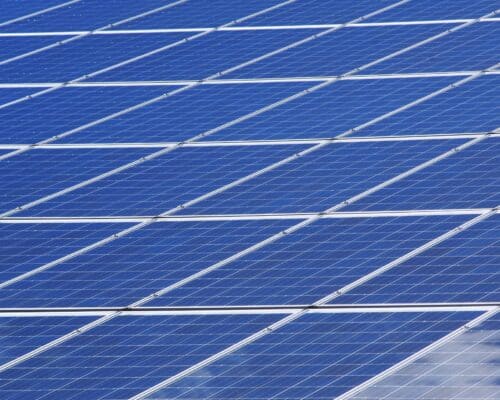
According to the IEA, as the climate crisis worsens, ASEAN’s power grid will face mounting stress. High temperatures and heatwaves can critically impact solar PV and electricity networks, reducing solar power generation efficiency and damaging cells and other components. Similarly, natural gas-fired power plants, for which Southeast Asia boasts the highest number of final investment decisions worldwide this decade, can also experience a decline in power generation.

The IEA notes that in a high-emissions scenario, nearly 70% of solar PV and over 90% of natural gas-fired power plants would experience more than 20 hot days above 35°C by 2100.
The extreme heat and the growing demand for cooling would also significantly increase the stress on electricity grids, leading to power lines heating up and expanding, and causing short circuits in underground power cables. According to the IEA, critical components such as transformers, inverters and substations will also face an increased risk of failure due to overheating.
UN ESCAP notes that, in urban areas particularly, energy infrastructure is often the first to be affected by heat, as heatwaves drive sharp surges in electricity demand for air conditioning.
When power systems fail, the consequences can be life-threatening. This is especially the case when populations lose access to cooling systems. Health facilities that lack dedicated backup power also face critical service disruptions.
Since heat reduces the efficiency of both electricity generation and transmission, heatwaves basically pose a double threat by simultaneously boosting demand and reducing supply. This often manifests as brownouts or infrastructure failures exactly when reliable power is most needed for cooling and to keep industries and healthcare facilities operational.

Ember notes that every country in the region faces unique power reliability challenges that undermine grid reliability and performance. Governments across the region have also had mixed success in tackling the problem.

Ember’s analysis warns that the toll of power outages on countries’ economic output could reach USD 2.3 billion annually by 2040 if unaddressed.

Boosting Grid Resilience Key to Enhancing Heat Preparedness and Protecting the Economy and the Most Vulnerable
Among the key steps to protect people and infrastructure from mounting heat stress is addressing vulnerabilities in the energy sector so countries can ensure an uninterrupted electricity supply across all economic sectors, as well as for cooling during peak heat periods.
According to the IEA, technical and structural improvements to energy infrastructure, diversification of energy sources and innovative digital solutions can help address the immediate impacts of extreme weather events and enable energy systems to recover quickly.
Improving Infrastructure Planning and Development and Scaling Up Investments
The IEA notes that if governments prioritise investments in a climate-resilient energy system, they can ensure readiness to deliver an uninterrupted power supply when the next disaster strikes. Given that the impacts of climate change are growing in frequency and severity, governments must design robust energy systems that can withstand looming shifts in climate patterns and continue operating despite immediate shocks from extreme weather events. Since no energy system is able to withstand mounting climate disasters at all times, it is imperative for Asian countries also to improve their ability to quickly restore the operational capacity of their power infrastructure.

Mobilising private sector investment, insurance and public financing instruments to enhance energy systems’ abilities to better withstand and recover from extreme weather events, ultimately strengthening their role in the clean energy transition and improving resilience, is also critical.
According to experts, scaling up investments in industry-scale battery storage solutions to address intermittency issues and balance the increasingly variable supply with rising energy demand will help keep grids stable and prevent outages, including amid extreme weather events that require higher power off-take.
Enhancing Predictive Capabilities to Boost System Performance and Grid Stability
It is integral for every country to prepare for extreme heat periods in advance so it isn’t caught off guard and can better balance the strain on power grids when demand surges. Crucial on that front would be investments in smart grids and early warning systems — a cheap and highly effective measure.
Scientists note that, since most extreme weather is well forecast, even in developing nations, there is no reason warnings can’t be issued days in advance of a potentially dangerous weather event, and that guidance can’t be provided on how communities can prepare for it. Key on that front would be moving from reactive heat-risk management to long-term, science-informed strategies to ensure grids can withstand peak heat stress.
Last year, for example, the resilience of China’s electricity grid was tested by extreme heat as the national electricity load exceeded 1.5 billion kilowatts on July 16. In total, the country saw its electricity load broken 36 times at the provincial level between the start of the summer and the middle of July.

Yet, the scientific consensus is that current efforts to monitor and manage heat-related risks face various barriers. One is the lack of unified definitions of heatwaves, which hinders standardised data collection and the development of early warning systems. In regions where such exist, they are often ineffective and fragmented, with limited cooperation between relevant authorities — such as meteorological, health and emergency agencies.
Another integral step in building resilience is creating a robust climate database, conducting scientific assessments and integrating climate resilience into energy system policies, all of which are currently areas where Southeast Asian countries can improve. Other critical steps include increased reporting and monitoring of heat impacts, as well as the development of heat action plans, which have been proven highly effective in reducing death tolls during heatwaves.
Integrating advanced technology to monitor and measure system performance on an ongoing basis and to identify potential weaknesses in advance, ensuring consistent supply and round-the-clock maintenance rather than expensive, time-intensive repairs, is also critical.
Investments in Smart Grids
UN ESCAP notes that investments in grid modernisation, diversification of energy sources, energy storage and climate-proof power infrastructure aren’t only critical for economic sustainability but essential for protecting lives in a warming world.
Furthermore, investments in smart grids can unlock massive gains. In the case of ASEAN nations, for example, Ember estimates that investing between USD 4 and 10.7 billion in smart grids can help avoid USD 2.3 billion in annual economic losses by 2040 and over 640,000 jobs.

By enabling advanced digital controls, real-time monitoring and automated demand management, smart grids streamline the integration of renewables more efficiently, reduce integration costs and ensure reliability. As a result, they can unlock green industrial growth and advance regional power trade, positioning ASEAN to meet climate goals while securing competitiveness in the global low-carbon economy. According to Ember, by tailoring reliability strategies to national contexts, ASEAN can maximise both resilience and user satisfaction across the region.
Passive Measures for Enhancing Grid Performance and Building Resilience are Also Critical
Passive strategies to enhance energy systems’ resilience help countries across the region ease strain on their power grids by investing in measures that save energy, reduce demand or provide natural cooling. These include implementing planning guidelines that prioritise expanding urban green spaces — such as parks, green spaces, cool roofs — establishing public cooling centres, retrofitting buildings and improving energy efficiency. Redesigning urban planning and building codes is also critical, as it would ensure natural cooling through better wind flow, improve ventilation across entire neighbourhoods or cities and minimise the impact of the urban heat island effect.
Nature-based solutions, such as trees lining streets, expanded urban park areas, green roofs and wetland conservation, in particular, can significantly lower urban temperatures by minimising the heat island effect, thus reducing the need for cooling. That is why studies suggest that 30% of cities should be dedicated to green or blue spaces.
For example, vegetation and tree canopies are estimated to reduce peak summer temperatures by up to 5°C. Singapore has used similar strategies to reduce surface temperatures by up to 17°C and ambient air temperatures by up to 5°C, with the government covering 50% of the costs of green roofs and facades on existing buildings.
Seoul, with its focus on parks and urban forests, is another success story. Through the restoration of the Cheonggyecheon stream, a 10 km area, and reducing pavement, cutting vehicle traffic, and increasing wind speeds, authorities managed to improve cooling and ensure temperature drops of 3.3°C to 5.9°C compared to a nearby road. The park also reduced air pollution by 35%, increased biodiversity and became a major recreational hub, drawing 64,000 visitors daily.
Short-term Measures Can Provide Relief, but Only Long-term Solutions Can Solve the Problem
Scientists are concerned that the temperature changes that we are witnessing defy climate models and their predictive capabilities. Research by a team from Columbia University, for example, found mysterious hotspots experiencing repeated heatwaves that are worse than those predicted by all existing simulations on every continent except Antarctica. The body of evidence that actual daily temperature records are increasingly outpacing model predictions is also growing, with recent temperature extremes remaining hard to explain, even by NASA.
The mounting heat stress, often beyond our ability to comprehend, paired with the rapid rate of urbanisation, explains why electricity demand in the Asia-Pacific region will nearly double by 2050. To withstand the challenges of a warming world and protect the economy and the most vulnerable groups, the region urgently needs to enhance grid resilience.
Adaptive measures, such as those mentioned above, can provide short-term relief and ease strain on electricity grids during peak heat periods. However, they are just patchworks if not accompanied by efforts to address the root of the problem. The magnitude of the challenge calls for a comprehensive approach that prioritises long-term resilience through mitigation efforts, the most effective of which is phasing out fossil fuels and increasing the role of renewables in the energy system.
“We know exactly how to stop heatwaves from getting worse: restructure our energy systems to be more efficient and based on renewables, not fossil fuels, and create more equal and resilient societies,” explains Dr. Friederike Otto, co-lead of WWA and senior lecturer in climate science at Imperial College London.
While deploying the necessary measures may seem complex, one thing is certain: the problem isn’t going away. In fact, scientific evidence warns that it’s likely to worsen, turning the need for action from a matter of preference into a matter of survival.
by Viktor Tachev
Viktor has years of experience in financial markets and energy finance, working as a marketing consultant and content creator for leading institutions, NGOs, and tech startups. He is a regular contributor to knowledge hubs and magazines, tackling the latest trends in sustainability and green energy.
Read moreOur Publications