Japan’s Offshore Wind Plans Find Hope
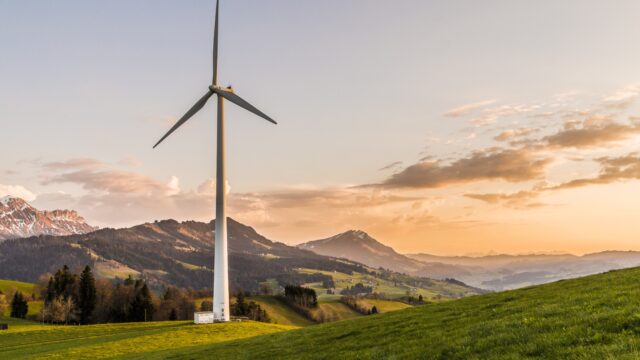
Photo: Simonjon via Wikimedia Common
09 February 2026 – by Nithin Coca
A few years ago, there were high hopes that Japan was on the right path and ready to tap into its massive offshore wind potential — by far its most abundant renewable resource — and shift away from dependence on imported fossil fuels like coal and fossil gas. But so far, besides a few projects, Japan’s offshore wind expansion has been slow, with just 253 megawatts (MW) of capacity online, far below projections.
The situation was dire when one of Japan’s biggest companies, Mitsubishi, announced it was withdrawing from planned offshore wind projects in the Akita and Chiba prefectures due to rising costs and concerns about profitability. The projects had a planned capacity of 1.76 gigawatts (GW) and were scheduled to begin operations between 2028 and 2030.
Japan’s Wind Power Generation Plans after Mitsubishi’s Withdrawal
Mitsubishi’s withdrawal, and the slow expansion thus far, puts Japan’s wind power generation plans — 10 GW by 2030 and 45 GW by 2040 — at risk. According to a recent report from IEEFA, Japan’s offshore wind sector faces numerous challenges, including insufficient inflation protection, limited offtake options, weak transmission frameworks, high grid connection costs, inadequate ports and vessels and protracted permitting. It’s on the government to find a way to make offshore wind both profitable and ensure its viability as a clean energy source for Japan.
“Japan stands at a pivotal moment in its clean energy transition, and offshore wind has emerged as a central pillar of its strategy,” said Masataka Nakagawa, the country manager for Japan with the energy consultancy OWC.

Massive Offshore Wind Capacity
Japan has long been dependent on imports to fuel its economy, and is the second least energy independent country in the G20, only behind tiny Luxembourg. With solar, hydro and onshore wind resources limited in the densely populated, mountainous country, many see the only way the country can meet both its Paris Agreement and 2050 net-zero targets is by rapidly expanding offshore wind. There’s a huge opportunity, too. Japan, with its long, windy coastline, has enough estimated wind power to meet all domestic energy demand eight times over.
“Japan holds vast offshore wind potential and cannot afford to miss its chance to become an offshore wind leader, especially within the Asia-Pacific region,” said Takeshi Matsuki, Japan country manager at the nonprofit Global Wind Energy Council.
As an archipelago nation, Japan has one of the world’s largest coastlines and the sixth-largest exclusive economic zone, making offshore wind an attractive choice. In fact, there is more than 400 GW of floating offshore wind potential. Japan can dramatically grow the use of offshore wind as part of its energy transition, but only with proper planning and oversight.
“If grid connection and supply chain constraints are addressed, Japan could become Asia’s leading offshore wind hub,” said Michiyo Miyamoto, IEEFA’s energy finance specialist for Japan.

Expanding Japan’s Offshore Wind Market
For policymakers in Tokyo, expanding domestic clean energy production should be a central goal, not only to deal with climate change but also for its potential benefits in energy security and regional economic development.
“As the industry is still in its infancy, strengthening the business environment is essential, with more flexible auctions, better risk sharing, long-term grid development and models for coexistence with local communities,” said Mika Ohbayashi, director of the Renewable Energy Institute.
So far, the government has taken some positive steps. Instead of awarding offshore wind permits to the cheapest bidder — and risk seeing that company withdraw as Mitsubishi did — the new framework will focus more on sustainability, capability and viability. Additionally, there will be more government support in the form of subsidies or tax credits. Hopefully, this means that future bidders will focus less on cost and more on the project’s merits.
“Timely auction reform, including evaluation criteria optimisation, will be key to accelerating capacity buildout. Enhancing offtake mechanisms — such as updating price caps and transitioning to more bankable schemes — will help align bids with market realities,” said Nakagawa.
Need to Produce More Renewable Energy to Meet Climate Targets
Getting back on track is one thing, but in order to meet net-zero and climate targets, Japan needs to massively expand its ambition. In fact, climate advocates would like to see ambition increased — from the current goal of 1 GW a year to at least 5 GW a year, and even more if floating offshore wind becomes commercially available.
“Once Japan recalibrates its course and regains momentum in offshore wind development, unlocking this potential will deliver clean, affordable and locally produced renewable energy, and also stimulate local economies through job creation, revitalised regional industries and new opportunities for coastal communities,” said Matsuki.
The year 2025 was tough for Japan’s offshore wind, but there are signs that 2026 will be better, and will hopefully put Asia’s second-largest economy back on track to be a clean energy leader.
by Nithin Coca
Nithin Coca covers climate, environment, and supply chains across Asia. He has been awarded fellowships from the Solutions Journalism Network, the Pulitzer Center, and the International Center for Journalists. His features have appeared in outlets like the Washington Post, Financial Times, Foreign Policy, The Diplomat, Foreign Affairs and more.
Read moreOur Publications