New Direction for the Energy Sector After the 2026 Bangladesh Elections
24 February 2026 – by Viktor Tachev
After winning over two-thirds of the votes in the Feb. 12 general elections in Bangladesh, the centre-right Bangladesh Nationalist Party (BNP) will have to put the country back on track and appease the population, which 18 months ago ousted the longest-serving prime minister, the authoritative leader Sheikh Hasina. BNP’s leader Tarique Rahman, who will become Bangladesh’s next prime minister, will have to address several challenges facing the country, including restoring democracy and reviving the economy. Rethinking Bangladesh’s energy policy and focus should sit high on the leadership’s agenda if it is to achieve progress.
The Energy and Power Sector Priorities of the Bangladesh PM Tarique Rahman
The newly elected leadership has announced plans to scale up oil refining capacity, including by building a phased refinery capable of producing 5 million tonnes per year to limit imports, which currently come from markets such as India, China, Malaysia, and Singapore.
According to reports, the BNP also plans to boost upstream oil and gas exploration to reduce its reliance on LNG imports amid the declining domestic gas output in recent years.
Regarding renewable energy, the BNP’s manifesto showcases plans to raise the share of renewable energy in the power mix to 20% by 2030. The proposed target marks an increase from the previous one of 16%. However, fulfilling it means the country should engage in a substantial scale-up in solar and other clean capacity over the next five years.
The BNP has also pledged to expand regional energy connectivity, including pipelines and broader cross-border cooperation. As per the party’s manifesto, the new leadership will aim to boost national energy security by establishing connections with the Gulf countries, Iran, Middle Eastern nations, Pakistan and India through an “inter-country gas line”.
The BNP has also pledged to address persistent environmental problems, including stopping deforestation and planting at least 250 million trees over the next five years. In its manifesto, the party has also promised to launch a centralised system for measuring and reducing carbon emissions from energy, agriculture and waste sectors.
Bangladesh Remains Highly Dependent on Fossil Fuels
Bangladesh, the eighth-most populous country globally, is among the top 10 economies most dependent on fossil fuels for power generation, with the majority coming from imports.
Ember estimates that, over the past two decades, its power sector emissions grew nearly eightfold. As of 2024, the country relied on fossil fuels to meet 98% of its electricity needs.
At the same time, the share of low-carbon sources in the country’s electricity generation mix is just 2%, far below the global average of 41%. The combined share of solar and wind stands at 1.3%, below the global average of 15%.
Even BNP’s proposed 20% renewable energy target by 2030 won’t bring Bangladesh close to the global share of 60% renewable electricity set out in the IEA’s Net Zero Emissions scenario.

In its manifesto, the winning party, the BNP, promised to prioritise job creation and protect low-income households. Prioritising the expansion of clean energy can help achieve both.
The new government will also have to address Japan’s growing influence on the country. For example, in the controversial Integrated Energy and Power Master Plan, prepared by the Japan International Cooperation Agency, the previous government emphasised extracting domestic coal to ensure energy security, sourcing 30% of power from coal in 2031 and 35% in 2041. LNG, carbon capture, utilisation and storage (CCUS) and hydrogen and ammonia technologies are also considered pivotal. This has raised fears that Japan will extend its fossil fuel interests to Bangladesh. For example, Japanese organisations drove the development of the controversial Matarbari coal power plant, which the IEEFA found to cost eight to 10 times more than comparable projects in China. Furthermore, the project’s launch was delayed, leaving Bangladesh with a brand-new coal plant while others are decommissioning such assets.
Experts warned that the combination of existing local policies and external pressure from the global fossil fuel lobby has turned Bangladesh into a “dumping ground” for foreign fossil fuels. However, under the new leadership, Bangladesh can break the vicious cycle, ultimately improving energy security and protecting the economy, the environment, and the well-being of Bangladeshis.
Bangladesh’s Economic and Environmental Circumstances Necessitate Prioritising Climate Action and Accelerating the Clean Energy Transition
Bangladesh is no stranger to the drawbacks of fossil fuel import reliance. In 2022, it experienced one of the most severe energy crises in its history. The prolonged power cuts affected up to 80% of the country and over 100 million people. No industry was left unaffected — from textile and ice cream production to ceramic manufacturers and pharmaceutical companies. Some factories lost up to 100 working hours per month. Gas prices for some sectors, including power, jumped from 14% to 179%. Even schools had to close to save energy.
In the midst of the crisis, volatile global gas prices forced Bangladesh to pay five to 10 times more than in previous years, with imports becoming 24 times more expensive than local gas. Paired with the depreciation of the local currency against the US dollar, the country had to drain its foreign currency reserves to secure deliveries. The situation became so severe that Bangladesh had to turn to the IMF and creditors for financial assistance.
Furthermore, despite spending close to USD 2 billion annually on energy imports, Bangladesh still can’t ensure a sufficient supply of electricity and gas, leaving its economy and population in continuous energy poverty despite rising power prices. Even last year, the Bangladesh Energy Regulatory Commission had to evaluate a proposal by Petrobangla, the state-owned agency, to increase the price of gas for industries by up to 152% due to costly imports.
At the same time, breaking the country’s dependence on fossil fuels will unleash massive economic benefits. IEEFA’s lead analyst for Bangladesh, Shafiqul Alam, considers the current government well placed to design and implement long-term reforms and steer Bangladesh’s power sector towards sustainability while retaining the country’s economic growth trajectory. The expert also advocates against new fossil fuel capacity additions to reduce the government’s obligations for excessive capacity payments for fossil-fuel plants, as well as scaling up renewable energy.
Estimates reveal that reducing oil-fired power generation from 10.73% to 5% can help Bangladesh save BDT 89.9 billion (USD 0.73 billion), slashing the subsidy of BDT 386.4 billion (USD 3.2 billion) by 23.3%. In addition, a 2% reduction in transmission and distribution losses could save the country an additional BDT 24.5 billion (USD 0.2 billion), ultimately reducing the subsidy burden by 6.34%.
According to Alam, oil-fired peaking power plants cost Bangladesh more than twice the average cost of grid-based power, prompting the government to provide hefty subsidies each year. Some studies suggest that removing fossil fuel subsidies would increase the country’s GDP by up to 2.3% and improve the welfare of Bangladeshis by 1.89%.
Bangladesh: One of the Most Vulnerable Countries to Climate Change, With Some of the Worst Air Quality in the World
Climate change adaptation is costing Bangladesh’s economy 6-7% of its annual budget, and the IPCC warns that by 2050, the climate crisis could amount to losses of up to 9% of its GDP.
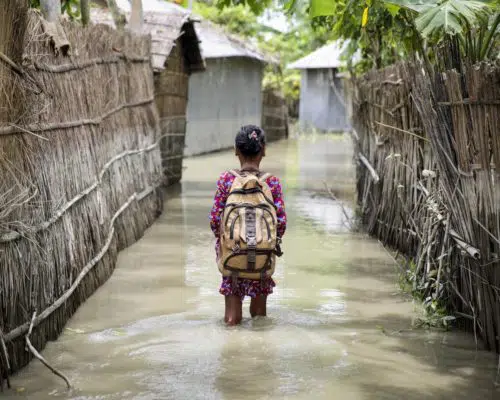
Between 2000 and 2019, Bangladesh was the seventh most vulnerable country globally to climate disasters. It is also among the top 10 in terms of climate change-induced losses. According to the World Bank, the average tropical cyclone costs Bangladesh about USD 1 billion annually. By 2100, a third of the population could be at risk of displacement.
Furthermore, the country ranks among the top three with the worst air quality in the world, with air pollution found to shorten the average Bangladeshi’s life by 5.5 years. In that sense, the increased reliance on questionable fossil fuel technologies risks further worsening the problem, ultimately threatening the well-being of Bangladesh’s population and increasing health costs.
The New Government of Bangladesh Nationalist Party Should Capitalise on Bangladesh’s Immense Untapped Renewable Energy Potential
In June 2025, Bangladesh approved the new Renewable Energy Policy, which aims to generate 20% of power from renewables by 2030 and 30% by 2040. However, analysts say that Bangladesh has never achieved its renewable energy targets.
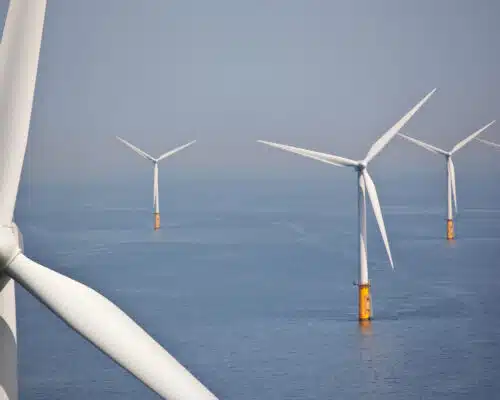
Furthermore, even if it does eventually, the current targets aren’t ambitious enough and fail to capitalise on the country’s immense solar and wind energy potential, estimated at 341 GW. On top of that, the country has vast hydropower potential, with over 50% of its capacity untapped. Experts estimate that even utilising just 4% of the territory would ensure enough capacity for a 100% renewable energy-powered system.

Additionally, analysts estimate that Bangladesh could immediately deploy around 12.5 GW of rooftop and other available solar power. Furthermore, installing just 2 GW of solar to replace diesel-run irrigation systems will save around USD 1.1 billion from fuel import costs.
With an estimated 1,500 square km of ponds, Bangladesh also has a significant potential for floating solar. According to estimates, utilising just a third of the ponds for solar installations can generate 15 GW. Furthermore, Bangladesh also has 2,500 square km of shallow water areas. Installing floating solar on just 10% of these areas would generate 25 GW. Big lakes like the Kaptai and the thousands of km long river pockets could add 20 GW.
Global Climate Scope ranks Bangladesh 69th among all observed emerging markets in terms of attractiveness for renewable energy investments. The segment the country is lacking most is experience. However, given Bangladesh’s stable fundamentals and vast untapped renewable energy potential, it can quickly advance toward a future powered by a cleaner, cheaper and more reliable electricity supply. All it needs is political commitment to advance the clean energy transition and progressive reforms that would ease and attract investors.
Where To Next For Bangladesh?
Environmentalists and climate activists remain pessimistic about the BNP’s commitment to advancing the energy transition and addressing key environmental problems to steer Bangladesh in a new direction. Experts warn that the BNP’s election manifesto offers no clear financing mechanism for climate adaptation and loss and damage, nor a phaseout strategy to reduce fossil fuel dependence. They also note that climate finance governance and transparent citizen monitoring mechanisms remain absent in BNP’s manifesto.
Furthermore, policy experts have described the targets to ensure 20% electricity from renewables by 2030 and to plant 250 million trees as “populist” and “unrealistic”.
However, the new government has all the means to dispel analysts’ pessimism, and energy policy and climate action are the two key areas that can make the biggest difference. The first step is learning from past mistakes. Instead of living from one delivery to another to keep the lights on, Bangladesh can work towards energy independence and ease the burden on its economy by prioritising local renewable energy generation. According to Ember, if the country had prioritised solar power between 2022 and 2024, it could have reduced LNG imports by 25%, saving USD 2.7 billion.
With that said, Bangladesh’s direction couldn’t be any clearer. The new government has a historical choice to make — either remain stuck in a status quo of blackouts, high power costs and life-threatening air quality, or grab the unique opportunity to steer the country toward a future of cheaper, cleaner and more secure power. Bangladeshis have made their preference clear.
by Viktor Tachev
Viktor has years of experience in financial markets and energy finance, working as a marketing consultant and content creator for leading institutions, NGOs, and tech startups. He is a regular contributor to knowledge hubs and magazines, tackling the latest trends in sustainability and green energy.
Read moreOur Publications