Oil Prices Surge as US–Iran War Threatens Global Energy Supply
09 March 2026 – by Viktor Tachev
On Feb. 28, United States and the Israel launched a coordinated joint attack against Iran, targeting key officials, military commanders and various facilities. Iran’s Supreme Leader Ali Khamenei was killed, ultimately bringing the current leadership regime to an end. Iran responded by attacking US military bases, infrastructure and diplomatic facilities across various Middle East countries, as well as closing the Strait of Hormuz. Due to the route’s importance to global oil and gas deliveries, the move has sent a shock wave through the energy market, driving up fuel prices. Experts warn that Asian countries, as leading fossil fuel importers, will bear the greatest economic and energy security costs.
The US Attack on Iran and the Shocks For Global Energy Markets
After a period of prolonged tensions, including the bombing of Iranian nuclear facilities in June 2025, and mass civil protests against the Iranian regime, resulting in what may have been 30,000 deaths as per data by local authorities (independent sources confirmed a death toll of over 5,000), the US deployed significant military forces in the Persian Gulf. On Feb. 28, together with Israel, the US bombed critical infrastructure across Iran, ultimately killing key leadership figures, including the country’s longstanding leader, Ayatollah Ali Khamenei.
Closure of Strait of Hormuz
Iran responded by striking US military infrastructure and diplomatic facilities across various Middle East countries, including Jordan, Kuwait, Bahrain, Qatar, Iraq, Saudi Arabia and the United Arab Emirates. It also halted oil and gas exports and announced full control of the Strait of Hormuz, claiming it would attack every ship passing through it. At least four tankers were reportedly struck as of the time of writing, with initial reports noting that a return to the pre-war situation was highly unlikely. As a result, there is now 80% less maritime traffic through the strait.
An analysis by Kpler reveals that, while Iran hasn’t formally closed the strait, only limited traffic continues, primarily Iranian- and Chinese-flagged ships. However, commercial operators, major oil companies and insurers have effectively withdrawn from the corridor. Insurance premiums had already reached six-year highs ahead of the strikes.
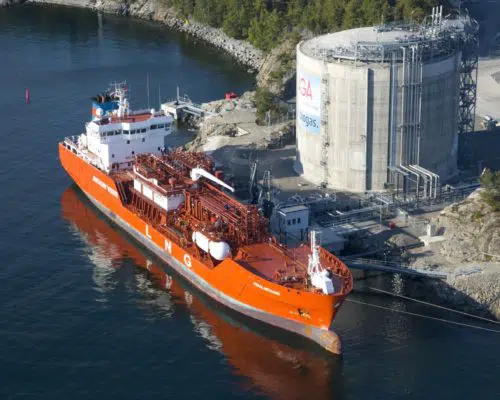
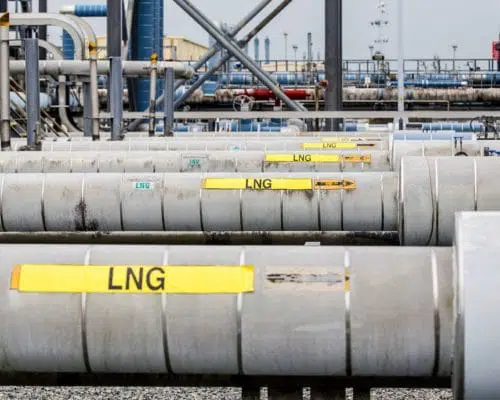
In retaliation for the US strikes, Iran also promised to start targeting the regional energy infrastructure of its Persian Gulf neighbours. The country was quick to follow through, launching drones against two key operating facilities in Qatar. As a result, the latter, which is responsible for around 20% of global LNG supply, announced that it will close the world’s biggest LNG facility and stop production, further fuelling the uncertainty through global energy markets. At the time of writing, Saudi Arabia’s largest oil refinery also remains closed.
Immediate Impact on Global Energy Prices and Economy
Iran is one of the world’s top five oil producers, accounting for about 5% of global output, and the third‑largest gas producer, with a share of about 6.4%. The Middle East, as a whole, accounts for roughly 40% of global oil exports, with around 20% of global crude oil deliveries passing through the Strait of Hormuz.
As of Jan. 30, the global benchmark Brent crude was trading at around USD 70 a barrel, up around 11% since the start of the month. Between Feb. 28 and March 3, it surged to USD 83 a barrel, an increase of 15% for the period. Global LNG prices increased 25% (JKM trading at USD 13.36 per MMbtu) between Feb. 28 and March 3.
According to an analysis by Bloomberg Economics, in a severe scenario, energy prices would remain high through the fourth quarter of the year. If the deep disruption to the oil and natural gas supply continues, it threatens to unleash a wave of inflation worldwide, the experts note. Ultimately, sharply higher oil prices will impact the economy through higher costs for consumers and businesses, reduced purchasing power, increased prices of transport and products using petrochemicals, and a hit to GDP growth.
Asian Countries at the Highest Risk of Oil Crisis
In a dedicated briefing published just before the war unfolded, Zero Carbon Analytics warned that if the US were to attack Iran, the Middle Eastern nation might end up blocking the Strait of Hormuz. This critical area is the main route for oil exports from major Middle East producers, including Saudi Arabia, Iraq and Iran, and the only route for LNG from Qatar and the UAE to enter global markets.
The experts noted that while closing the strait would significantly disrupt global oil and gas supplies, Asian nations would be the most affected, as they received 84% of oil and 83% of LNG shipped through the route in 2024. China, India, Japan and South Korea accounted for 75% of oil and 59% of LNG flows through the shipping route.

Now that Zero Carbon Analytics’ warnings have proven accurate, Asian countries are starting to feel the impacts of the energy supply glut, with Bloomberg reporting of “a sense of panic” spreading among Asian oil and gas importers.
China, the world’s largest importer of oil and natural gas and a major buyer of Iranian oil, estimated to import 45.7% of its oil through the strait, was quick to call for vessels passing through the route to be protected.
Alongside China, Zero Carbon Analytics’ pre-war briefing identified Japan and South Korea as the most vulnerable countries globally to supply shocks following the closure of the strait. The two countries rely on fossil fuel imports to meet 87% and 81% of their energy needs, respectively.
After the blockade, the Korean government announced that, although there was no concern about energy shortages, with oil and gas reserves sufficient to last several months, it would begin exploring opportunities to secure oil supplies from outside the Middle East and avoid disruptions. However, these deliveries are likely to be more expensive. Experts warned that if the conflict drags on for the foreseeable future and the Strait of Hormuz remains inaccessible to international shipping, South Korea’s ability to not only keep its lights on but also manufacture and export products as part of the global supply chain might be significantly affected.

After Iran closed the strait, Japan, which faces the most direct risk of disruption due to its high share of oil and gas imports relying on the shipping route, announced that the conflict didn’t pose an immediate threat to its energy supply. Still, the Japanese Ministry of Economy, Trade and Industry set up a task force to assess the war’s impact on energy supply and to develop necessary measures, since the country’s LNG inventories were equivalent to roughly three weeks of total consumption.
Currently, Japan imports over 95% of its oil from the Middle East, with the United Arab Emirates and Saudi Arabia each providing 40% of its total imports.

According to Bloomberg, fuel suppliers such as Iraq and Saudi Arabia are already cutting production. Alongside other Middle Eastern countries such as the UAE and Qatar, they are the leading or among the leading suppliers of crude oil and natural gas to Thailand, Malaysia, the Philippines and Indonesia. Furthermore, Russia continues to be a highly unreliable supplier, as it recently rerouted oil cargoes heading to East Asia to India.
According to a Bloomberg analysis, countries such as India, Indonesia, Australia and Myanmar are also at risk of fuel shortages or forced to pay high rates for cargoes. However, other Asian buyers are also facing sudden shortages. According to Dr Mohammad Tamim, Vice Chancellor of Independent University, Bangladesh, the Strait of Hormuz closure has shaken global energy markets, threatening LNG-dependent countries like Bangladesh.
“Our main LNG suppliers are Qatar and Oman, so prolonged disruption would severely impact energy security and the economy. A crisis lasting beyond two weeks could destabilise gas supplies, disrupting industries and power plants. Rising spot prices would also strain reserves and fiscal stability, highlighting the need for renewables to reduce exposure to geopolitical shocks,” the expert notes.
Some Southeast Asian nations, such as Thailand, are now suspending fuel exports to prioritise domestic needs. China requested its top refiners to halt diesel and gasoline exports. Refiners in Japan, Indonesia and India are also cutting back run rates and suspending exports.
Asian Oil and Gas Importers Must Prepare For Costly and Unreliable Imports
According to Jan Rosenow, professor of Energy and Climate Policy at Oxford University, the current developments once again highlight how vulnerable energy markets remain to geopolitical tensions and external shocks.
“As long as countries remain heavily reliant on imported fossil fuels, price volatility and supply insecurity will continue to pose significant economic and political risks.”
Wood Mackenzie estimates that oil prices could rise to “well over” USD 100 a barrel if Iran doesn’t lift the blockade of the strait quickly. JP Morgan forecasts oil prices reaching USD 130 per barrel, matching the all-time high seen during the 2007-2008 oil shock, while Iraq’s Deputy Prime Minister has warned prices could reach USD 300 per barrel.

While Japan’s industry minister, Ryosei Akazawa, said that the volatility of spot gas prices was unlikely to translate into an immediate increase in energy prices, Oxford Energy estimates that, due to the lost capacity, LNG prices in the country could surge by around 170%.
The situation will be reminiscent of the start of the war in Ukraine, when a global price spike drove up energy prices and inflation in Japan, with average household electricity bills jumping 25.8%. At the time, the Japanese government announced a JPY 25 trillion package (USD 170 billion) to compensate users for higher electricity and gasoline prices. Then, in 2024, it allocated around JPY 989 billion (USD 6.8 billion) in additional aid to reduce the prices of gasoline, electricity and gas bills.
Going forward, experts warn that any significant impacts on Iranian oil and gas infrastructure will only add to the impact of the closure of the Strait of Hormuz on global energy markets, triggering an energy crisis similar to what transpired after Russia invaded Ukraine. If such a situation unfolds, a likely scenario is wealthy countries locking in cargoes first during price spikes and pushing South and Southeast Asian countries out of the market. A case in point is Bangladesh, which is no stranger to the burden of unaffordable energy imports.
“Any disruption or price spike globally will raise Bangladesh’s import costs, increase power generation expenses and ultimately intensify economic pressure across industries,” explains Zakir Hossain Khan, chief executive of the Change Initiative and a renewable finance expert.
Renewables Offer Asian Countries a Shelter From the High Oil and Gas Prices
According to Rosenow, the most effective way to shield consumers and businesses in the current situation is to accelerate the transition to domestic, clean energy sources and electrification alongside improvements in energy efficiency.
“Clean energy means energy security and is an insurance policy against geopolitical tensions,” he said.
Europe has already demonstrated how quickly countries can limit their reliance on fossil fuel imports by reducing gas deliveries by 18% between 2022 and 2024 and scaling up renewables.

For fossil fuel-import-dependent countries like Japan, following their European peers’ blueprint and scaling up the deployment of renewables can help them redirect expenditure by more than 3% of GDP (USD 1.8 trillion between 2010 and 2022) to other economic sectors. Furthermore, the levelised cost of electricity (LCOE) for utility-scale solar in Japan has fallen by 80% from 2014 to 2023, at JPY 9.9 (USD 0.06) per kWh, making it over 50% lower than LNG, at JPY 23.3 (0.15) per kWh. Experts also estimate that installing 140 GW of wind power capacity by 2050 could create 355,000 jobs.
Furthermore, scaling up renewable energy deployment and developing regional grids are one-time investments and security strategies with a projected output over 25 years. With a massive solar scale-up already underway, expanding manufacturing capacity beyond China, and the ASEAN Power Grid offering potential to enable cross-border power trade, Southeast Asian countries can maximise their renewable potential and reduce dependence on volatile fossil fuel imports.
The Uncertainty Ahead Means Asian Countries Have a Critical Energy Security Choice to Make
Iran’s blockage of the Strait of Hormuz isn’t unexpected, since the country has used this option in the past, including in mid-February 2026 for military exercises. Each time the move increased oil and gas prices. Recently, Iran even warned that closing the strait would be “easier than drinking a glass of water“.
In that sense, none of the recent developments is surprising. What is surprising, however, is the reluctance of Asian fuel importers to learn from history and accelerate the diversification of their energy mixes by scaling up the deployment of the cleaner, cheaper and more reliable renewables.
According to US President Trump, the war could last for “another four to five weeks,” but didn’t rule out the possibility of it continuing for longer, saying he wouldn’t “get bored” with the conflict. Aside from the fear of increased loss of life and infrastructure damage, this means Asian countries might be at the mercy of suppliers, straining their economies for the foreseeable future.
Furthermore, a Bloomberg analysis confirms that fuel reserves across the region are scarce, and unless there’s a sudden cease-fire in the Middle East, the situation will worsen in Asia.
The elevated risk of sustained price spikes must be a push for oil- and gas-importing nations to electrify more quickly, especially price-sensitive countries in South and Southeast Asia. Many of them have already experienced firsthand the benefits of scaling up cheaper, cleaner, more reliable and more immediate solutions like solar.
According to Li Shuo, director of the China Climate Hub at the Asia Society, the energy price volatility linked to the military conflict in Iran is yet another reminder that dependence on fossil fuels leaves countries exposed to global shocks, even if they aren’t directly involved.
“Transitioning away from fossil fuels is not only sound climate policy, it is a strategic imperative for national security,” the expert notes.
The current situation is the second such fossil fuel market shock in just five years and should serve as a red flag. Not acting this time around will be yet another missed opportunity for Asian governments to protect their economies when the next global conflict unfolds. Because, judging by history, this won’t be the last time energy markets are thrown into turmoil.
by Viktor Tachev
Viktor has years of experience in financial markets and energy finance, working as a marketing consultant and content creator for leading institutions, NGOs, and tech startups. He is a regular contributor to knowledge hubs and magazines, tackling the latest trends in sustainability and green energy.
Read moreOur Publications