Solar Could Save ASEAN up to USD 67 Billion as LNG Prices Surge
08 April 2026 – by Viktor Tachev
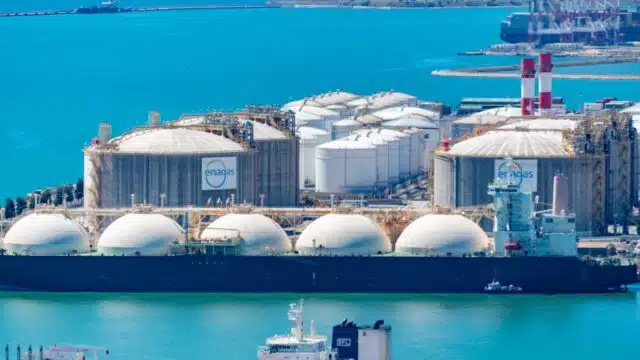
The crisis in the Middle East has sent global LNG prices soaring, exposing the vulnerabilities of import-dependent Asian countries. With no end in sight, governments are bracing for strained budgets and unreliable fuel deliveries and seeking alternative sources of supply. However, rather than pursuing expensive, temporary fixes for an inherently fragile situation that will undoubtedly recur, the solution is closer to home. A new Ember analysis reveals that replacing the gas expansion plans with solar power deployment can unlock massive economic gains for the region, strengthen its energy security and bring countries closer to their climate goals.
Ember: Up to USD 67 Billion in Savings on the Cards if ASEAN Prioritises Solar Instead of LNG
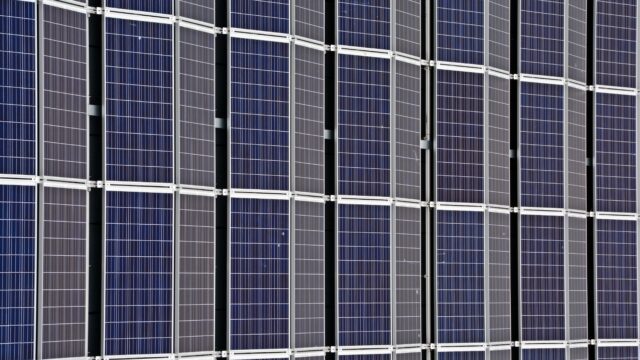
In a new analysis, Ember finds that gas-fired power from the region’s projected fleet could cost up to USD 109 billion per year as LNG prices surge. For comparison, generating the equivalent electricity from solar in a single year would cost around USD 42 billion, roughly half the cost. As a result, replacing ASEAN’s planned gas power expansion with solar could save the region up to USD 67 billion, the experts note.
Aside from the mounting costs, prioritising LNG over solar would result in broader economic fallout, including currency pressure, soaring inflation and industrial exposure across global energy markets, including Singapore, Japan and Thailand.
According to Ember’s analysis, countries with a high share of gas in their electricity mix face the most immediate pressure. Currently, the largest gas-importing markets across ASEAN and East Asia, excluding China, use gas for between 34-92% of their power mix, with Thailand and Singapore topping the charts in recent years.
Singapore’s high reliance on gas for electricity generation, at 95% of the power mix, makes it especially sensitive to LNG price swings. Ember warns that gas-fired generation costs are now double the February levels, at USD 260.8 per MWh. Importantly, the experts note that a rise to USD 100 per million British thermal units (MMBtu) could spike the cost of gas-fired electricity generation to USD 770 per MWh — a scenario that the analysts consider very plausible, as seen in August 2022 when gas prices peaked at over USD 100 per MMBtu. The government has already taken measures, setting an emergency wholesale electricity price cap to protect consumers from price volatility and to stabilise prices.
In the case of Thailand, the government has urged greater energy savings and work-from-home measures to reduce power demand.
Japan, among the top five oil-consuming countries, also faces particularly serious exposure, Ember notes. The country, which imports over 90% of its crude oil from the Middle East, is now grappling with crude oil prices around USD 100 a barrel. Ember estimates that, if prices climb to USD 110 a barrel with no exchange rate fluctuations, consumer prices in the country could continue to rise.
Furthermore, past instances of energy price volatility, including during the Russia-Ukraine conflict, triggered significant inflationary surges across the region, with Singapore and Thailand recording peak inflation of 8.5% and 6.1%, respectively, in 2023. The current disruption risks repeating or exceeding these levels, particularly in developing and emerging economies with less fiscal room to absorb price shocks.

The findings come as ASEAN’s energy transition plans for 2030 envision gas capacity reaching almost 200 GW, nearly double the current 106 GW. However, the closure of the Strait of Hormuz and the halt in Qatari LNG exports, which have significantly disrupted energy markets across Southeast and East Asia, are casting a major question mark over ASEAN’s gas expansion plans.

Pivoting to Coal: A High-cost and High-risk Move
Previous crises have exposed the inherent vulnerabilities and unreliability of LNG markets, prompting many nations to seek shelter in coal. However, according to Ember, this would be another costly move this time around.
The analysts note that the current situation isn’t an LNG-specific problem but a fossil fuel one, with coal not a cheaper fix. Coal prices have risen by approximately 15% to around USD 134 a tonne, bringing the LCOE to USD 76 per MWh. While less than the LCOE of USD 104 per MWh for gas generation, it is nearly double the USD 40 per MWh for solar and storage.
This reminder is particularly relevant for Thailand, which has already ordered its coal plants to run at full capacity. However, aside from the increased power prices, the move risks mounting significant environmental costs, adding 3.2 million tonnes of CO2 annually, or about 5% of the country’s targeted emissions by 2037 under its draft power development plan. Moreover, developing new coal power plants could take up to seven years and, considering that coal can’t replace gas or oil in other key economic sectors, such as transportation or industry, unless they are electrified, new coal power assets could become stranded.
Furthermore, the average LCOE for coal currently ranges between USD 60 and 85 per MWh, higher than the costs of onshore wind, solar and solar plus storage at USD 40 per MWh, USD 39 per MWh and USD 57 per MWh, respectively, making it considerably riskier and more costly than renewables.
“Current and past crises have proven that fossil import dependence is risking energy security. Developing and emerging economies in Asia will be at higher risk if energy prices continue to escalate,” says Dr. Dinita Setyawati, senior energy analyst for Asia at Ember. “While energy saving can be an initial short-term solution, the pivot to homegrown renewables can provide more options to buffer future energy shocks.”
Unreliable Supplies and Elevated LNG Prices to Cause Long-term Economic and Energy Security Consequences
ASEAN countries are experiencing some of the world’s fastest economic growth rates, with developing economies averaging 5.1%. Fossil fuels have underpinned this growth, with dependence on oil and gas critical for key sectors, including agriculture, transportation, electricity and industry. However, the fossil fuel import dependence has once again exposed a critical vulnerability that will hamper economic activity, as growth is likely to be weighed down by energy supply constraints, which in turn will result in declining industrial production.
This time around, the culprits are the closure of the Strait of Hormuz and the halt in Qatari LNG production. Around 84% of the crude oil and 83% of the LNG that passed through the Strait of Hormuz went to Asia in 2024. Singapore and Thailand were among the most reliant on imported gas from Qatar, accounting for 42% and 27% of total imports, respectively. In East Asia, Japan imports over 90% of its crude oil from the Middle East, while South Korea sources around 70% of its crude from there, with most of it passing through the Strait of Hormuz.
While the impacts will affect most of Asia, vulnerabilities will be most pronounced in economies with less diversified energy sources, prompting import-dependent countries with a larger share of gas in electricity generation to rethink their energy security.

According to Ember, it is critical for ASEAN nations to view the current situation as one with potentially long-term consequences, rather than immediate ones, especially for developing economies.
Middle East War and the Global Energy Markets
The longer the liquefied natural gas (LNG) and oil supplies from the Middle East are disrupted, the greater the implications for countries’ energy security and economy. The intensifying competition for LNG and oil in the spot market, which often favours wealthier economies with greater purchasing power, may again lead to redirected cargoes towards higher-priced markets, while emerging economies are unable to compete for limited supplies at elevated prices. Asian nations have already felt that firsthand during the 2022 energy crisis, when LNG shipments were consistently cancelled and rerouted to Western countries, leaving developing nations with the choice of paying above-market prices to secure alternative deliveries or enduring prolonged power shortages.
According to Ember, the current crisis risks reshaping price dynamics, intensifying competition in the spot market, amplifying socioeconomic pressures, risking geopolitical fragmentation across the region and widening income disparities not only between countries but also within them as higher energy costs filter through to households and industries. Importantly, with no end in sight, ASEAN has a strong case for improving its energy security and revamping legacy energy systems. This includes accelerating renewable energy deployment, investing in grid infrastructure and regional interconnection, expanding energy storage and avoiding locking in further dependence on LNG imports.
The Strait of Hormuz Crisis Has Strengthened the Case For Solar Power, and Countries All Over the World Are Benefiting
Ember’s findings underscore the economic case for renewables as the world grapples with the second fossil fuel crisis in less than five years. In fact, many markets have already felt the benefits of scaling up solar power firsthand.
A recent report by the Centre for Research on Energy and Clean Air (CREA) and Renewables First has found that, due to the market forces and consumer demand that have accelerated Pakistan’s solar transition, the country has avoided over USD 12 billion in oil and gas imports between 2021 and February 2026. Pakistan is expected to get 20% of its electricity from solar by the end of this year, enabling it to save an additional USD 6.3 billion if prices remain elevated.
Zero Carbon Analytics estimates that, without the 406 GW of new solar capacity and the 31% growth in wind power between 2022 and the end of 2025, the EU would have spent an additional EUR 58 billion (USD 67 billion) on coal and gas imports for power generation. As a result, today, most EU countries with above-average shares of wind and solar in their electricity mix enjoy below-average household power prices (before tax).
Another example is Vietnam, which avoided a total of USD 594 million in potential coal and gas imports and the rising prices that could have been incurred due to the war in Iran, thanks to the country’s record solar growth between 2018 and 2024. According to Zero Carbon Analytics, these savings could help fund healthcare for about 2.2 million citizens annually.
Many Asian economies are accelerating their plans to scale up renewables and improve grid resilience. China’s State Grid Corporation plans to invest approximately RMB 4 trillion (USD 550 billion) in transmission and storage infrastructure between 2026 and 2030. Ember notes that its recent policy developments also indicate a shift in focus from simply expanding clean energy capacity to building a “new-type power system” capable of accommodating much higher shares of renewable energy while maintaining supply reliability and energy security. Importantly, the country’s forthcoming 15th Five-Year Plan calls for “advancing the safe and orderly substitution of fossil fuels, and building a new-type power system in support of becoming a strong energy nation”.
ASEAN economic ministers have issued a joint statement underscoring the importance of strengthening regional energy security, accelerating the transition to renewables and deepening cooperation on the ASEAN Power Grid.
South Korean President Lee Jae Myung also called for the accelerated deployment of clean energy as a medium-term measure, given the prolonged situation in the Middle East.
ASEAN has sufficient evidence that accelerating the clean energy transition matters from an economic, security, climate and societal perspectives. According to Ember, the region is rich in hydropower, geothermal, solar and wind energy that could be further developed to maintain energy stability, alleviate high power costs and accelerate countries’ progress on their climate targets. Whether Asian nations will capitalise on it, or continue to be stuck in a status quo of perpetuated fuel imports that have strained their economies and undermined the reliability of their energy systems, remains to be seen.
“A fundamental question is: Can Asia’s future prosperity really rest on a fuel base that is volatile, imported, and geopolitically exposed?” asks Dr. Muyi Yang, senior energy analyst at Ember. “The Strait of Hormuz crisis is just the latest reminder. Perhaps it is time for Asia to rethink its fossil-intensive growth pathway.“
by Viktor Tachev
Viktor has years of experience in financial markets and energy finance, working as a marketing consultant and content creator for leading institutions, NGOs, and tech startups. He is a regular contributor to knowledge hubs and magazines, tackling the latest trends in sustainability and green energy.
Read moreOur Publications