The High Cost of Thailand’s LNG Import Plans
Photo: Diego F. Parra / Pexels
23 March 2026 – by Viktor Tachev
Thailand is increasingly reliant on LNG imports to meet its energy needs, boasting the region’s largest import capacity with two LNG terminals and plans to build a third. However, experts warn that a costly move like this would not only distance the country from its net-zero and energy transition goals but would also undermine its energy security by leaving it at the mercy of suppliers in an increasingly unstable market. Furthermore, investments in additional LNG import capacity will increase the risk of stranded infrastructure and lock Thailand into long-term dependence on a volatile and unreliable fuel, ultimately increasing power costs for businesses and households, all while cheaper, cleaner and more secure solar power is at arm’s reach.
Thailand Plans To Further Increase Its Import to Meet Rising LNG Demand
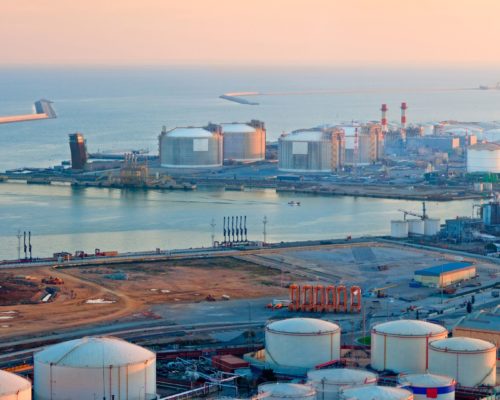
Natural gas has long been the backbone of Thailand’s power system, starting with the discovery of deposits in the Gulf of Thailand in 1973. In the 1980s, the country began allocating a greater share of the domestically sourced natural gas to other industries, leading to insufficient supply for the electricity generation sector. As a result, Thailand turned to imports from Myanmar and built its first LNG terminal in 2011, with a regasification capacity of 5 million tonnes per annum (mtpa). In 2018, the capacity expanded to 11 mtpa, with the project costing THB 49.1 billion (USD 1.58 billion).
Due to the consistent decline in natural gas reserves in the Gulf of Thailand and reduced deliveries from Myanmar, Thailand opened a second LNG terminal in 2022 with a regasification capacity of 7.5 mtpa. With the investment, the country aimed to meet domestic energy demands and, in the long term, emerge as a regional LNG trading hub in ASEAN.
Between 2014 and 2024, Thailand’s LNG imports increased over sevenfold. By 2024, the country had become the top LNG importer in Southeast Asia, with LNG deliveries rising to 29.07% of total supply, up from 2.18% in 2011. Meanwhile, reliance on domestic natural gas declined to 59.84% in 2024, from 79.4% in 2011.
Gas Price in Thailand
This affected the average pool gas price, which represents the weighted average price of natural gas from all sources, including domestic gas, including offshore pipeline fees, natural gas from Myanmar, including pipeline delivery fees, and LNG imports, including import costs and LNG terminal service fees. In 2024, it increased to THB 308.60 per million British thermal units (BTU), or approxiamtely USD 9.93, up from THB 221.13 per million BTU (USD 7.13) in 2011, reflecting Thailand’s growing dependence on LNG and its direct impact on the overall energy costs.
Last year, Thailand struck a deal with the US administration, agreeing to buy energy products, including LNG, crude oil and ethane, valued at approximately USD 5.4 billion per year. Zero Carbon Analytics notes that, as per the agreement, Thailand would import an additional 1 million tonnes of US LNG in 2026, followed by another 1 million tonnes over the next five years. Furthermore, in June 2025, state-owned oil and gas company PTT signed an agreement to import 2 million tonnes of LNG annually from the Alaska LNG project for 20 years.
Going forward, in line with its Gas Plan 2024, Thailand aims to increase the share of LNG from 31% in 2024 to around 40% by 2030, with some estimates suggesting that LNG will account for over 60% of power generation by the mid-2030s.
Before launching its second LNG terminal, the Thai government approved a project for a third LNG terminal with a 10.8 million tonnes per annum (mtpa) capacity and completion scheduled for 2029. Authorities described the project as a way to enhance Thailand’s energy security.
Thailand also plans to build an additional 6.3 GW of gas-fired capacity, with units coming online between 2028 and 2037. As per the country’s current draft National Power Development Plan 2024-2037 (PDP 2024), gas will account for 41% of electricity generation by 2037, with imports meeting the majority of it.

Concerns Rising About the Rationale Behind Thailand’s Third LNG Terminal as the First Two Remain Underutilised
Experts argue that, when comparing the LNG import projections in the draft of the 2024 Gas Plan with the combined receiving capacity of the three LNG terminals, the average LNG supply under existing contracts and additional procurement between 2024 and 2037 won’t exceed 15 mtpa. Even under a worst-case scenario, where potential gas sources fall short of expectations or gas imports from Myanmar are disrupted, the average LNG supply is still projected to remain below 20 mtpa. Accordingly, the combined capacity of the first two LNG terminals alone (19 mtpa) would be sufficient to meet Thailand’s natural gas requirements throughout the Gas Plan period (2037).
According to Dr. Kurujit Nakornthap, director of the Petroleum and Energy Institute of Thailand, importing LNG at the full combined capacity of all three LNG terminals would mean that Thailand would be able to receive up to 29.8 mtpa of LNG, equivalent to approximately 93% of the country’s current total natural gas demand across all sectors.
Since the two existing LNG terminals remain underutilised, there are doubts about the rationale for the THB 60 billion (USD 1.9 billion) investment in the third and its impact on electricity costs. There are also concerns that the project’s construction and operating costs would directly affect public electricity rates, delay the country’s net-zero transition and exacerbate the environmental impacts associated with its development. Regarding the latter, locals complain that the two LNG terminals operating in the Rayong province have already caused severe air and water pollution, and Greenpeace Thailand advisor Tara Buakamsri warns that building a third facility in the town of Map Ta Phut in Rayong will further worsen the problem.
How Thailand’s Liquefied Natural Gas Imports and expanding LNG Infrastructure Affect Power Prices
When LNG prices on global markets rise, electricity production costs also increase and are passed on to consumers, directly raising electricity bills.
Furthermore, there is a mechanism to pass LNG terminal construction costs on to electricity prices. It comprises two main components: the demand charge and the commodity charge. The demand charge reflects the capital investment, operating expenses and the allowed return on investment (ROI) of the LNG terminal operator. The commodity charge is a variable fee based on the actual costs of providing terminal services, which fluctuate with the volume of LNG processed. When the reserved volume declines, the demand charge increases, and when the reserved volume expands, the demand charge decreases. As a result, any future policy to reduce natural gas consumption would inevitably push demand charge costs upward, effectively pressuring Thailand to maintain or increase LNG usage and imports to offset the fixed costs of the infrastructure investments.
Furthermore, there are arguments that the third LNG terminal will also increase demand charge costs due to its high construction costs and expected ROI. If it becomes operational and fails to reach full reservation capacity, the demand charge per unit may increase sharply.
Experts warn that regardless of whether Thailand’s Energy Regulatory Commission (ERC) implements a policy to standardise the demand charge rate across all three LNG terminals or a station-specific demand charge calculation, the overall pool gas cost will rise, since the system must shoulder the fixed investment costs and guaranteed returns associated with the third LNG terminal. This would result in fixed costs inevitably borne by electricity consumers.
Since Thailand’s market mechanics determine the selling price of natural gas based on pool gas pricing, if LNG terminal service fees increase, shippers’ LNG procurement costs will rise accordingly, ultimately increasing overall fuel costs, translating into higher electricity bills for consumers.
LNG Import Dependence Risks Undermining Thailand’s Energy Security and Energy Transition
Thailand is the leading LNG and crude oil importer in ASEAN. According to World Bank data, as of 2024, Qatar was Thailand’s dominant LNG supplier.
This makes Thailand highly susceptible to the inherent vulnerabilities and unreliability of global fossil fuel markets. For example, after Iran struck Qatar’s energy infrastructure, the latter announced that it would close the world’s biggest LNG facility and stop production. Thailand followed by saying that it will suspend fuel exports to prioritise domestic needs.
After the US attacks on Iran, EU gas prices doubled before settling down at around 70% up on the previous week. IEA’s chief Fatih Birol warned that, if the war between the US and Iran continues, Europe and Asia will face a gas bidding war “within days”, as LNG supplies will become scarcer. Such a situation has already happened in the past when Russia invaded Ukraine. Back then, wealthier European nations outbid their Asian peers to secure deliveries, prompting a significant energy crisis across the region.
A Burden On Thailand’s Economy and End Users
LNG-import-dependent countries are used to bearing the consequences of the market’s built-in volatility and unreliability, often straining their economies or passing price spikes on to businesses and end users, and Thailand is no stranger to this.
According to Dr. Kurujit Nakornthap, there is a dramatic difference between the cost of importing LNG, which in 2022 reached USD 38.66 per million BTU, and the price of gas in the Gulf of Thailand, at USD 5.51 per million BTU. On an annual basis, this amounted to a difference of up to USD 19.15 million, clearly reflecting the burden of energy costs on the public.
As a result, more expensive LNG imports drove surging electricity prices in the country in 2022. The period coincided with a 28% rise in LNG imports to offset reduced domestic and pipeline supplies. The Institute for Energy Economics and Financial Analysis (IEEFA) estimates that growing LNG imports contributed to a doubling of domestic gas prices and record electricity prices. With the increase in electricity prices, the debt of the Electricity Generating Authority of Thailand (EGAT) more than tripled between May and August, and between September and December 2022. In response, the government took several fiscal measures to help consumers facing higher electricity bills.
Estimates indicate that the government’s cost to compensate for higher electricity prices in the first four months of 2023 totalled THB 75 billion (USD 2.2 billion). The depreciation of the Thai baht in April 2023 also contributed to higher LNG costs and electricity prices for citizens.
Aside from fuel import prices, LNG infrastructure investment and operational costs can also raise power prices for end users.
For example, even before the launch of the second LNG terminal, there were concerns that it was a questionable necessity and a potential growing public burden. First, the initial investment costs of THB 38.5 billion (USD 1.22 billion) rose to a maximum of THB 41.4 billion (USD 1.31 billion) to accelerate the project’s completion. Importantly, the National Energy Policy Council (NEPC) also permitted the ERC to consider passing the additional investment costs on to future electricity and natural gas service rates, if necessary.
Furthermore, in May 2022, EGAT submitted a formal letter to the Permanent Secretary of the Ministry of Energy proposing that the Cabinet consider granting tax exemptions for taxes, penalties, surcharges and related fees arising from the construction, company establishment and related transactions of the developer’s joint venture, arguing that without such, the project would increase electricity prices for the long-term.
Even though the Cabinet approved the proposed tax exemption, electricity charges increased, starting from THB 4.03 per unit (USD 0.13) in May to August 2022, when the terminal started operating and reaching THB 4.72 (USD 0.15) per unit in September to December. Furthermore, government policies resulted in EGAT carrying an outstanding debt of THB 26.66 million (USD 0.84 million), which jumped to over THB 83 million (USD 2.62 million) by the end of the year. In fact, if electricity prices were adjusted to reflect actual costs, they could reach THB 6.16 per unit (USD 0.19).
The IEEFA finds that Thailand’s persistent underutilisation of gas-fired power plants, project delays and rising costs mean the proposed gas capacity additions in the national Power Development Plans (PDPs) are misaligned with electricity needs and climate goals. Furthermore, the experts note that even authorities’ plans to pause idle gas plants to address the underutilisation won’t ease the economic burden, since the infrastructure will continue to incur fixed costs as operating expenses, which will ultimately be passed on to consumers. Since gas-fired power plants typically operate for 20–25 years under long-term power purchase agreements, fulfilling the targets would lock the country into a future of high power prices and energy insecurity.
“With over 11 GW of combined capacity, these assets have cost the EGAT and ratepayers THB 159 billion [USD 5.02 billion] over the last three years to generate minimal electricity,” says Sam Reynolds, IEEFA Asia’s LNG and gas research lead.
The IEEFA notes that the Draft Gas Plan 2024 sees LNG imports growing by 73% to supply 43% of gas requirements by 2037, due to declining domestic production and Myanmar imports.
“The economic implications could be severe for consumers, who are already struggling to pay for the rising cost of gas supply. LNG prices were more than double those of domestic gas in 2025 and 29% higher than pipeline imports from Myanmar,” explains Christopher Doleman, IEEFA LNG and gas specialist for Asia.
Scaling Up Solar Power Can Unlock Huge Economic and Energy Security Benefits for Thailand
Solar has been the cheapest form of electricity in Thailand since 2022. According to BloombergNEF’s “Thailand: Turning Point for a Net-Zero Power Grid” report, the levelised cost of electricity (LCOE) for new utility-scale solar power projects ranges between USD 33 and USD 75 per MWh, significantly below the cost of building new gas-fired power plants (USD 79-86 per MWh). As a result, BNEF notes that scaling up renewables remains the most economically viable pathway for Thailand to meet its decarbonisation and energy transition goals, while boosting domestic energy security and affordability.
The country has vast renewable energy potential, particularly solar, estimated at around 300 GW, as well as stable market fundamentals, including solid experience with deploying residential solar systems.
According to Ember, increasing solar power capacity by 89% and battery storage by 60% compared to the current targets in the Power Development Plans will unlock massive economic gains for Thailand by 2037, including USD 1.8 billion in total cost savings. In terms of fossil fuel use by volume, the cumulative gas avoided by 2037 (51.4 billion cubic metres) is almost twice that consumed in 2024 for power generation. Last but not least, such a move will also ensure 147 million tonnes in cumulative avoided CO2 emissions by 2037, which would significantly help the country toward its emission-reduction target of 47% below 2019 levels by 2035 and net-zero goal by 2050, set in the recently updated NDC.
In that sense, Thailand’s energy transition pathway should be clear. However, it remains to be seen whether the government would prioritise cheaper, cleaner and more reliable energy, or continue bearing the material economic, strategic and environmental risks of continued reliance on long-lived gas infrastructure that will lock the country into high power costs, increased emissions and energy insecurity up to the 2050s.
by Viktor Tachev
Viktor has years of experience in financial markets and energy finance, working as a marketing consultant and content creator for leading institutions, NGOs, and tech startups. He is a regular contributor to knowledge hubs and magazines, tackling the latest trends in sustainability and green energy.
Read moreOur Publications