Green Trade and Multilateralism Against Chaos [Op-Ed]
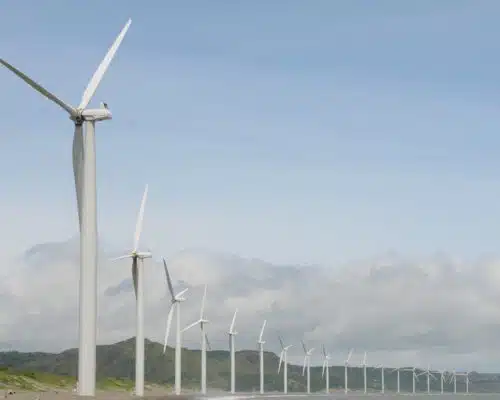
Photo: Shutterstock / GreenOak
18 May 2026 – by Stefania Relva
How can the world move forward with the energy transition amid ongoing geopolitical tensions that introduce new uncertainty into global markets? How should trade agreements be drafted to ensure security for all parties involved? And how can green industrialisation be part of this agenda?
During the Global Green Industrialization Dialogue, which took place in April as part of the International Vienna Energy and Climate Forum, these issues were addressed as a condition for providing concrete signals regarding trade partnerships, financial architectures, and industrial policy commitments to accelerate decarbonisation.
The debates showed a constructive perspective: the current situation underscores the importance of more diversified energy mixes, resilient value chains, and international trade in green products that can offer structural alternatives to dependence on vulnerable energy sources and logistics routes.
The threats of disruption in fossil fuel supply chains are not new: they are part of the history of these fuels. What has changed in the current situation is the context of climate change and the urgency of the energy transition in which they occur.
The crisis in the Strait of Hormuz highlights the need for countries to ensure energy diversity and security, and this works in two simultaneous directions. On the one hand, the immediate search for new sources and secure routes for fossil fuels is a natural response to the logic of traditional energy geopolitics. On the other hand, the strengthening of transition processes and increasing investment in green technologies.
In this sense, we took one of the greatest transition experiences of the past 50 years to Vienna. Amid the oil shocks of the 1970s, the entire world went in search of new reserves. At the time, Brazil was unsuccessful in this quest and turned to other options: ethanol produced from sugarcane was used to reduce gasoline demand, while, in the electricity sector, the crisis accelerated the use of hydropower. Together, these energy sources account for much of the renewable energy in Brazil’s energy and electricity mixes. The process demonstrates that energy crises can become catalysts for structural transformation.
Now, the expectation is that experiences like that serve as a foundation for international trade in industrial products manufactured with low carbon emissions. This means that the transition must go far beyond simply replacing energy sources or manufacturing equipment for clean energy production—such as wind, solar, batteries, or hydrogen. That is part of the story, but it is not the whole story: to make international trade in green products a reality, we need to decarbonise traditionally emissions-intensive industries, such as steel, aluminium, fertilisers, fuels and other chemicals.
In other words, today the transition must address complementary agendas: the adoption—wherever possible—of renewable energy sources, the development of a transition industry—enabling clean energy technologies—and the industrial transition, transforming sectors that are difficult to decarbonise—ignoring any one of these compromises the outcome.
The Vienna Dialogue helped establish partnerships that promote these three strategic steps, with a primary focus on facilitating large-scale trade agreements. The focus is to combine low emissions with mutually beneficial relationships through an arrangement that enhances the competitiveness of decarbonisation and promotes the economic development of the countries involved.
Nations in the Global South, such as Brazil, stand out as potential partners in these initiatives. In addition to the quality of their energy mixes, many of them possess attributes conducive to a prosperous commercial relationship, such as the availability of infrastructure, a skilled workforce, a supply of raw materials — including critical minerals and rare earths —, good diplomatic relations and a peaceful atmosphere, among others.
The strategy also has the potential to promote industrial development in more peripheral nations, helping to reduce socioeconomic inequalities among countries, in line with the Belem Declaration on Global Green Industrialization, proposed by the United Nations Industrial Development Organization (UNIDO), the governments of Brazil and the United Kingdom, the COP30 presidency, and The Breakthrough Agenda initiative. Launched at COP30, the declaration was signed by about 40 countries and international organisations. Given the multitude of actors involved and the interests at stake, this is clearly no simple task, especially against a backdrop of armed conflicts and growing economic risks.
Among the challenges, one of the top priorities is to reconcile global initiatives and local realities, with a better allocation of supply chains to raw materials and energy sources in each region or country.
It is also necessary to create conditions for trade in green goods to flourish robustly and at scale. This implies addressing issues such as standards, financing, market access, and international coordination, which involves striking a balance between policies that create a market for low-carbon products — through regulation, public procurement initiatives, certification mechanisms and carbon pricing — and support for innovation, technological development, and cost reduction for decarbonisation technologies.
Furthermore, in the face of a crisis in multilateralism, robust bilateral and plurilateral agreements must take on greater importance as tools for advancing shared agendas, structured in a coordinated manner among countries with common interests. It must also be acknowledged that the current U.S. administration’s distancing from climate issues represents a complicating factor. Nevertheless, the concerns expressed in recent weeks by governments in Europe, Mercosur, Canada, India, and Mexico show that many regions are committed to the transition through consistent partnerships.
The Belem Declaration indicates that, however great the challenges may be, the integration of industry, trade, and climate policies has already begun and is positioned to grow exponentially in the coming years, contributing to more diversified and resilient supply chains that are less dependent on unstable partners or vulnerable logistics and energy routes, with greater scope for decarbonisation.
In Vienna, important steps were taken to reduce these geopolitical risks, enhance countries’ economic security, and tackle the climate crisis — a process in which multilateralism, international trade, and the energy transition will be the big winners.
Stefania Relva is Director of Industrial Transformation at the E+ Energy Transition Institute. She has a degree in civil engineering from Unicamp and master’s and doctoral degrees in science from the Department of Energy Engineering and Electrical Automation at USP’s Polytechnic School, where she works as an associate researcher and guest professor. She is one of the editors of the book Energy Transition in Brazil (Springer Publishing, 2023). At E+, she works on decarbonising the industry, developing the hydrogen market and maintaining the renewability of the Brazilian electricity mix.
E+ Energy Transition Institute is an independent Brazilian think tank that works to connect governments, industry, civil society and academia to promote the energy transition and the green transformation of industry as vectors for the country’s socioeconomic development. E+ promotes debate on these issues based on scientific evidence, through dialogue with various stakeholders, the development of studies, and the dissemination of knowledge on decarbonisation, with an emphasis on the bioeconomy, the electricity sector, and industrial production, including the promotion of new green industrial investments in the country. To this, the Institute has a multidisciplinary team and a wide range of strategic partners.
Disclaimer: The views and opinions expressed in this article are those of the author and do not necessarily reflect the official policy or position of Energy Tracker Asia.