The Challenges Facing Thailand’s Plans to Become ASEAN’s LNG Hub
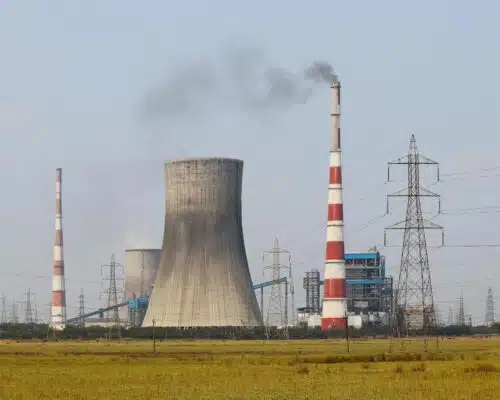
The Challenges Facing Thailand’s Plans to Become ASEAN’s LNG Hub, Photo by Markus Kammermann on Unsplash
20 April 2026 – by Viktor Tachev
“For us, LNG is the best transition fuel. It provides energy that is secure, affordable and sustainable,” is what Samerjai Suksumek, advisor to Thailand’s minister of energy, told the Gastech 2025 audience on the event’s opening day. He stressed that in today’s “uncertain world”, energy security was more important than ever, adding that for many Asian countries, natural gas and LNG were “reliable, flexible and proven”.
Thailand’s Energy Security at Risk Due to Reliance on Imported LNG
If there is irony here, it’s the tragic kind. A few months after Suksumek’s remarks, the narrative that LNG is a secure and reliable fuel was disproven overnight by Iranian missiles striking the Ras Laffan LNG export facility in Qatar and taking 20% of the world’s supply off the market, sending gas prices soaring and disrupting imports for many Asian countries. Thailand itself was among the most affected, as it was forced to suspend fuel exports to prioritise domestic needs. The government announced plans to increase domestic natural gas production from the Gulf of Thailand, using its Oil Fuel Fund to subsidise prices, postponing maintenance at gas fields and even operating coal and hydropower plants at full capacity to minimise the impact of its heavy reliance on LNG imports.
During his Gastech speech, Suksumek further confirmed the Thai government’s plans to build a third LNG terminal to serve not only Thailand but also the “wider region” and to establish Thailand as a regional LNG hub. However, proceeding with these plans poses significant economic, environmental and energy security risks, especially when cheaper, cleaner, more dependable and readily available solutions like solar and battery storage remain at arm’s reach.
Thailand’s Plans to Become a Regional LNG Hub
Natural gas has long been the backbone of Thailand’s power system, dating back to the discovery of deposits in the Gulf of Thailand in 1973. Due to growing demand, the country also began importing LNG from Myanmar in the 1980s.
The government then followed by building the Map Ta Phut terminal in 2011, with an initial regasification capacity of 5 million tonnes per annum (mtpa). In 2018, the capacity was expanded to 11.5 mtpa, and the facility remains the largest in the country to date. In 2022, Thailand built the second regasification terminal, Nong Fab, adding 7.5 mtpa.
Third LNG Terminal in Thailand
The two terminals ensured that Thailand has the largest operational LNG import capacity in ASEAN. However, as the country’s dependence on imported LNG has grown over the years, the Thai government plans to build a third LNG regasification terminal. The facility, on course for completion by 2029, will have an initial capacity of 5 mtpa, with planned expansion to 10.8 mtpa. Dr. Kurujit Nakornthap, director of the Petroleum and Energy Institute of Thailand, notes that it would allow the country to import up to 29.8 mtpa of LNG, equivalent to approximately 93% of Thailand’s current total natural gas demand across all sectors.
However, the investments by PTT Public Company Limited (PTT) in the construction of the three LNG terminals were not solely the result of the objective of securing domestic supplies but also of the government’s policy to position Thailand as a regional LNG hub within ASEAN.
The concept of developing Thailand as a regional LNG hub has been around since 2007, following consultations with foreign market experts, and was later adopted by PTT to expand into regional LNG trading. The government formally incorporated the idea into the national energy reform plan, in line with the National Strategy 2018-2037.
Since then, the country has been making tangible progress. On June 10, 2020, the Energy Regulatory Commission (ERC) approved the action plan for the Regional LNG Hub project under the ERC Sandbox innovation testing framework, with PTT Public Company Limited and PTTLNG responsible for implementation. In January 2021, PTT successfully reloaded Thailand’s first LNG onto the vessel Symphonic Breeze, which had arrived from Japan.
Approximately 62,449 tonnes of LNG, equivalent to 3,262,266 million British thermal units (BTU), were exported at a selling price of USD 14.66 per million BTU, compared to a procurement cost of USD 8.70 per million BTU. After deducting related expenses, around THB 580 million (USD 18.17) was remitted to the government to support the reduction of domestic natural gas prices.
Next, on April 1, 2021, the National Energy Policy Committee (NEPC) approved guidelines allowing PTT to reload LNG under its long-term contracts. They enabled PTT to manage LNG inventories more flexibly by selling surplus LNG during periods of high global prices, while supporting Thailand’s ambition to become a regional LNG hub.
As per the guidelines, LNG exports cannot affect the country’s domestic natural gas demand, and at least one LNG storage tank must remain reserved after any export. Furthermore, LNG may be sold only when spot market prices are higher than long-term contract prices. Spot LNG prices refer to LNG traded on a per-shipment basis, with prices determined by prevailing market conditions at the time of the transaction. PTT must also repurchase LNG when spot prices decline, and net revenue from such transactions, the actual selling price minus the average monthly pool LNG price and related expenses, must be remitted to the government for the benefit of domestic gas users.
Thailand’s Plans Bring Forward Key Concerns the ERC Must Address Before Proceeding
As Thailand moves forward with expanding its LNG infrastructure, particularly the development of the third LNG terminal as part of its vision to become a regional LNG hub, the country is facing a massive investment of nearly THB 60 billion (USD 1.9 billion). This has raised critical questions regarding the plans’ necessity, economic viability and the risk of passing the high investment costs on to consumers through electricity bills — a concern that the Energy Regulatory Commission of Thailand (ERC), which oversees electricity pricing, must address.
There are also potential questions regarding conflicts of interest, since the terminal is a critical national infrastructure, while its major shareholders are private companies. This ownership structure raises concerns that operational decisions may prioritise corporate interests, such as allocating gas supplies to power plants within the same corporate network. It is also imperative for the ERC to ensure that the project’s investment costs don’t unfairly lead to an increase in electricity prices for Thai businesses and households.
Furthermore, the ERC must clearly define who will bear responsibility if the third LNG terminal is substantially underutilised, as the financial burden of overinvestment in a regional LNG hub objective that may not succeed shouldn’t be borne by the public. Moreover, the ERC must guarantee that if Thailand procures LNG in excess of domestic demand and is unable to resell it, the substantial costs of LNG storage and infrastructure won’t be passed on to the public through higher electricity bills.
The ERC should also address concerns about the viability of the investment in the third LNG terminal, given that, as per the Gas Plan 2024, the combined capacity of the first two terminals would be sufficient to meet Thailand’s natural gas requirements by the end of the projected period (2037). Furthermore, expanding LNG receiving capacity to 29.8 mtpa contradicts Thailand’s energy transition, which aims to reduce reliance on natural gas. Approving such a large investment in unnecessary infrastructure would expose Thailand to a high risk of stranded assets if it needs to scale down gas use in the future to meet climate targets.
Last but not least, the ERC must affirm Thailand’s ability to become a regional LNG hub, given that there are already strong regional competitors, and long-term buyer demand is likely to decline as all ASEAN countries progress toward their net-zero targets.
Furthermore, the investment in the third LNG terminal risks binding Thailand into continued carbon lock-in, directly contradicting the country’s own carbon-neutrality and net-zero goals.
Economic, Energy Security and Market Risks Threaten Thailand’s Plans to Become a Regional LNG Hub
While PTT’s initial LNG reloading success instilled optimism that Thailand could become a thriving regional hub, the journey might not be seamless. Before proceeding with its plans, the authorities must answer several questions.
For example, why would neighbouring countries purchase LNG from Thailand as an intermediary rather than buying it directly from the source, such as the US, especially given that this could help them alleviate Trump’s tariff regime and improve trade terms with the world’s leading economy?
Furthermore, given that the global energy transition is accelerating and natural gas demand is on course to decline in the coming years, is the risk of costly LNG infrastructure investments becoming stranded assets worth it? In the case of Thailand, the “Thailand’s Fossil Lock-In: Stranded Risk of Midstream Oil & Gas Infrastructure” report by the Climate Finance Network Thailand estimates that nearly half of the country’s operating and proposed LNG terminal capacity (estimated to be worth THB 66 billion for new LNG terminal projects, or around USD 2.07 billion) could become economically unfeasible, thereby creating a financial burden on the government and, by extension, Thailand’s population.
Also, why would countries in the region, including Thailand itself, consider exposing their economies to the inherent risks of LNG imports, including unpredictable power costs and high electricity prices for business and households, when already cheaper, readily available and cleaner sources like solar PV and batteries exist?
Another question is: why would countries opt for LNG imports and undermine their energy security when recent energy crises have proven the market’s inherent unreliability?
Last but not least, how would continued carbon lock-in and the commitment to LNG use until the end of its economic life align with ASEAN nations’ net-zero targets and environmental concerns, as well as their aspirations to become attractive clean energy markets for foreign investments?
Those questions stem from the multiple barriers and risks facing Thailand’s plans to become a regional LNG hub that the government must consider before proceeding.
The Abnormal Market Conditions That Generated Profits Might Not Repeat
PTT’s THB 580 million in revenue from LNG sales was the result of multiple favourable factors aligning, ultimately creating a temporary price spread.
First, Japan, South Korea and China experienced high demand due to the cold weather. There were also prolonged disruptions at LNG production facilities across major exporters like Malaysia, Australia and Nigeria. Furthermore, congestion at the Panama Canal significantly reduced LNG availability to Asian countries, driving up prices. Last but not least, the reduced domestic demand for natural gas during the COVID-19 pandemic led to excess LNG under PTT’s long-term contracts, enabling exports to high-demand regional markets.
The combination of these conditions has instilled confidence that Thailand’s strategy to serve as a regional LNG hub by maintaining large LNG inventories in anticipation of export opportunities will continue to generate significant profit opportunities in the future.
However, if these market conditions disappear, and producers start operating at full capacity and seasonal demand reduces as colder regions experience warmer weather, a global LNG oversupply is likely to emerge. The situation would reduce natural gas prices, eroding PPT’s strategy of retaining LNG inventories to capture price spikes, exposing it to high downside risk.
In fact, experts have been projecting an LNG oversupply as soon as this year, although Iran’s strikes on Qatar’s energy infrastructure are putting these forecasts to the test.
Domestic Energy Security Requirements
As per the guidelines for LNG reloading under PTT’s long-term contracts, LNG reloading “must not affect domestic natural gas demand”.
However, in a highly volatile global LNG market, maintaining a balance between export activities and domestic energy security remains a challenge. PTT’s export strategy involves selling LNG when Asian spot prices are higher than long-term contract prices and purchasing replacement LNG when spot prices decline.
If LNG under long-term contracts is resold too much on the spot market and spot prices later increase, Thailand may be forced to rely on higher-priced spot LNG to meet domestic demand, which could ultimately increase electricity costs.
Furthermore, Thailand currently faces higher energy insecurity than most of its peers, further complicating its export plans. For example, Enerdata estimates Thailand’s energy independence at 47.5%, which is lower than the scores of regional peers and prospective target markets such as Vietnam (51.9%), Malaysia (96.8%), Myanmar (100%), and Indonesia (100%), although higher than Cambodia (25.8%), Singapore (2.49%) and the Philippines (44%).
Strong Regional Competition
Although Thailand has the capacity to develop into a regional LNG hub, with existing terminals capable of handling up to 19 mtpa of LNG and a planned expansion to 29.8 mtpa once the third LNG terminal starts operating, succeeding requires more than port capacity and storage. It also necessitates market liquidity, including reliable international trading partners, supportive regulations and the ability to deliver LNG quickly and efficiently. While Thailand has announced its ambition to become a regional LNG trading hub to meet demand in Southeast Asia, many other countries in the region are pursuing the same objective rather than simply cooperating as LNG trading partners.
One well-established regional competitor is Singapore, with the government continuously investing in infrastructure to accommodate the import and distribution of LNG. The country has strong experience in developing the market, including through regulations and guidelines such as Technical Reference 56 (TR 56), designed to ensure the safety, quality, and quantity of LNG delivered to LNG bunkering operations at Singapore ports.
Malaysia also plans to expand its role as an energy hub for ASEAN, having already exported liquefied natural gas to Thailand and Vietnam, and is aiming to extend LNG exports to the Philippines in the future.
Through its Department of Energy (DOE), the Philippines has announced its intention to emerge as a regional LNG hub, supported by foreign companies such as Tokyo Gas, which has invested in a floating LNG terminal project in Batangas City.
Indonesia, another long-standing competitor and a pioneer in the LNG industry since the early 1970s, also aims to position itself as an LNG hub. The opening of Arun Port as an LNG storage facility accessible to foreign companies signals that the country is moving beyond being an LNG producer and becoming a transportation hub, facilitating LNG trade in the region.
Under its Green Transformation Strategy (GX) and the Asia Zero Emissions Community (AZEC), the Japanese government and industry have been actively developing the LNG market across Asia, investing in import terminals, power plants and pipelines. In fact, Bloomberg reports that Japan has been building a natural gas empire, with Southeast Asian countries as key target markets for surplus LNG.
According to the IEEFA, as of FY2023, 37% of the LNG volumes handled by Japanese companies were resold overseas rather than consumed domestically, up from 16% five years ago. Still, Japanese companies have continued to sign additional LNG contracts despite declining domestic demand with the intent to profit from selling the gas to Southeast Asia.
“The volume of reselling is actually more than the biggest LNG exporter, Australia,” Hiroki Osada, a campaigner at Friends of the Earth Japan, has commented.
Research by Market Forces reveals that Japanese trading houses plan to build 8.6 times more gas power than solar and wind combined in South and Southeast Asia, undermining the region’s energy transition. Furthermore, in some countries, including Bangladesh, the Philippines, Thailand and Vietnam, the Japanese government has heavily influenced domestic energy policies to ensure that gas and LNG, not renewables, remain the priority.
China is another emerging competitor. Aside from being the world’s leading LNG importer and distributor, the country can now use its growing bargaining power and market influence in Asia to successfully engage in LNG trading.
Intermediaries and Market Risks
Information from June 27, 2025, reveals that PTT International Trading (PTTT), a wholly owned subsidiary of PTT, entered into a Heads of Agreement for the long-term LNG supply and sales with Centrica LNG Company Limited (Centrica), a leading British energy company.
The agreement marks PTTT’s first long-term LNG sales contract outside Thailand. Under it, the company will supply LNG to Centrica in Asia for a 10-year period beginning in 2028, under Delivered Ex-Ship (DES) terms, with the seller being responsible for the LNG until delivery to the buyer at the destination port.
Centrica is an LNG trader and exporter with operations across multiple countries and the capacity to deliver to “nearly any destination worldwide”. In 2022, it traded a total of 284 LNG cargoes, delivering LNG to 36 countries, including China, Japan, Kuwait, Mozambique, the United States, various European markets and the Middle East, under various contract lengths.
Among its strategies for profiting from LNG markets is exploiting arbitrage opportunities and price differences across markets. The company retains control over delivery destinations, allowing it to redirect shipments to markets with higher prices and profit from regional price differences.
As a result, if Centrica procures LNG from Thailand under long-term contracts at below-market prices and then resells it at higher global market prices, Thailand may forgo potential revenue from selling directly at higher market prices.
While PTTT’s agreement with Centrica serves as the initial step toward expanding its role as a regional LNG trader, if Thailand continues to rely mainly on a “buy low, sell high” strategy, accumulating large LNG inventories without securing international buyers at profitable prices, the LNG storage facilities and reserves may turn into a significant financial burden, ultimately increasing the electricity prices for the public.
Potential Lack of Markets for Thai LNG
For Thailand to succeed as a regional LNG trading hub, it is essential to secure long-term LNG buyers. While this might have been easier a couple of years ago, today, it is looking increasingly difficult as more ASEAN countries recognise the drawbacks of reliance on LNG imports and work to accelerate their clean energy transitions. Furthermore, many countries in the region already have long-term LNG supply contracts in place. As a result, while there could be a market for Thai LNG, it is increasingly shrinking.
The countries in the region can be divided into two main groups based on their LNG needs. The low-reliance group includes Cambodia, Laos, Vietnam, and the Philippines.
Coal and hydropower dominate Cambodia’s electricity generation, with domestic renewable energy expected to have a share of nearly 70% by 2030 (up from 62% in 2024).
Laos also relies on hydropower as the primary source of electricity generation, followed by coal.
Vietnam still relies predominantly on coal, with hydropower second and solar making huge strides in recent years. While the country uses a small amount of natural gas for electricity generation, it first imported LNG in 2023 from Indonesia and signed an LNG supply agreement with the United States in March 2025.
The Philippines continues to rely on coal as the primary electricity generation source and has pledged to a 75% emission reduction target by 2030 and to move away from fossil fuels.
Furthermore, all of these countries, except the Philippines, aim to achieve net-zero by 2050, making them more likely to pivot toward renewables than other emitting sources. In Vietnam, for example, a conglomerate reportedly wants to abandon plans to build the country’s biggest LNG-fired power plant and instead pursue a renewables and battery storage project. As a result, these markets don’t demonstrate sufficient potential to become Thailand’s long-term LNG importer.
On the other hand, the markets with high reliance on natural gas include Indonesia, Myanmar, Malaysia, Brunei, and Singapore. However, most of them are producers, exporters, or in the process of developing their own LNG infrastructure, casting doubt on their potential interest in imports from Thailand.
Indonesia, a former leading LNG producer, now uses the majority of its domestically sourced LNG to meet demand and is considering additional imports from the US to ease the impact of Trump’s tariff regime.
Myanmar relies on domestic natural gas for its needs and also exports to Thailand via pipelines. Furthermore, the country has ceased LNG imports due to high spot LNG prices and currency depreciation since 2021.
Malaysia, the leading natural gas producer in Southeast Asia and the world’s fifth-biggest exporter as of 2024, also supplies LNG to Thailand. Meanwhile, the country has an active 20-year LNG purchase agreement with the US.
Brunei is another major LNG producer and exporter to multiple markets, including ASEAN countries. In fact, Thailand is the ninth-largest importer of LNG from Brunei, making the latter a strong regional supply competitor.
Singapore remains the country that is the most reliant on natural gas in the region, and while it is a big importer, including via pipelines from Malaysia and Indonesia in the past, and predominantly LNG more recently, it is more likely to position itself as a self-reliant buyer rather than a long-term customer of Thailand. For example, the government established Singapore GasCo to diversify supply sources and manage long-term gas contracts to ensure price stability. In addition, Singapore is the only ASEAN country with a free trade agreement (FTA) with the US, allowing continued LNG imports even when the latter temporarily suspended LNG export approvals to non-FTA countries in January 2024. This reduces Singapore’s need to rely on LNG purchases through a regional hub.
As a result, the ASEAN market offers limited room for Thailand to sustainably position itself as a regional LNG hub.
Continuous LNG Market Disruptions
The current fossil fuel crisis, the second in just five years, has once again highlighted the inherent unreliability of the LNG market and the risks faced by countries reliant on imports.
Fatih Birol, the head of the International Energy Agency, has called this “the greatest global energy security threat in history,” much worse than the oil crises of 1973, 1979, and 2022 taken together.
While Thailand has brokered an agreement with Iran for the safe passage of its oil tankers through the Strait of Hormuz, it has been among the most affected by recent disruptions to energy supplies stemming from the strait’s blockade and the destruction of energy infrastructure across key producers.
As the leading LNG and crude oil importer in ASEAN, Thailand has been heavily reliant on fuel deliveries from the Middle East. According to World Bank data, Qatar was its dominant LNG supplier as of 2024. As a result of Iran’s attacks on its energy infrastructure and Qatar’s announcement that it would halt production, Thailand suspended fuel exports to prioritise domestic needs. The government also announced plans for increasing domestic natural gas production from the Gulf of Thailand. Furthermore, the country plans to use its Oil Fuel Fund to subsidise prices, postpone maintenance at gas fields and operate coal and hydropower plants at full capacity.
According to energy market analysts, it could take a long time to restore the oil and gas supply to prewar levels, with some predicting it might take three to five years to bring Qatar’s plant, the world’s largest, fully online again.
As a result, alongside other Asian peers, Thailand finds itself in the middle of a gas bidding war with Europe, which, judging by history, would be challenging to win. According to Global Energy Monitor, the energy shocks tied to Iran and the Strait of Hormuz in March 2026 show that even in a relatively balanced LNG market, disruptions to shipping routes and production can quickly raise delivered prices and tighten access, underscoring the economic and energy security risks for deeper LNG dependence in regions like Southern Asia.
Thailand has been actively trying to diversify its LNG deliveries, striking recent deals with US, Italian and French energy giants, as well as renewing an agreement with the Japanese government for new LNG contracts. However, these moves aren’t likely to ensure long-term energy security, as evidenced by the ongoing disruptions in global LNG markets. Meanwhile, Thailand would still remain at the mercy of suppliers, risking a similar situation in the future.
Alternative Options Crucial
Before advancing with its plans to become a regional LNG hub, Thailand should explore whether there are better options.
One example is delaying the development of the third LNG terminal, since the two existing ones are sufficient to meet natural gas demand until 2037, potentially leaving the third underutilised and at risk of becoming a stranded asset.
It is also important to classify LNG terminals into regulatory assets for electricity generation and commercial assets for non-power use so that electricity prices don’t include non-electricity costs.
Reviewing the Draft PDP 2024, which projects a reserve margin exceeding twice the expected peak electricity demand, is also important if the country is to avoid unnecessary investments in energy infrastructure.
Last but not least, the Thai government should consider accelerating its efforts to scale up renewable energy generation by capitalising on its massive solar power potential, estimated at over 300 GW. Since heavy reliance on large-scale LNG imports undermines Thailand’s energy security and exposes electricity prices to high volatility, increasing the share of solar would protect the country’s economy from these risks.
Thailand’s Choice: Clinging to the Past or Charting the Future
Thailand’s ambitions to become a regional LNG hub run counter to its long-term energy transition efforts and pose various risks, including fiscal and economic pressure, weakened energy system resilience, reduced energy security and unpredictable electricity prices for businesses and households.
Furthermore, they pose environmental risks and threaten the country’s clean energy targets since, according to Jan Rosenow, professor of energy and climate policy at the University of Oxford, high fossil fuel prices generate windfall profits that flow back into exploration, extraction and export infrastructure.
“We are already seeing this with LNG expansion plans being fast-tracked.”
With natural gas still projected to constitute 41% of the energy mix’s generation by 2037, along with plans to import sufficient volumes of LNG to meet both domestic and export needs, the country is prioritising leadership in a declining, increasingly unpredictable sector that suffers disruptions every couple of years.
Meanwhile, Thailand has already demonstrated leadership in scaling up green technology manufacturing, with thriving solar panel and battery storage production industries emerging as an attractive market for clean energy investments. Furthermore, the government now aims to establish the country as a leader in thriving technology sectors such as EVs and data centres.
While Thailand stands at a crossroads, the choice shouldn’t be complicated. The country is in the perfect position to continue building on its strong fundamentals and to capitalise on the growing demand for green technologies. Whether it chooses to do so would ultimately determine if its climate targets reflect real intent, or if they are just promises on paper, disconnected from the country’s actual energy trajectory.
by Viktor Tachev
Viktor has years of experience in financial markets and energy finance, working as a marketing consultant and content creator for leading institutions, NGOs, and tech startups. He is a regular contributor to knowledge hubs and magazines, tackling the latest trends in sustainability and green energy.
Read moreOur Publications