Renewable Energy in Thailand: An Alternative to LNG
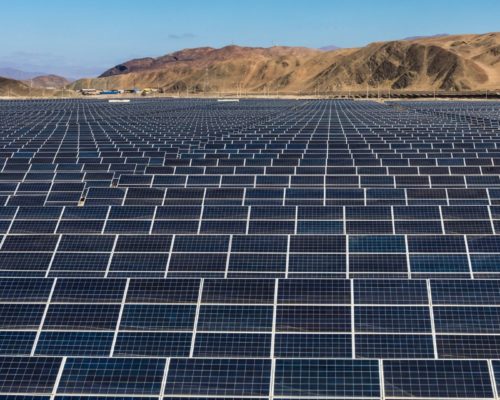
Photo by Michael Pointner on Unsplash
27 April 2026 – by Viktor Tachev
Government policies are playing a crucial role in advancing renewable energy in Thailand. Thailand’s energy sector is at a crossroads. On one hand, the country is starting to take advantage of the fact that solar and battery storage offer the cheapest and most readily available new electricity generation option for the country’s thriving economy, while on the other, the government is pursuing investments in new gas-fired capacity and a third LNG terminal to expand what is already the region’s largest import capacity.
As the government works on the new Power Development Plan 2026-2050, it has the unique opportunity to strengthen the country’s energy security, protect its economy, stabilise electricity prices, reduce greenhouse gas emissions and advance toward its net-zero and climate goals by further accelerating clean energy deployment and reconsidering its LNG infrastructure development plans. The energy decisions made today, whether to enter Thailand’s new “Bright Age” or remain locked in a costly cycle of fossil fuel dependence, will ultimately determine the future of its economy, society and environment over the coming decades.
The Current State of Thailand’s Renewable Energy Sector in 2026 and Its Recent Progress
Over the past decade, the share of renewables in Thailand’s power generation mix jumped from 8% to 15%.

According to the IEA, Thailand’s cumulative installed PV capacity reached 9.9 gigawatt peak (GWp) in 2024, comprising 6.3 GWp of ground-mounted solar, 3.3 GWp of rooftop solar, 281 MWp of floating solar and 17 MW of off-grid solar systems. Regarding rooftop solar in particular, the government has managed to establish the country as a regional success story through a series of policy reforms, stimulus measures and supporting initiatives. The installed capacity increased 32% year on year in 2023, while according to TransitionZero, the estimated rooftop solar capacity installed nationwide today ranges from 3.02-4.17 GW, exceeding official figures.
The share of solar and wind in the mix was 7%. However, Ember’s Electricity Review 2026 notes that the country made major progress in 2025, with solar generation increasing by 72% to 9 TWh. As a result, it now accounts for 5% of Thailand’s power mix.
Furthermore, Thailand has made strides in developing its clean energy market in recent years, with BNEF’s Global Climatescope finding that clean energy investments topped USD 1.18 billion in 2024, a 73% increase from 2023 and a major jump from the USD 260 million attracted in 2019.
Ambitious Renewable Energy Targets and Untapped Solar Power Potential
Despite the country’s location in one of the world’s best solar zones, with intense radiation of 4.06-5 kWh per square metre, and access to domestically produced, low-cost solar panels and batteries, Thailand has utilised just 1% of its around 300 GW in solar power potential. Capitalising on it can unlock significant gains in energy security and affordability across different Thai provinces. In the case of Chachoengsao, a province in Thailand east of Bangkok, proper government support can enable it to generate 1.5 GW of electricity from residential solar alone, enough to make the province self-sufficient by 2038.
Furthermore, the 3 GW of hydropower capacity, accounting for around 3% of total generation, remains well below the estimated potential of 15 GW.
According to the draft of the National Power Development Plan 2024-2037 (PDP 2024), the country aims to meet 33% of its total electricity demand with renewable power by the decade’s end. By 2037, the share is projected to jump to 51% — a major increase from the previous goal of 36%.
Furthermore, by 2037, Thailand would aim to expand renewable capacity by around 50 GW and energy storage capacity by 14 GW.

Ember estimates that, if the country succeeds in achieving its goals, it would effectively more than double its share of renewables by 2037.

Several factors have motivated Thailand’s pledge for ambitious clean energy targets in the PDP, including achieving carbon neutrality by 2050 and powering emerging growth sectors, such as EVs and data centres, with renewables.
Thailand positions itself as the regional green manufacturing hub and aims for EVs to account for over 30% of total auto production by 2030, with the sector projected to be responsible for around 20% of total electricity demand by 2037.
The electricity demand of its data centre industry, projected to grow at 7.5-8.5% annually between 2025 and 2027, is on course to exceed 6 TWh by 2030 (2.5% of total electricity demand), rising to 10 TWh by 2037.
Economic Benefits of Renewable Energy in Thailand
According to the IEA, Thailand is among the Asian countries that have achieved the largest savings on fossil fuel imports through the adoption of renewables. In fact, solar has been the cheapest source of electricity generation in the country since 2022.
BloombergNEF’s dedicated report, “Thailand: Turning Point for a Net-Zero Power Grid,” finds that, today, the levelised cost of electricity (LCOE) for new solar projects of USD 33-75 per MWh, remains significantly lower than the cost of building new gas-fired power plants (USD 79-86 per MWh) and new coal plants (USD 74-96 USD per MWh). Even paired with batteries, solar remains cheaper than building new gas-fired power plants. The case is the same for ammonia co-firing, with solar, solar paired with battery storage and onshore wind already cheaper alternatives.
Importantly, as renewable energy technologies continue to evolve, more supportive policy measures come into force and Thailand continues to build on its strong solar manufacturing traditions and developmental know-how, the progress is expected to continue, offering even greater economic gains.
LNG Imports and Infrastructure Investment Plans Threaten Thailand’s Energy Security and Clean Energy Progress
As per the Gas Plan 2024, Thailand aims to increase the share of LNG from 31% in 2024 to around 40% by 2030. By the mid-2030s, Wood Mackenzie estimates that LNG might even account for over 60% of Thailand’s gas mix.
To accommodate rising imports, Thailand plans to expand its already region-leading LNG import capacity by building a third terminal, due to start operating by 2029. As a result, it would be able to receive up to 29.8 million tonnes per annum (mtpa) of LNG, equivalent to around 93% of the country’s current total natural gas demand across all sectors.
However, experts argue that, when comparing the LNG import projections in the draft of the 2024 Gas Plan with the combined potential receiving capacity of the three LNG terminals, the average LNG supply under existing contracts and additional procurement between 2024 and 2037 won’t exceed 15 mtpa or no more than 20 mtpa under a worst-case scenario. As a result, the combined capacity of the first two LNG terminals alone (around 19 mtpa) would be sufficient to meet Thailand’s natural gas requirements throughout the Gas Plan period (2037).
Since the two existing LNG terminals already remain underutilised, there are growing concerns about the need to invest THB 60 billion (USD 1.9 billion) in the third terminal and the risk of the investment and power costs being translated to businesses and households in the form of higher electricity bills, as recently reported by Energy Tracker Asia.

Electricity Generation from Gas-fired Power Plants
The case is the same for LNG-fired power plants. Thailand plans to build an additional 6.3 GW of gas-fired capacity, with units coming online between 2028 and 2037. However, the IEEFA finds that the persistent underutilisation of gas-fired power plants, project delays and rising costs mean the proposed gas capacity additions in the national Power Development Plan are misaligned with electricity needs and climate goals. The analysts note that even pausing idle gas plants to address underutilisation won’t alleviate the economic impact, since they will continue to incur fixed costs as operating expenses, ultimately paid by consumers. Since gas-fired power plants typically operate for 20-25 years under long-term power purchase agreements, it would also lock the country into a future of high power prices and energy insecurity.

Relying on Imported LNG to Meet Electricity Demand
As a result, Thailand’s costly gas investment plans risk undermining its energy security, leaving it over-reliant on volatile LNG imports in the long-term and highly susceptible to the inherent vulnerabilities and unreliability of global fossil fuel markets, as most recently evidenced by the Strait of Hormuz blockade. The disruption has prompted the Thai government to urge fuel rationing, reduce the operational capacity of gas-fired power plants and promote work-from-home policies to reduce energy demand.
Furthermore, any new investments risk turning the gas-fired plants and terminals into stranded assets long before their commercial lifespans expire. Importantly, it would result in a long-term carbon lock-in, ultimately distancing the country from its net-zero and energy transition goals.
This is in line with a broader regional trend. According to Ember, gas-fired power from the region’s projected fleet could cost up to USD 109 billion per year as LNG prices surge. For comparison, generating the equivalent electricity from solar in a single year would cost around USD 42 billion. As a result, if countries in the region scrap their gas investment plans and prioritise solar instead, they can unlock USD 67 billion in savings. Meanwhile, it would significantly strengthen their energy security, ensuring reliable domestically sourced energy.
Importantly, Ember notes that such a move would protect countries from broader economic fallout, including currency pressure, soaring inflation and industrial exposure across global energy markets. Thailand, as one of the countries most reliant on gas, is among the markets facing the biggest risk, the experts warn. For instance, during the aftermath of the Russia-Ukraine war, Thailand recorded peak inflation of 8.5%, the highest in the region.

Reconsidering the LNG Investment Plans Crucial For Ensuring No Unnecessary Investments in New Infrastructure
While the draft of the Gas Plan 2024 revises projected LNG imports downward compared to the previous edition (2018), that’s primarily due to the identification of additional natural gas resources in the Gulf of Thailand and from Myanmar, as well as a projected increase in hydrogen use.
The draft of the National Power Development Plan 2024-2037 (PDP 2024) indicates that the share of natural gas in electricity generation will decline to 41% by 2037 (down from 59% in 2024). However, LNG imports are projected to meet the majority of the gas demand.
The plan projects that by the end of the plan period in 2037, Thailand will have a reserve margin exceeding more than twice the projected peak electricity demand. This necessitates a thorough review of overstated electricity demand forecasts to avoid unnecessary investment in natural gas infrastructure, particularly the planning and construction of additional large-scale gas-fired power plants.
Furthermore, the Thai government can consider delaying the development of the third LNG terminal, thereby avoiding a project with costly economic and climate consequences and opt to rely on the two existing terminals, which are sufficient to meet projected gas demand by 2037. In fact, if additional LNG capacity is required, lower-cost alternatives, such as building additional LNG storage tanks at existing terminals, could prove a more viable option.
Thailand Can Unlock Massive Economic, Energy Security and Emissions-reduction Gains If it Prioritises Scaling Up Renewable Energy
Market experts are clear: Not LNG, but renewables, particularly solar and battery storage, remain the most economically viable pathway for Thailand to meet its decarbonisation and energy transition goals while also boosting domestic energy security and affordability.
Ember finds that the country stands to gain significantly if the government decides to improve the 2037 targets in the PDP. For example, if it increases solar power and battery storage capacities by 89% and 60%, respectively, relative to the plan’s current targets, Thailand can achieve total savings of USD 1.8 billion.

Power Generation from Renewable Energy
Aside from lowering system costs, the move will also help the country to significantly enhance energy security by reducing reliance on volatile and unreliable fossil fuel imports. More specifically, Ember estimates that it would enable the government to avoid almost twice the natural gas consumed in 2024 for power generation (51.4 billion cubic metres).
Meanwhile, improving the targets would deliver massive climate benefits, including avoiding 147 million tonnes of cumulative CO2 emissions by 2037. As a result, the country would make significant progress toward its 2035 emissions-reduction target of 47% below 2019 levels and its net-zero goal by 2050, set in the recently updated NDC.
It would also improve Thailand’s image as an attractive market for clean energy investors and ensure that its approach aligns with the renewable energy commitments of major technology investors, unlike competitors like Malaysia, which have pivoted to add more gas or delay fossil fuel phaseouts.
BNEF notes that unlocking all those gains is within reach, with the first step being an orderly phaseout of Thailand’s fossil-fuel power plants. This should go hand in hand with the accelerated deployment of renewable energy sources and battery storage solutions to enable the country to address intermittency challenges. Other necessary steps include implementing power market reforms and utilising corporations’ growing interest in clean power procurement to attract more private investment in the deployment of renewables.
The Power Development Plan 2026 as an Opportunity to Strengthen the Energy System’s Resilience
Promoting electricity generation from renewables would help alleviate Thailand’s energy security concerns, as well as accelerate its decarbonisation journey and protect businesses and consumers from high power costs during future energy crises. The PDP 2024’s target to increase the share of renewable energy to 51% by 2037 is an ambitious step toward that direction.
However, by continuing to build on what the country has already achieved, including the stable clean-energy market fundamentals and access to domestically produced, affordable solar panels and batteries, Thailand can go even further. BNEF’s Net Zero Scenario shows that solar and wind energy can supply 60% of Thailand’s electricity by 2050, strengthening the country’s energy security and eliminating greenhouse gas emissions.
Thailand’s Power Development Plan for the period 2026-2050, expected to be released this year, gives the government the perfect opportunity to carefully assess available options and prioritise clean energy investments to ensure cheaper and more secure electricity, breaking the vicious cycle of LNG import dependence and costly, unnecessary infrastructure investments. Whether it seizes it will ultimately determine the trajectory of its economy, society and environment for the upcoming decades.
by Viktor Tachev
Viktor has years of experience in financial markets and energy finance, working as a marketing consultant and content creator for leading institutions, NGOs, and tech startups. He is a regular contributor to knowledge hubs and magazines, tackling the latest trends in sustainability and green energy.
Read moreOur Publications