Thailand’s LNG Investment Plans Risk Undermining Its 51% Renewables Target For 2037
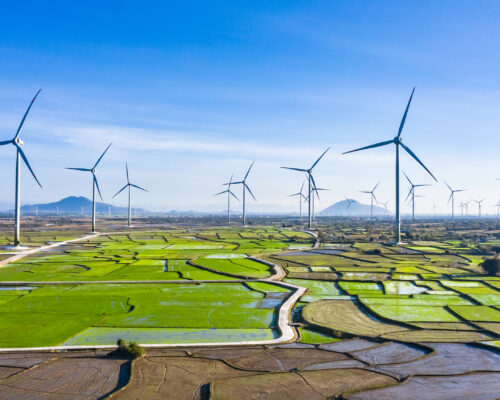
Photo by Pixabay on Pexels
13 April 2026 – by Viktor Tachev
Thailand is at a crossroads. On one hand, the country has announced an ambitious clean energy goal for 2037, while on the other, it is also revealing plans for continued investments in new, costly LNG import infrastructure. Experts warn that developing a third regasification terminal when the first two remain underutilised and sufficient to meet the country’s LNG demand for the foreseeable future is counterproductive. Furthermore, it risks diverting investments that could go towards new renewable energy capacity, which would guarantee more stable electricity prices, strengthened energy security and cleaner energy in line with Thailand’s growing economy and green industries.
From immense untapped potential to stable, clean energy market fundamentals and access to affordable, domestically manufactured solar panels and battery storage technology, Thailand has all the means to achieve its renewable energy target for 2037. The only question mark is whether there would be a willingness to do so.
Thailand’s Ambitious Goal For 51% Renewables in the Energy Mix by 2037
Thailand’s draft revised Power Development Plan (RPDP) 2024 sets the ambitious goal for renewable energy sources to account for 33% and 51% of total electricity demand by 2030 and 2037, respectively — a major increase from the previous target of 36% by 2037.
As per the RPDP, Thailand aims to enable the expansion of around 50 GW of renewable capacity and 14 GW of energy storage by 2037. If the country succeeds in achieving its goals, it would effectively more than double its share of renewables by 2037.
The targets in the plan are motivated by efforts to transition away from fossil fuels and achieve carbon neutrality by 2050, according to Ember. While new gas capacity remains on the cards with the RPDP aiming for 6.3 GW and a 2 GW net increase between 2035 and 2036, overall, the plan projects up to 8 GW phased out by 2037.
Another major driver of Thailand’s ambitious renewable energy targets is the country’s intent to power emerging growth sectors, including EVs and data centres. As Thailand positions itself as the regional green manufacturing hub and aims for zero-emission vehicles to make up at least 30% of total auto production by 2030, EV’s are estimated to account for around 20% of total electricity demand by 2037.
Furthermore, the country aims to create a booming data centre market, with a projected annual growth rate of 7.5-8.5% between 2025 and 2027. The sector’s electricity demand is forecast to reach 6 TWh by 2030, or 2.5% of total electricity demand, rising to 10 TWh by 2037.
However, according to Ember, to achieve its ambitious renewables targets and fully realise the climate benefits of transport and data centre electrification, the power system must evolve in parallel, ensuring that clean energy supplies meet the rising power demand. Pursuing such a pathway would ensure that Thailand’s approach aligns with the renewable energy commitments of major technology investors, unlike the pivots of competitors, like Malaysia, which aims to add more gas or delay fossil fuel phaseouts.
Renewables Have Progressed, But Still Below Their Potential, Experts Note
Over the past decade, the share of renewables in Thailand’s energy mix jumped from 8% to 15%. While these numbers look promising, there is a caveat. The 15% share remains below the global average of 41%. Furthermore, the share of solar and wind in the mix is just 5%, or a third of the global average.
Despite progress over the last decade, Ember notes that renewable energy sources remain well below their potential in installed capacity and generation. Domestic hydropower accounts for just 3% of total generation, with an installed capacity of 3 GW, well below an estimated potential of around 15 GW.
According to the IEA, Thailand’s cumulative installed PV capacity reached 9.9 GWp in 2024, comprising 6.3 GWp of ground-mounted solar, 3.3 GWp of rooftop solar, 281 MWp of floating solar, and 17 MW of off-grid solar systems. Yet, the country has utilised just over 1% of its total solar power potential, estimated at over 300 GW.
Thailand’s Rooftop Solar Success
However, one area where the government has succeeded is turning Thailand into the region’s rooftop solar success story through a series of policy reforms, stimulus measures and supporting initiatives. According to TransitionZero, the estimated rooftop solar capacity installed nationwide today ranges from 3.02 GW to 4.17 GW. Relative to deployment trends in Southeast Asia, Thailand also outperforms regional peers such as Malaysia and Vietnam in installations on smaller rooftop areas.
Furthermore, Thailand has made strides in developing its clean energy market in recent years. According to data from the Global Climatescope, clean energy investments have reached around USD 1.18 billion in 2024, an 73% increase from 2023. This illustrates the significant growth the country has achieved over the years, starting from just USD 0.26 billion in 2019.
Thailand Remains Fully Reliant on Fossil Fuels, With LNG Imports the Backbone of Its Energy System
Due to its remarkable economic growth, Thailand is experiencing a rapid surge in electricity demand. Currently, it ranks third in ASEAN by total consumption and fourth by per capita demand. However, Ember warns that since Thailand has been meeting this rising demand with fossil fuels, mainly natural gas, the country is facing mounting environmental costs. Its power sector emissions have nearly doubled since 2000.
Today, fossil fuels dominate Thailand’s power system, with coal and gas accounting for over 85% of electricity generation. Natural gas is responsible for the majority, at 68%.

The 10-year trend reveals that Thailand has become increasingly reliant on imported natural gas to meet domestic energy needs, with the fuel marking a compounded annual growth rate (CAGR) of 4.7% from 2015 to 2024. As of 2024, the country was the top LNG importer in Southeast Asia.
While the share of natural gas is expected to decline in the upcoming years, it will still serve as the backbone of Thailand’s energy system. As per the current draft of the National Power Development Plan 2024-2037, gas will account for 41% of electricity generation by 2037, with imports meeting most of the demand. Importantly, estimates indicate that the share of imported LNG in Thailand’s gas mix could climb to 60% by 2035, up from around 40% in 2024.
The IEEFA notes that the Draft Gas Plan 2024 projects LNG imports to grow by 73%, supplying 43% of gas requirements by 2037.
To accommodate the increased deliveries, the Thai government plans to build a third LNG regasification terminal, further expanding what is already the largest operational LNG import capacity in ASEAN.
The Map Ta Phut terminal, with the capacity of 11.5 million tonnes per annum (mmtpa), is the first and largest facility, while the Nong Fab terminal, commissioned in 2022, adds a further 7.5 mmtpa. The third LNG terminal, on course for completion by 2029, will have an initial capacity of 5 mmtpa, with planned expansion to 10.8 mmtpa.
Thailand’s LNG Investment Plans Threaten Its Renewable Energy Goals, Posing Economic and Energy Security Risks
The country’s two existing LNG terminals remain underutilised and are sufficient to meet Thailand’s gas deliveries until 2037, according to the projections in the draft Gas Plan 2024. Dr. Kurujit Nakornthap, director of the Petroleum and Energy Institute of Thailand, notes that importing LNG at the full combined capacity of all three LNG terminals would mean that Thailand would be able to receive up to 29.8 mtpa of LNG, equivalent to approximately 93% of the country’s current total natural gas demand across all sectors.
The IEEFA also warns that Thailand’s persistent underutilisation of gas-fired power plants, project delays and rising costs mean the proposed gas capacity additions in the national PDP are misaligned with electricity needs and climate goals. In 2025, seven privately owned gas plants operated under a capacity factor of 10%, while most contracted plants have shown declining dispatch rates over the last three years, with several generating almost no electricity. Throughout that period, these assets have cost USD 5.02 billion to generate minimal electricity.
The costly underutilisation has raised serious questions about the need to develop new capacity. Estimates indicate that suspending additional gas-fired power plant development to reduce dependence on natural gas and LNG imports is a viable strategy unlikely to cause power system issues in Thailand. According to the draft PDP 2024, by 2037, Thailand will have a total installed electricity generation capacity of 112,391 MW, while peak electricity demand is expected to reach over 50,000 MW. As a result, the country will have a reserve margin exceeding twice the projected peak demand.
While the third LNG terminal, which is estimated to cost THB 60 billion (USD 1.93 billion), may be utilised during certain periods or in emergencies, it is unlikely to operate at full capacity, especially in light of the PDP 2024’s targets for 41% natural gas in electricity generation by 2037.
On top of this are the fuel price volatility and the risk of passing on the high project investment and construction costs to consumers.
Furthermore, since such projects have operational lifespans of 25-30 years, investing in large-scale natural gas infrastructure undermines the country’s energy transition objectives and risks, diverting funds that could help Thailand advance toward its 51% renewables target by 2037.
As Thailand Plans to Scale Up LNG Imports, the Strait of Hormuz Crisis Has Exposed the Market’s Vulnerability
According to Global Energy Monitor, the energy shocks tied to Iran and the Strait of Hormuz in March 2026 show that even in a relatively balanced LNG market, disruptions to shipping routes and production can quickly raise delivered prices and tighten access, underscoring the economic and energy-security risks for deeper LNG dependence in regions like Southern Asia.
As the leading LNG and crude oil importer in ASEAN, Thailand is highly susceptible to inherent vulnerabilities and the unreliability of global fossil fuel markets. After Iran struck the energy infrastructure of Qatar, Thailand’s main LNG supplier, production was halted, and the Thai government suspended fuel exports to prioritise domestic needs.
As a balancing measure, the government also announced plans for increasing domestic natural gas production from the Gulf of Thailand. Furthermore, the country plans to use its Oil Fuel Fund to subsidise prices, postpone maintenance at gas fields and operate coal and hydropower plants at full capacity.
Thailand has long been aware of its vulnerability to LNG supply shocks and has sought to diversify its supply sources. For example, in October 2025, it struck a deal with the US to start buying energy products, including LNG, crude oil and ethane for approximately USD 5.4 billion per year. Zero Carbon Analytics notes that, as per the agreement, Thailand would import an additional 1 million tonnes of US LNG in 2026, followed by another 1 million tonnes over the next five years. In June 2025, state-owned oil and gas company PTT signed an agreement to import 2 million tonnes of LNG annually from the Alaska LNG project for 20 years.
Next, in December last year, Thailand’s Gulf Development Company entered into a long-term LNG buying agreement with the Italian giant, Eni.
In January 2026, Thailand struck a 15-year deal with Engie to supply LNG for Thai power plants.
In March, the Thai government extended the Thailand-Japan Memorandum of Understanding on LNG cooperation for another three years. The agreement promotes investment in LNG supply chains and infrastructure in Thailand, potentially paving the way for new LNG contracts and deepening the country’s reliance on imported fossil gas for electricity generation, Greenpeace notes.
Staying True to Its Renewable Energy Goal Can Unlock Huge Economic Gains For Thailand
Solar has been the cheapest form of electricity in Thailand since 2022. According to BloombergNEF’s “Thailand: Turning Point for a Net-Zero Power Grid” report, the levelised cost of electricity (LCOE) for new solar projects ranges between USD 33 and USD 75 per MWh, significantly lower than the cost of building new gas-fired power plants (USD 79-86 per MWh) and new coal plants (USD 74-96 USD per MWh). Furthermore, the gap is expected to continue widening. Even when combined with batteries, it would still be cheaper than building new gas-fired power plants, the experts note.
As a result, BNEF notes that scaling up renewables remains the most economically viable pathway for Thailand to meet its decarbonisation and energy transition goals, while boosting domestic energy security and affordability for businesses and households.
According to estimates, implementing the RPDP will require a total of USD 153 billion in fixed expenditure between 2024 and 2037. However, Ember has found that increasing solar power capacity by 89% and battery storage by 60% compared to the current targets in the plan can unlock massive economic gains for Thailand by 2037, including USD 1.8 billion in total cost savings.
In fact, Thailand has already felt these benefits firsthand, as it remains among the Asian countries that have achieved the largest savings on fossil fuel imports through the adoption of renewables, according to the IEA. In terms of fossil fuel use by volume, the cumulative gas avoided by 2037 (51.4 billion cubic metres) is almost twice that consumed in 2024 for power generation. Such a move will also ensure cumulative avoided CO2 emissions of 147 million tonnes by 2037, which would significantly help the country toward its emission-reduction target of 47% below 2019 levels by 2035 and its net-zero goal by 2050, set in the recently updated NDC.
Today’s Energy Decisions To Determine the Future of Thailand’s Economy, Society and Environment
The next Power Development Plan is expected to be released this year, offering Thailand the unique opportunity to accelerate its energy transition by prioritising renewables. Doing so would help the country avoid the risks associated with the heavy reliance on large-scale LNG imports, including undermined energy security, high electricity prices, unreliable fuel supplies and reduced competitiveness for its local manufacturing industry. Since global markets now demand more low-carbon products and sectors like data centres and EVs require clean electricity, Thailand should remain determined to achieve its 51% renewables target and accelerate its emissions-reduction journey.
“Thailand should not tie its energy future to fossil fuels like LNG, which are volatile and can no longer guarantee energy security,” said Manun Wongmasoh, climate and energy campaigner at Greenpeace Thailand. “Thailand has strong potential to invest in clean, decentralized and equitable renewable energy that can truly strengthen energy security while reducing electricity costs for the public.”
The country is within one of the world’s best solar zones and boasts over 300 GW of renewable energy potential. Paired with stable clean-energy market fundamentals and access to domestically produced, affordable solar panels and batteries, the Southeast Asian nation has everything needed to achieve its 51% renewables target by 2037 and ensure cheaper, cleaner and more secure electricity.
Whether it gets there will depend on one critical decision: doubling down on renewables or on LNG. In that sense, what stands in the way is not capability, but choice, meaning Thailand’s energy future ultimately remains in its own hands.
by Viktor Tachev
Viktor has years of experience in financial markets and energy finance, working as a marketing consultant and content creator for leading institutions, NGOs, and tech startups. He is a regular contributor to knowledge hubs and magazines, tackling the latest trends in sustainability and green energy.
Read more