Thailand’s Rooftop Solar Boom and the Energy Crisis
06 April 2026 – by Viktor Tachev
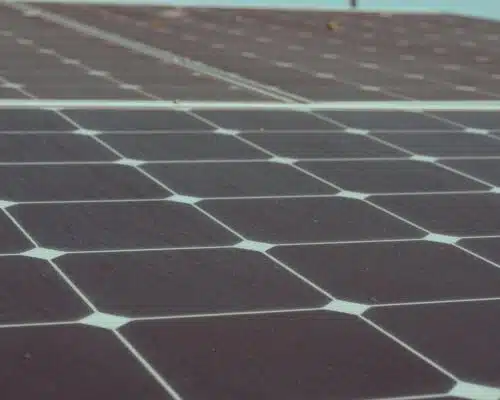
Thailand has been among Southeast Asia’s success stories in rooftop solar deployment. While the country has made huge strides since the early 2010s, when the government first began supporting the rooftop solar market, progress in recent years has slowed. Yet, with abundant solar potential and the right policy interventions, Thailand has all the prerequisites to continue building on its strong fundamentals, improve energy security, provide consumers with access to cheaper, more reliable electricity and become an even more appealing market for clean energy investors.
Thailand’s Rooftop Solar Journey Throughout the Years
Thailand was the region’s front-runner in introducing policy incentives for rooftop solar, starting from 2013-2015, with the deployment of 130 MW of rooftop solar installations through an initial feed-in-tariff (FIT) scheme targeting residential, commercial and industrial users. The growth was then enabled by two main programs: self-consumption with no excess electricity and residential with excess electricity incentives.
However, rooftop solar began to really gain momentum from 2018, driven largely by the commercial and industrial market segments. Strong corporate demand for clean energy access and decarbonisation options underpinned growth, with on-site rooftop solar installations remaining the primary decarbonisation option for companies, alongside the purchase of renewable energy certificates through green electricity tariffs.

Over the years, rooftop solar has played an important role in Thailand’s overall solar adoption, accounting for 35% of total installed solar capacity in 2023, with residential solar system installations increasing by 32% on year.
According to TransitionZero, the estimated rooftop solar capacity installed nationwide today is between 3.02 GW and 4.17 GW, exceeding official numbers, with the commercial and industrial sectors dominating. Relative to deployment trends in Southeast Asia, Thailand outperforms regional peers such as Malaysia and Vietnam in installations on smaller rooftop areas (below 1,000 square m).
The Policies and Measures That Have Enabled the Rooftop Solar Market Growth in Thailand
Over the years, Thailand’s authorities have taken various steps and supporting measures to enable the growth of the domestic rooftop solar market.
For example, the government has introduced a Utility Green Tariff to provide green electricity to the private sector for routine services and manufacturing. Auctions, tenders, FITs and premiums are other utility-scale measures that the country has adopted to boost market growth. Thai authorities have also introduced direct power purchase agreements (Direct PPAs) to allow the direct purchase of renewable electricity to attract foreign investment, as well as tax incentives for solar energy projects, such as corporate income tax exemptions and deductions.
Tax Breaks on Installing Solar Panels
However, among the key measures to enable the growth of the solar rooftop market was the introduction of programs for both government buildings and the household sector (via a tax-incentive mechanism). Regarding the latter, at the end of 2025, the Thai Cabinet approved household rooftop solar tax breaks of up to THB 200,000 (USD 6,190) on taxable income. The measure, introduced under the “Quick Big Win” energy initiative, applies to individuals who install residential solar panel systems with a capacity of up to 10 kW, with the PPAs to remain in place for up to 10 years. Around 90,000 households are expected to participate.
Selling Surplus Solar Power to the Government
The measure, which applies to installations completed between March 3 this year and Dec. 31, 2028, would allow Thai households to sell surplus rooftop solar power back to the grid under a government-backed “net billing” scheme. The metropolitan and provincial authorities would purchase the excess electricity at THB 2.20 (USD 0.06) per kWh. While the rate is lower than the retail rate of around THB 4 (0.12) per kWh, the government is discussing a full net metering scheme that would allow households to offset their electricity use with solar generation at the full retail rate.

Another important step the Thai government agencies took to spur rooftop solar growth was removing the requirement to obtain factory licenses for rooftop installations, introduced in 1992 under the Factory Act. Up until last year, any solar rooftop installation with a capacity of over 1,000 kW required a factory license from the Department of Industrial Works. The move effectively means that rooftop or other building-mounted solar installations can be occupied or utilised by individuals, regardless of their installed capacity, removing a major administrative barrier. The government has also encouraged business operators across the country to install large-scale solar rooftops and purchase electricity under corporate PPAs from these installations.
Additionally, the Ministry of Energy, alongside related agencies, developed an action plan to promote the battery and energy storage systems industry in Thailand from 2023-2032, including encouraging installation to boost variable renewable energy integration, enhancing grid stability, providing benefits for domestically produced systems and promoting competitiveness in sustainable battery production.
Thailand also joined the IEA’s Photovoltaic Power Systems Programme, aiming to enhance international collaboration to strengthen solar energy’s role as a cornerstone in the transition to sustainable energy systems.
Private sector initiatives are also helping advance the rooftop solar market in the country by addressing existing gaps. For example, the Solar Collective Purchase, launched last year by the advocacy group Re Generation with backing from the Thailand Consumer Council, aims to pool interested buyers to negotiate wholesale prices and provide installation guidance through a centralised website.
The Strong Foundations in Rooftop Solar PV and Battery Systems Development Have Boosted the Growth of Solar Power Generation in Thailand
Thailand has extensive experience in the global green technology manufacturing supply chain, being home to Southeast Asia’s first lithium-ion battery gigafactory and among the world’s leading solar PV producers after China and Vietnam.
This has resulted in a significant reduction in the equipment prices. For example, while PV panels capable of generating 1 MW of electricity cost THB 150 million in 2010 (USD 4.65 million), the price has now decreased to just THB 15 million per MW (USD 465,000), experts note.
The lower prices and abundant supply of panels and batteries, paired with the government’s push to develop the domestic rooftop solar market, have enabled wider adoption of solar power in Thailand. While corporate users (office owners and factory operators) have been the main buyers of solar energy to date, these developments are expected to attract more household-sector clients over the next few years.
In fact, solar has been the cheapest form of electricity in Thailand since 2022. According to BNEF, the declining LCOE for solar power has been a byproduct of the country’s strong solar market fundamentals, including its leading position in solar equipment manufacturing and proven project development know-how. As a result, today, BNEF notes that scaling up renewables remains the most economically viable pathway for Thailand to meet its decarbonisation and energy transition goals, as well as boost domestic energy security and affordability.
Thailand Can Unleash the Potential of Its Rooftop Solar Market With the Adoption of Additional Supporting Policies and Enabling Measures
According to a report by Clean, Affordable and Secure Energy (CASE), the market potential for rooftop solar PV could reach 9 GW by 2037. Yet, according to the IEA, as of 2023, almost 1.8 GW of the country’s 5 GW of installed solar power capacity was on rooftops.
Despite the country’s vast solar potential and declining technology costs, rooftop solar adoption remains significantly underutilised and faces various barriers. Among them are the complex, time-consuming permitting process, the inconsistent policy frameworks that introduce power market risks and hinder investor confidence and consumer adoption and the restricted access to financing. Developer and technical risks, including a lack of experienced and certified developers and solar PV installers, as well as limited grid hosting capacity, are also present. CASE’s analysis also notes that misconceptions about rooftop solar systems, such as fears of lightning strikes or unrealistic expectations about energy independence, deter adoption, particularly in the residential sector.
Some experts also argue that the market’s growth is constrained by strong lobbying efforts from a few large energy corporations.
According to CASE, various steps can help authorities overcome the existing barriers. First, it is imperative to streamline administrative processes by developing a centralised one-stop-shop platform to simplify permitting, register equipment and provide online application processes. The tool should also consolidate and clarify information on equipment standards, financial products, policy incentives and regulations, reducing time and costs for stakeholders.
Enhancing policy and financial support by establishing long-term targets and steady support programs for rooftop solar PV for residential, commercial and industrial consumers, as well as introducing insurance solutions and risk-sharing mechanisms to improve access to finance, is also crucial. Enabling peer-to-peer energy trading and improving developer transparency to build investor confidence are other important strategies for boosting the rooftop solar market growth, according to CASE.
Authorities should also aim to integrate rooftop solar targets with grid development plans to enhance demand forecasting and grid hosting capacity, and to promote the use of energy storage systems to enable demand response and reduce peak demand.
Highlighting the Economic and Environmental Benefits of Solar Energy
Expanding training and certification programs for solar PV installers and conducting public awareness campaigns to address misconceptions and highlight the economic and environmental benefits of rooftop solar are also critical.
Experts argue that the government should also address the cap imposed by the National Energy Policy Council’s “Solar for the People” program, which limits electricity purchases from household rooftop solar at 90 MW between 2021 and 2030, or roughly 0.04% of the country’s estimated rooftop potential. Currently, once the threshold is hit, the government effectively limits electricity purchases from new rooftop installations, removing a key financial incentive for households to install solar panels.
Switching to net metering is another important step that would allow solar users to deposit excess daytime electricity into the grid and draw it back at night. According to experts, combined with a grid subscription fee, this would be fairer to both users and providers.
Last but not least, it is critical for the government to clarify the share of small-scale rooftop systems versus large utility projects in the country’s Power Development Plan.
Renewable Energy in Thailand
Thailand has made strides in developing its clean energy market in recent years. According to data by Global Climatescope, investment in clean energy in the country reached around USD 1.18 billion in 2024, an 73% increase from 2023. This illustrates the significant growth the country has achieved over the years, starting from just USD 260 million in 2019.

Still, there are many untapped opportunities the country can leverage to become an even more appealing market for clean energy investments.
For example, Global Climatescope ranks Thailand 30th among emerging markets and 11th in the Asia-Pacific region. While the country has stable market fundamentals, the experience and market opportunities are limited. Among the reasons for Thailand’s ranking is that the country still lacks crucial measures to empower renewable energy growth, such as support for customer-sited generation (rooftop and self-consumption), priority dispatch for generation and a renewables mandate/RPS/supplier obligation.
These reforms, paired with a shift in focus from bullish LNG investment plans and toward renewables, can help the country capitalise on its vast potential, particularly solar, estimated at around 300 GW. According to a Greenpeace study, with proper governmental support, Chachoengsao, a province in Thailand east of Bangkok, for example, could generate 1.5 GW from residential solar alone, enough to make the province self-sufficient by 2038.
Ember notes that increasing solar power capacity by 89% and battery storage by 60% compared to the current targets in the Power Development Plan by 2037 will generate USD 1.8 billion in total cost savings. In terms of fossil fuel use by volume, the cumulative gas avoided by 2037 (51.3 billion cubic metres) is almost twice that consumed in 2024 for power generation (30 billion cubic metres). In fact, Thailand has already felt these benefits firsthand as it remains among the Asian countries that have achieved the largest savings on fossil fuel imports through the adoption of renewables, according to the IEA. Last but not least, such a move will also ensure 147 million tonnes of CO2 in cumulative avoided emissions by 2037, which would significantly help Thailand toward its emission-reduction target of 47% below 2019 levels by 2035 and net-zero goal by 2050, set in the recently updated NDC.
BNEF’s dedicated report urges Thailand to consider an orderly phaseout of its thermal power plants alongside the expansion of clean power, including enabling the participation of flexible power supply and demand sources. Implementing power market reforms, such as enabling a competitive ancillary services market, conducting regular energy storage auctions and accelerating the deployment of battery-based solutions to address the variability of renewables, is another important step. Utilising corporations’ growing interest in clean power procurement to attract more private investment in the deployment of renewables, energy storage and the power grid is also advisable.
Thailand Is Ready For the Next Step in the Development of Its Rooftop Solar Market
Despite clear evidence of the economic, climate and environmental benefits of renewables, as of 2024, just 5% of Thailand’s electricity was generated from solar and wind, well below the global average of 15%.
However, the fact that the country is nestled in one of the world’s best solar zones, with intense radiation of between 4.06 and 5 kWh per square metre, and the access to domestically-produced and cheap solar panels and batteries, means Thailand has everything needed to accelerate its transition toward cheaper, cleaner, and more secure electricity.
Its journey to date can serve as a blueprint for other countries in the region to develop their rooftop solar markets and to understand the opportunities and challenges they might face along the way. While Thailand’s approach and long-term strategy are far from flawless, the country has solid foundations for further progress. The question is whether the country will build on them or undermine them.
by Viktor Tachev
Viktor has years of experience in financial markets and energy finance, working as a marketing consultant and content creator for leading institutions, NGOs, and tech startups. He is a regular contributor to knowledge hubs and magazines, tackling the latest trends in sustainability and green energy.
Read moreOur Publications