The Price of Inaction: The Costs of Delaying Brazil’s Ecological Transition [Op-Ed]
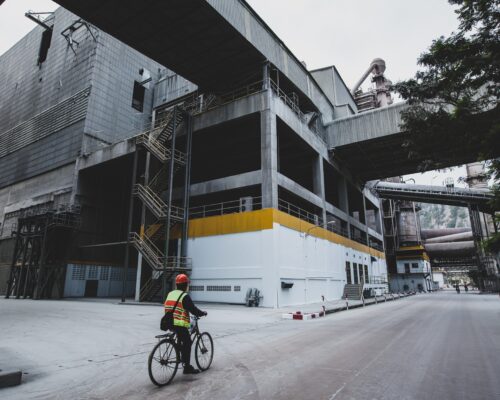
Photo: Matheus Câmara da Silva / Unsplash
06 October 2026 – by Arilson Favareto and Carolina Marcal dos Santos
As the global ecological transition increases demand for low-carbon food, energy and raw materials, producing countries face the challenge of expanding supply sustainably, reconciling emissions reductions, ecosystem protection, and more competitive and resilient supply chains.
A new study on Brazil shows that addressing this challenge may be more economically advantageous than maintaining current production trajectories. Prepared by the Brazilian Center for Analysis and Planning (Cebrap) and ClimaInfo, the research jointly analyses the energy and agri-food transitions and identifies pathways to combine decarbonization, productive modernisation, environmental regeneration and greater competitiveness. In Brazil’s agri-food system, the systemic costs associated with the current model, including operating costs, environmental degradation, ecosystem losses, health impacts and climate vulnerability, are estimated at between US$410 billion and US$526 billion per year, while the cumulative investments required for its structural transformation are estimated at between US$268 billion and US$511 billion through 2050. In the energy sector, current systemic costs reach US$300 billion to US$428 billion per year, while estimated investments for the energy transition range from US$597 billion to US$915 billion through 2050. The investments required to enable the ecological transition through 2050 represent approximately 6.8%-7.4% of Brazil’s 2025 GDP. In 2025, Brazil’s GDP was BRL 12.7 trillion.
Other key findings from the analysis include:
- The ecological transition represents a strategic opportunity to reposition the Brazilian economy in an international context marked by decarbonization, the reorganisation of production chains and the growing value placed on environmental assets. Its benefits, however, will depend on the institutional and policy choices made over the coming decades, especially the ability to combine economic competitiveness, environmental conservation and social inclusion.
- The ecological transition needs to be planned systemically. In Brazil, the energy and agri-food systems share resources, production chains and territorial dynamics. Decisions on bioenergy, food production, land use, biodiversity and critical minerals have simultaneous effects on economic growth, energy and food security, competitiveness and sustainability.
- The cost of inaction tends to exceed the cost of the transition. Maintaining the current model increases Brazil’s exposure to extreme climate events, environmental degradation, loss of agricultural productivity, higher production costs, conflicts over land and water use, trade barriers, energy insecurity, and climate and geopolitical risks. Delaying the transition therefore entails progressively higher ecological, economic, social and fiscal costs.
- The systemic costs of the current agri-food system are higher than those of the energy system, particularly when its hidden costs are taken into account. Biodiversity loss, soil degradation, water contamination, greenhouse gas emissions, health impacts, climate vulnerability and dependence on imported inputs already impose high costs on the economy and reduce the resilience and competitiveness of Brazilian agriculture.
- Transforming the agri-food system may require less investment than transforming the energy system, while offering significant economic, environmental and social benefits. Restoring degraded pastures, integrated production systems, ecological restoration, biological inputs, regenerative agriculture and traceability can simultaneously help reduce emissions, increase productivity, strengthen food security and enhance international competitiveness.
- The scenarios analysed indicate that a moderately ambitious transition pathway is technically feasible and financially viable for Brazil. This pathway combines decarbonization, productive modernisation, environmental restoration and the strengthening of national capabilities, without assuming an abrupt elimination of fossil fuels or an immediate break with the existing production structure.
- The ecological transition is already under way, but it will not automatically be fair or sustainable. Without coordinated investment and stronger institutional capabilities, there is a risk of consolidating a ‘green neo-extractivism’ in which new activities associated with decarbonization reproduce historical patterns of primary-export specialisation, income concentration and pressure on ecosystems and territories.
- Distributive justice and social participation are conditions for the sustainability of the transition. The distribution of costs and benefits, the protection of workers and vulnerable communities, the strengthening of sustainable production practices, territorial planning and social participation need to be incorporated into transition policies to ensure legitimacy and long-term sustainability.
- The ecological transition should be treated as a development agenda, not merely a climate agenda. It offers opportunities to diversify the production structure, add value to economic chains, strengthen the bioeconomy, develop new industrial and technological capabilities, increase international competitiveness and reduce structural vulnerabilities in the Brazilian economy.
- The main policy choice is whether to guide the transition or allow it to be determined in a fragmented way by market dynamics. An integrated energy and agri-food transition strategy can reduce future risks, avoid the growing costs of inaction and build a more resilient, competitive and socially inclusive development pathway.
The Ecological Transition Needs to be Planned Systemically.
The study proposes an integrated interpretation of Brazil’s ecological transition, organised around two central dimensions: the energy transition and the transformation of the agri-food system. Although these agendas are often treated separately, they are deeply interdependent. The central role of biomass in the energy mix, competition over land use, dependence on inputs and shared production chains mean that changes in one of these systems have direct effects on the other. In the Brazilian context, this interdependence is particularly relevant: land use and agricultural activities account for most national emissions, while the expansion of energy solutions such as biofuels depends directly on agricultural production, land availability and territorial land-use dynamics.
Data from the Greenhouse Gas Emissions and Removal Estimating System (SEEG), coordinated by the Climate Observatory, indicate that in 2024 land-use change accounted for approximately 42% of national emissions, while agriculture accounted for around 29%. Together, these two sectors represented approximately 71% of Brazil’s emissions. The energy sector, in turn, accounted for around 19.7% of national emissions. These data show that a climate strategy focused exclusively on decarbonising the energy system would be insufficient to address the structure of Brazil’s emissions.
A fragmented approach to these agendas can produce at least three major misalignments that may be reflected in public policies and should be avoided:
1. Energy transition and the agri-food system: decarbonisation strategies that depend on expanding biomass and biofuels may increase competition over land use and create new pressures on agri-food systems and territories.
2. Decarbonisation and biodiversity: reducing emissions should not be treated as the sole indicator of sustainability. Low-carbon technologies and activities can affect biodiversity, water, ecosystems and territories if implemented without adequate social and environmental safeguards.
3. Ecological transition and social justice: the costs and benefits associated with new technologies, investments and production models may be distributed unevenly. Without protection and participation mechanisms, the transition may reproduce or deepen existing inequalities, disproportionately affecting workers, vulnerable communities and territories already facing environmental pressures.
The ecological dimension of the interdependencies involving these three factors is crucial for assessing the quality of the transition underway. Agricultural expansion, energy infrastructure and intensified mining create overlapping pressures on fragile ecosystems, particularly in biomes such as the Amazon and the Cerrado. The literature on planetary boundaries indicates that the stability of the Earth system depends on respecting multiple biophysical limits, suggesting that decarbonisation is not automatically synonymous with sustainability. Solutions aimed at reducing emissions may simultaneously contribute to biodiversity erosion or the depletion of other resources such as water.
The study’s central contribution is therefore to broaden the debate on Brazil’s ecological transition beyond a sectoral or predominantly technological approach, incorporating its economic, ecological, territorial and political dimensions. The challenge is not limited to identifying technologies capable of reducing emissions or mobilising the resources needed to finance them. It is about guiding a structural transformation capable of responding to the climate crisis while addressing historical constraints on Brazilian development, such as dependence on primary export activities, territorial inequalities, income concentration and pressure on natural resources.
In this sense, the study indicates that harnessing Brazil’s transition potential requires greater coordination among energy, agri-food, industrial and environmental policies. This coordination can allow decarbonisation to be accompanied by productive modernisation, ecosystem regeneration, reduced inequalities and the development of new economic activities, preventing the transition from reproducing patterns of dependence and vulnerability in the current development model.
The Ecological Transition as a Development Agenda and a Strategy to Reposition the Brazilian Economy Internationally
More than a response to the climate crisis, the ecological transition should be treated as a development agenda, as it represents an opportunity to diversify the production structure, add value to economic chains, strengthen the bioeconomy, increase international competitiveness and reduce the structural vulnerabilities of the Brazilian economy.
The ability to combine productive expansion, environmental integrity and compliance with social and environmental requirements is likely to become increasingly strategic for Brazil’s participation in global value chains. As major consumer markets raise their environmental requirements, traceability and deforestation-free production cease to be merely voluntary commitments and become relevant factors for market access and the competitiveness of Brazilian commodities.
The European Union Deforestation Regulation (EUDR) establishes requirements for commodities such as soy, cattle, coffee, cocoa, palm oil, rubber and wood. The rules begin to apply to large and medium-sized companies on December 30, 2026 and, generally, to micro and small enterprises on June 30, 2027. In this context, the report itself notes that growing international pressure for deforestation-free supply chains has encouraged traceability and certification mechanisms, potentially expanding access to higher-value markets, although it also entails adaptation costs, especially for smaller-scale producers.
This dynamic is not limited to the European market. Asia is a strategic destination for Brazilian exports: its countries accounted for more than 30% of Brazil’s exports in 2025, with soy, iron ore and oil accounting for approximately 59% of this flow.
At the same time, recent studies point to the strengthening of environmental governance standards and mechanisms in major Asian economies, including through the incorporation of environmental requirements into trade and the emergence of sustainability standards associated with global value chains.
In Brazil, however, the consolidation of environmental protection mechanisms in production chains remains subject to political and regulatory disputes. The Soy Moratorium, created in 2006 to restrict purchases of soy produced in areas of the Amazon deforested after July 2008, faced renewed pressure in 2026 after state-level measures discouraged companies from participating in the agreement. In August, Brazil’s Federal Supreme Court upheld these state laws while also recognising the constitutionality of the voluntary pact.
This context reinforces a central issue for Brazilian economic policy: environmental protection and the ability to demonstrate social and environmental compliance are becoming components of international competitiveness itself. Traceability, deforestation control and supply-chain integrity can help preserve and expand market access, while failure to meet rising environmental standards may generate adaptation costs, trade barriers and loss of competitiveness. For Brazil, the challenge is therefore to turn its environmental assets and productive capacity into a long-term competitive advantage, reconciling production growth, environmental conservation and strategic participation in new global value chains.
A World in Transformation: Geopolitics, Strategic Resources and New Production Chains
The ecological transition does not take place in a geopolitical vacuum. It is unfolding in an international context marked by instability, disputes over strategic resources and the reorganisation of global production chains. In 2025, oil and soy together accounted for around 25% of Brazilian exports, underscoring the importance of energy and agri-food commodities to the country’s participation in international trade. While this position represents an important source of revenue and foreign exchange, it also exposes the Brazilian economy to fluctuations in international markets and to the transformations accompanying the ecological transition.
Energy remains at the centre of geopolitical disputes. More than a commodity, oil is a strategic asset, and wars, conflicts and disputes over control of territories and energy routes continue to affect prices and global energy security. For Brazil, this reality has a dual implication: although the country is a major oil producer and exporter, its economy remains exposed to volatility in international energy markets and dependence on imported inputs. Agribusiness is a particularly relevant example, as diesel, fertiliser, and transport costs are sensitive to shocks in international energy prices. In 2025, for example, fertilisers were the country’s second most imported product, behind only petroleum and bituminous minerals.
All of this suggests that the ecological transition can help reduce external vulnerabilities and strengthen the country’s sovereignty and energy security, while opening new opportunities for competitiveness and economic diversification. The transition should therefore be understood not only as a climate agenda, but also as an agenda for sovereignty, energy security and economic development.
The energy dimension is increasingly joined by the mineral dimension. The contemporary energy transition is materials-intensive, especially in minerals such as lithium, copper, nickel, graphite and rare earths, which are essential for batteries, electric vehicles, transmission grids and renewable generation technologies. According to the International Energy Agency (IEA), 85% of the growth in demand for these minerals between 2022 and 2024 was driven by energy-related applications, including electric vehicles, batteries, solar panels and grid expansion (IEA, 2025). The agency’s projections point to significant growth in demand for these inputs over the coming decades.
Because of its geological endowment, Brazil has significant reserves of some of these minerals, which could expand its role in the transition’s new economic geography. This opportunity, however, brings new challenges. Mining expansion may increase pressure on ecosystems, water resources and local populations, making the territorial dimension of the transition even more complex. Turning this mineral endowment into an economic advantage will therefore require not only expanding the supply of strategic resources, but also developing higher-value-added production chains and establishing social and environmental safeguards capable of ensuring that the economic benefits of the transition are not accompanied by the reproduction of patterns of environmental degradation and territorial inequality.
Arilson Favareto is a Sociologist and a Full Professor at the Josué de Castro Chair/USP and the Federal University of ABC. Researcher at Cebrap’s Center for Research on Environment, Development and Sustainability and Center for Critical Imagination; and Carolina Marçal dos Santos is an Environmental Manager and the Project Coordinator at Instituto ClimaInfo.
CEBRAP is a Brazilian research institution dedicated to producing knowledge, analysing social, economic and political issues and also working in applied research and public policy.
ClimaInfo is a nonprofit organisation specialising in the production and dissemination of information, analyses and studies on climate, energy and policies to address climate change.
Disclaimer: The views and opinions expressed in this article are those of the author and do not necessarily reflect the official policy or position of Energy Tracker Asia.
Our Publications