Asia Reassesses LNG Reliance After Six Months of Hormuz Disruption
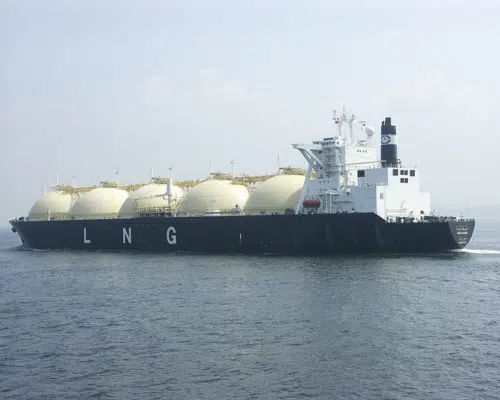
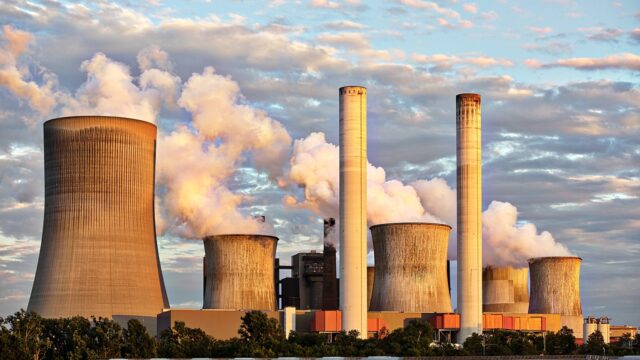
Photo: Ian Simmonds / Unsplash
14 September 2026 – by Wendy Lo
When energy planners across Asia assessed the risks of LNG dependence, a major geopolitical supply disruption was often treated as a tail risk. Six months of disruption around the Strait of Hormuz have changed that. It has exposed the supply, price and currency risks embedded in Asia’s growing reliance on imported gas.
Asian LNG demand fell 3% year on year in the first eight months of 2026, following a 5% decline in 2025 and marking a second consecutive annual contraction, according to data from the Institute for Energy Economics and Financial Analysis (IEEFA).
LNG’s Price Shock Exposes the Cost Gap
LNG prices have more than doubled since the conflict began, reaching USD 23 per mmBtu, according to IEEFA analysis. At that level, a single cargo costs about USD 84 million. Running 1 GW of LNG-fired power at baseload levels requires more than USD 1 billion in fuel each year, translating into generation costs of around USD 212 per MWh. By comparison, the global average cost of solar power is about USD 40 per MWh.
Repeated geopolitical shocks are also changing how governments assess gas security, according to Sam Reynolds, Research Lead for LNG and Gas Asia at IEEFA, who spoke at a media briefing ahead of Gastech 2026 in Bangkok. He said the Russia-Ukraine war could be seen as an isolated shock, but the Iran conflict suggested a broader pattern that Asian governments are now factoring into energy planning.
For emerging LNG markets including Thailand, the Philippines, Vietnam, Bangladesh and Pakistan, the shock is being transmitted through several channels at once. LNG is priced in US dollars, while many of these economies hold limited foreign exchange reserves, Reynolds noted. Currency depreciation therefore amplifies already higher import costs, increasing pressure on both utilities and government finances.

Source: Sam Reynolds, IEEFA.
Higher Gas Prices Spill Into Currencies and Public Finances
Higher LNG import costs can quickly spread through the wider economy. Jayant Menon, Visiting Senior Fellow at ISEAS-Yusof Ishak Institute and former Lead Economist at the Asian Development Bank, said they can worsen countries’ terms of trade and balance-of-payments positions. This can prompt governments to draw down reserves or increase subsidies. These responses can widen budget deficits and add further pressure on interest rates and currencies.
In the Philippines, interest rates have been raised multiple times since the conflict began, while the peso has weakened to 62.5 against the US dollar, Menon said.
The policy dilemma is that governments are increasing subsidies for LNG and other fossil fuels to cushion the price shock even as they pursue the green transition. Menon said these measures could further widen budget deficits and intensify existing fiscal pressures.
New Gas Projects Hit a Financing and Supply Chain Wall
The disruption is also exposing structural weaknesses in LNG-to-power development. Gas turbine lead times have stretched to six years. Capital costs have nearly tripled in four years to almost USD 3,000 per kilowatt, according to data from NextEra, GE Vernova and BNEF cited by Reynolds. Across Southeast Asia, only 20% of gas capacity planned for 2030 has secured turbines, according to Wood Mackenzie.

Source: Sam Reynolds, IEEFA
IEEFA estimates that 47 proposed LNG-fired power projects worth USD 52 billion have been cancelled, withdrawn, or made no progress over the past five years in Bangladesh, the Philippines, Thailand and Vietnam. Of 91 projects assessed, only 11% of planned capacity were successfully brought online.
One of the clearest recent examples is a 4.8 GW project in Vietnam. It had secured both priority status under the country’s Power Development Plan and access to gas turbines, but the developer withdrew after the Iran conflict made the project’s fuel-import requirements and exposure to US dollar costs increasingly difficult to justify, Reynolds said.
Asia Starts Recalculating the Role of Gas
Policy responses are already emerging across the region. The contraction in Asian gas imports is now reshaping national power development plans, Reynolds said. Vietnam’s solar expansion has contributed to a 60% decline in gas generation, according to IEEFA. Pakistan has said it will no longer build LNG-fired power plants. Thailand’s draft power development plan targets up to 89% clean power capacity by 2050. It cites turbine shortages as one reason to avoid adding new gas plants over the next decade.
Financial markets have yet to fully reflect these risks, according to Arun Kumar, Strategic Advisor at Asia Research and Engagement. Independent estimates suggest USD 400 billion in committed LNG investment could face stranding. Some 250 to 300 MTPA (million tonnes per annum) of capacity could be underutilized by 2030, he said.
Six months of Hormuz disruption have subjected long-standing views about LNG regarding security and reliability to a real-world test. “As a policymaker,” Reynolds said, “am I really going to hitch my country’s energy sector development plans to this absolute rollercoaster of a fuel?”
by Wendy Lo
Wendy Lo is a journalist covering renewable energy and industrial decarbonization across the Asia-Pacific. Her reporting examines the policies and market dynamics shaping the region’s energy transition.
Read moreOur Publications