Can Untapped Rooftop Solar Energy Help the Power-stressed Visayas?
20 July 2026 – by Viktor Tachev
The Philippines Visayas region’s electricity network has been under intense strain since mid-May, with the Philippines’ grid operator repeatedly issuing alerts that power reserves are running dangerously low. During the “red alert” warnings, the available power supply is insufficient to meet demand, triggering rotational outages and reductions in power for residents and businesses.
The power interruptions have taken a heavy toll on the services sector, which drives up to 70% of the Visayas economy, and caused significant operational disruptions for health facilities and communication networks.
This regional crisis unfolds against the backdrop of broader national energy issues caused by the outbreak of war in Iran and the subsequent largest energy supply disruption in history. In March 2026, Philippine President Ferdinand Marcos Jr. declared a national energy emergency due to the strain on the country’s overall fuel and power supplies.
Potential of Solar Energy in the Visayas, Philippines
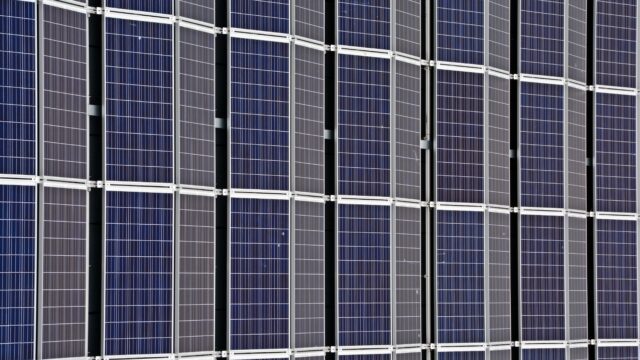
One solution may lie in the region’s abundant sunshine. The Institute for Climate and Sustainable Cities (ICSC), a Philippines-based climate and energy policy group, highlights substantial untapped rooftop solar potential. Across the Visayas, this underutilised resource is estimated at over 646 megawatts (MW), comprising 80.21 MW for residential buildings, 38.12 MW for commercial properties, and 527.72 MW utility-scale development.
Rooftop Solar Installations, Battery Storage and other Renewable Energy Projects
Accelerating the deployment of rooftop solar and battery storage can ease grid strain during peak hours and provide communities with a vital source of backup power during supply disruptions. A more decentralised energy system, which distributes power generation across local networks rather than relying entirely on a single power grid, could also increase resilience in the face of shocks.
This resilience was proven during the 6.9-magnitude Bogo City earthquake in September 2025. While blackouts crippled most of the regional grid, the municipalities of Guiuan and Paranas maintained essential communication and charging services through their pioneering rooftop solar installations. Expanding decentralised networks could be an important way to safeguard communities in the face of the Philippines’ exposure as the 10th most vulnerable country to extreme weather events in the past 30 years.
Yet, the Philippines continues to underutilise its rooftop space. Data from the ICSC’s SPECTRUM mapping platform reveals that current solar penetration accounts for just 0.5% of the nation’s estimated 106,172 MW potential. Fully unlocking this capacity could help shield consumers from blackouts and prevent millions of tonnes of carbon emissions, as well as helping to provide clean electricity access to the 11 million Filipinos who still live without power.
No End in Sight for the Visayas’ Energy Crisis
With the National Grid Corporation of the Philippines warning that grid disruptions could persist until August, there is no immediate end in sight for the Visayas’ energy crisis. The vulnerability of the current system is stark: Of the 30 coal power plants in the region, over one-third have been offline at various points this month. Meanwhile, the Department of Energy has warned that the ongoing grid alerts could raise household power bills.
Addressing these chronic power issues over the longer term may depend on how authorities manage existing barriers to new power generation. Currently, energy developers face limited grid connection points, complex financing terms and lengthy administrative processes, with mandatory grid impact studies taking up to two years to complete.
Against the backdrop of a volatile global fuel market and the ongoing national energy emergency, the ICSC argues that “building resilience through distributed energy solutions is no longer just an environmental option, but an energy security necessity”. It is a sentiment likely shared by consumers across the Visayas, whose immediate concern remains keeping the lights on.
by Viktor Tachev
Viktor has years of experience in financial markets and energy finance, working as a marketing consultant and content creator for leading institutions, NGOs, and tech startups. He is a regular contributor to knowledge hubs and magazines, tackling the latest trends in sustainability and green energy.
Read moreOur Publications