Amid Global Electrification Push, Bangladesh Highlights Need for Solar in Developing Countries
23 September 2026 – by Wendy Lo
As world leaders gathered at the United Nations General Assembly (UNGA) this week, discussions on the energy sector are focused on two key imperatives – electrifying the economy more quickly and reducing its reliance on fossil fuels.
Bangladesh, whose Foreign Minister Khalilur Rahman is presiding over the UNGA session, offers a striking example of the needs – and challenges – of implementing these policies in developing economies. The country is heavily reliant on imported fossil fuels, whose prices have gyrated this year, to meet rising demand. Increasing renewable production and updating the grid is a key solution but, like in many emerging markets, still faces financing hurdles in the short term.
The issue was put firmly on the agenda on Monday, when the Turkish COP31 Presidency launched the “35-by-35 Global Electrification Pledge” at UN Headquarters, setting a global ambition to raise electricity’s share of final energy demand from roughly 20% today to 35% by 2035.
The push comes as falling renewable energy costs strengthen the case for electrification in fossil fuel-importing economies. A report from the International Renewable Energy Agency (IRENA) says electricity’s share of global final energy consumption needs to rise from 23% in 2023 to around 30% by 2030. IRENA estimates that renewable generation avoided USD 480 billion in fossil fuel costs globally in 2025, helping importing countries reduce their exposure to fuel price shocks.
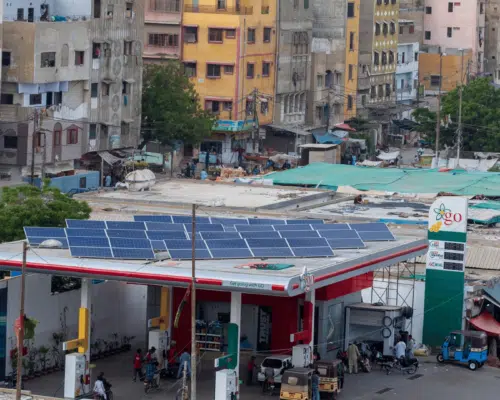
Bangladesh has begun taking steps in that direction. In September, the government introduced new tax incentives and low-cost financing for solar as disruptions to LNG supplies exposed the risks of its dependence on imported fossil fuels.
Bangladesh Targets Solar Costs and Financing
In its FY2026-27 budget, the government removed import duties on solar panels, inverters, lithium-iron batteries, battery housing and mounting structures until 2031. In September, the National Board of Revenue went further, reducing the remaining tax burden on solar equipment imports to 1% for commercial importers. Those taxes had previously totalled 17%, reaching as high as 58.6% for some equipment categories.
Alongside efforts to lower equipment costs, the government is also targeting financing barriers. The finance ministry established a USD 122.42 million (BDK 15 billion) fund to provide low-cost loans for household, institutional and industrial solar installations.
Renewables accounted for just over 5% of Bangladesh’s power mix in 2025, with 1.49 GW of installed capacity. Reaching the government’s target of 20% renewables in the electricity mix by 2030 would require around 760 MW of new capacity each year, according to Zero Carbon Analytics (ZCA). As of February 2026, only 358 MW of renewable projects were under construction.
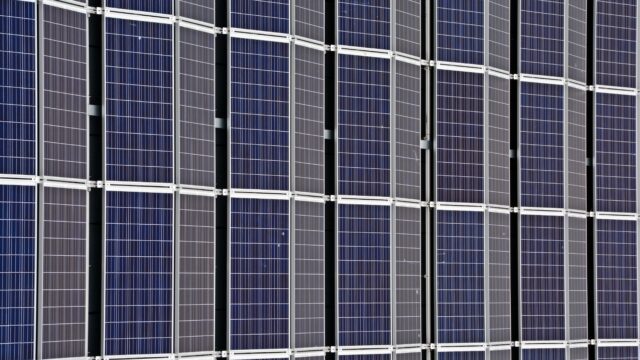
ZCA estimates that the additional USD 2.8 billion Bangladesh could spend on fossil fuel imports in 2026 is equivalent to the cost of installing around 8 GW of rooftop solar, enough to increase the country’s generation capacity by 25%.
That trade-off has become more pressing as Bangladesh’s dependence on imported LNG has collided with one of the most severe supply disruptions in recent years.
LNG crisis exposes the risks of import dependence
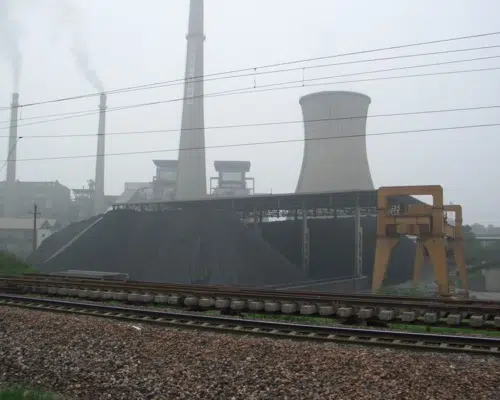
Gas accounts for around 64% of Bangladesh’s electricity generation, according to Ember, while data from the International Energy Agency (IEA) shows that nearly two-thirds of the country’s LNG supply passed through the Strait of Hormuz in 2025.
The impact on the power system has been severe. On 11 August, the gap between electricity supply and demand reached 3,592 MW, equivalent to roughly 20% of demand at the time. Rural areas outside Dhaka have faced outages lasting eight to 10 hours a day.
The government’s immediate response has largely focused on securing more LNG. It approved two cargoes from BP Singapore for August and September and procured another eight from companies in the UK, Australia, Malaysia and Oman through direct procurement. Bangladesh has also signed a long-term agreement to purchase 117 LNG cargoes from the US between 2026 and 2038.
ZCA analysts warn that further reliance on LNG could deepen the country’s exposure to imported fuel prices and supply disruptions, risks already highlighted by the current crisis.
Bangladesh faces a steeper path to electrification
The 35-by-35 pledge acknowledges “different national circumstances and pathways” and calls for greater access to finance and support for developing countries. Bangladesh illustrates how dependence on imported fossil fuels can complicate the shift to electrification.
Across Southeast Asia, governments are taking different approaches to clean electrification. Both Singapore and the Philippines have joined Electrify Now, a coalition launched in June to build practical cooperation on clean electrification in support of the broader 35-by-35 goal.
But IRENA says developing economies continue to lag in the transition, despite renewables becoming the most cost-competitive source of new electricity in most markets. High financing costs remain a key barrier, with country-level risks and financing conditions accounting for around 56% of the variation in renewable financing costs, more than twice the share attributable to technology.
Grid investment presents another challenge. The IEA estimates that three-quarters of the increase in grid capacity needed globally through 2035 will be in emerging markets and developing economies. Growing deployment of rooftop solar and other distributed resources will also require distribution networks to handle increasingly complex two-way electricity flows.
For Bangladesh, lower equipment costs and concessional lending address part of these barriers. Scaling up renewables at the pace required to meet its targets will also depend on affordable capital and sufficient grid investment.
by Wendy Lo
Wendy Lo is a journalist covering renewable energy and industrial decarbonization across the Asia-Pacific. Her reporting examines the policies and market dynamics shaping the region’s energy transition.
Read moreOur Publications