Bangladesh’s Textile Industry: The Engine Behind Solar Power Push
07 July 2026 – by Viktor Tachev
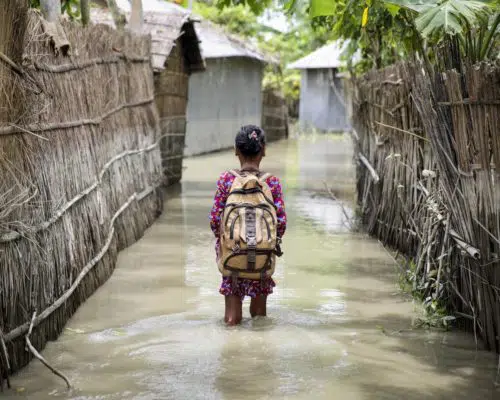
Bangladesh’s ready-made garments (RMG) and textile industry have been driving its transition from one of the poorest nations after its independence in 1971 to averaging 6% annual GDP growth. Today, it accounts for 8% of nominal GDP and 83% of total export earnings. However, the second fossil fuel crisis in five years is putting many of the roughly 3,500 garment and textile factories, which employ around 4 million workers nationwide, to the test.
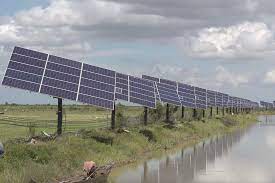
Bangladesh’s textile industry is experiencing major difficulties due to energy shortages and rising power costs, with many factories suffering operational disruptions and facing an uncertain future. Those that continue to do business as usual have one thing in common: They have invested in solar power systems. Their successful strategy has led industry officials to declare solar power a matter of survival for Bangladesh’s RMG and textile industry.
Bangladesh Garment Manufacturers and Exporters Association Are Pushing For Support For Solar Uptake
According to industry officials, Bangladesh’s dependence on unreliable fossil fuel imports is incurring high costs for the RMG industry, eroding its margins and making products more expensive, ultimately reducing its competitiveness.
Following the energy crisis triggered by the US-Iran war, which has caused a 30% drop in production capacity in industrial hubs across the country, the Bangladesh Garment Manufacturers and Exporters Association (BGMEA) urged the government to prioritise diesel supplies to keep factories running. However, even factories with diesel generators have complained of fuel supply shortages and high power costs.
Critical to the Survival of Garment Industry and Bangladesh’s Economy
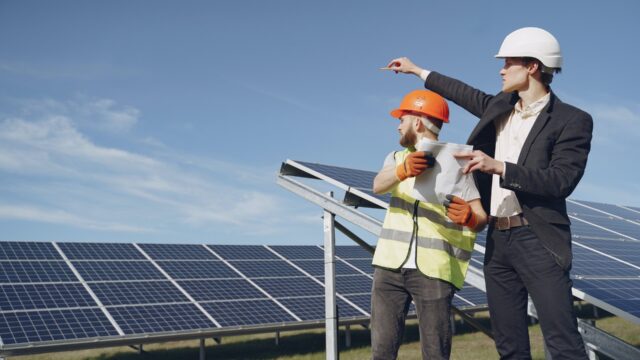
Industry representatives say that adopting renewables can prove critical to the survival of Bangladesh’s RMG sector. As evidenced by the ongoing energy crisis, during power shortages, factories equipped with solar installations are avoiding business disruptions and securing more export orders to markets.
During the first meeting of the Advisory Council on Private Sector Development in April, business community representatives urged the prime minister to accelerate key economic reforms and policy support to expand the use of renewables, particularly solar power, and reduce fossil fuel import dependence.
Solar Power as a Way to Improve Bangladeshi Businesses’ Global Competitiveness
Factory operators who have installed solar-powered systems note that the steep initial investment is paying off in the current environment. Importantly, when output exceeds demand, surplus electricity flows back to the grid under a net metering arrangement, trimming the company’s electricity bills. According to experts, companies that invested in solar energy and are now seeing their dividends return can spur others to follow suit and pursue the green transformation.
Furthermore, transitioning to cleaner energy is also a strategic business imperative. The EU, the largest export market for the Bangladesh RMG industry and textile sector, is tightening environmental standards and increasingly prioritising greener supply chains.
Government Support Critical For Easing Solar Uptake
According to business leaders, preserving the sector’s competitiveness requires urgent measures to allow RMG hubs to sign long-term power purchase agreements with solar and wind developers and modernise the grid to accommodate variable renewable generation.
Experts also call for immediate fiscal support to encourage RMG and textile factories to invest in solar. While the government has reduced import duties on solar panels and inverters to 1%, mounting structures still face a 58.6% duty, and battery storage remains heavily taxed. According to manufacturers, even a temporary reduction in the duty on industry-grade lithium batteries for just two to three years would enable factories to replace diesel generators and help the government save foreign currency by cutting fuel imports.
Furthermore, moving toward an open-access renewable energy market can help factories improve their sustainability credentials for Western partners, cut operational costs and position themselves for business expansion.
Following the examples of other regional peers, Bangladesh’s energy regulatory commission is finalising the details of its open-access system. Once the grid charges and rules are finalised, corporate buyers, such as RMG manufacturers and textile companies with GHG emission reduction targets would be able to purchase renewable electricity directly from solar or wind power plants. According to industry officials, this would allow a mid-sized factory to offset between 10% and 15% of its electricity demand through rooftop solar alone, while off-site generation could take that to 50%, 70% or more.
Solar Key to the Future of Bangladesh’s Readymade Garment and Textile Industry
To stimulate rooftop solar system adoption across factories, BGMEA announced a set of financial support and service incentives. The measures include a soft loan at a 5.5% interest rate for rooftop solar installations to ease the investment burden on factory owners, and a 50% waiver of BGMEA’s service fees for member factories that commit to installing solar systems within three months.
According to the president of the BGMEA, Mahmud Hasan Khan, many businesses have already avoided the worst of the current energy crisis by using solar power. While the expert welcomed the government’s plan to expand solar generation, he warned that it must be matched by a genuine policy commitment to make renewable energy commercially viable for producers.
At the end of the day, scaling up clean energy isn’t just a sectoral necessity, but a lifeline for Bangladesh’s most vital sector. Rooftop solar has emerged as a practical, affordable and readily deployable solution. The next step is taking advantage of it.
by Viktor Tachev
Viktor has years of experience in financial markets and energy finance, working as a marketing consultant and content creator for leading institutions, NGOs, and tech startups. He is a regular contributor to knowledge hubs and magazines, tackling the latest trends in sustainability and green energy.
Read moreOur Publications