What is China Doing in Bangladesh? Solar Revolution
30 June 2026 – by Viktor Tachev
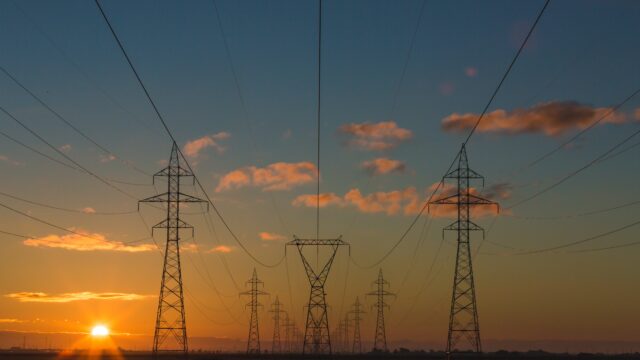
Bangladesh plans to deploy up to 10,000 MW of solar capacity by 2030 through public-private partnerships (PPPs) to ease the economic impact of costly fossil fuel imports. Success depends on overcoming existing barriers, such as making projects bankable, scaling up foreign investment and finding the right partners to source low-cost equipment, ensure policy development assistance and access know-how. China has already declared its readiness to ensure all that, but Bangladesh should first improve its market fundamentals and de-risk projects for investors and developers.
The Ambitious Solar Power Plans of Bangladesh’s Government
Bangladesh’s Renewable Energy Policy 2025 targets at least 20% of electricity generation from renewables by 2030 and 30% by 2041, with a focus on solar.
In a bid to attract foreign investments, Bangladeshi authorities are opening government land to public and private investors and have declared their readiness to take an equity stake, while companies have to bring capital and technology.
For the upcoming solar energy policy, due in June, authorities plan to introduce tax holidays and duty-free imports of solar equipment, similar to Pakistan. A new battery energy storage system policy has also been announced, with incentives expected for 5-10 MW industrial-scale systems.
Furthermore, solar panels are being installed across public infrastructure, including in all deputy commissioner offices and educational institutions, with plans for commercial and residential rooftop system installations in cities also in the works.
Luring Clean Energy Investors to Bangladesh’s Market Can Prove Challenging
Generating 10,000 MW of renewable electricity by 2030 is estimated to require around USD 9.36 billion in investment. However, scaling up that financing can prove challenging, as Bangladesh continues to struggle to ensure project bankability and provide investor guarantees.
Furthermore, Bangladesh’s government’s cancellation of the letters of intent for 31 renewable energy projects has significantly undermined investors’ confidence. The projects totalled around 5,680 MW of capacity and USD 6 billion in potential investment, with USD 300 million in banking financing already committed and 15 companies having purchased land.
Today, Bangladesh lags behind regional peers in terms of clean energy market investment attractiveness. In 2025, it ranked 69th among all emerging markets and 21st in APAC in Bloomberg’s Global Climatescope. For reference, in 2022, it ranked 13th among all emerging markets. The fall aligns with experts’ findings that, over the years, Bangladesh’s power purchase agreements (PPAs) have progressively deteriorated in terms of investor protection.
China’s Belt and Road Initiative and the Bangladesh’s Solar Power Revolution
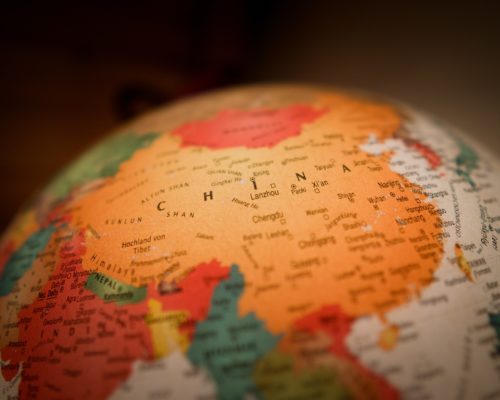
Under its Belt and Road Initiative, China and its banks have been actively supporting solar, wind and grid modernisation projects, while Chinese companies have been investing in and designing flagship projects, including the Mymensingh PV power station and the Cox’s Bazar wind farm, Bangladesh’s first utility-scale wind project.
Furthermore, Chinese companies dominate the supply chain for Bangladesh’s solar home systems and mini-grids, and have helped advance both utility-scale and industrial solar adoption with battery storage.
In total, Chinese investors account for over 50% of total foreign direct investment in Bangladesh’s renewable energy sector and will be integral to achieving the latter’s ambitious 2030 targets. This was echoed by Kayser Kamal, deputy speaker of the National Parliament of Bangladesh, during the China-South Asia Expo in June, who noted that his country needed Chinese assistance in sectors like energy and solar equipment.
China is willing to answer these calls. During the Fourth Bangladesh-China Renewable Energy Forum, held in April, both countries expressed willingness to collaborate on developing Bangladesh’s clean energy sector, with Ambassador Yao Wen declaring China’s readiness to share its “full industrial chain experience in clean energy, deepen cooperation in policy coordination, industrial collaboration, investment and financing”. He reaffirmed China’s readiness to assist by scaling up preferential financial support for key renewable energy projects through diversified channels. However, he warned that if Bangladesh were to make the current energy crisis a thing of the past, it would need “a systematic solution”.
Throughout the forum, experts noted that the current energy crisis might ease but won’t end without a decisive shift to renewable energy, necessitating that Bangladesh follow what it called the 3 Fs and 3 Rs, Fallen Fossil Fuel and Rising Resilient Renewables. Authorities highlighted recommendations to fast track the 10,000 MW renewable energy target and mobilise Chinese technology, investment and expertise, including reforms to approvals, procurement and PPA frameworks, as well as dedicated budgetary and financing support for the green energy transition.
During the Bangladesh Prime Minister Tarique Rahman’s visit to China between June 23rd and 26th, the two countries announced a “new era” in their relationship. In a joint communique, the two sides agreed to strengthen cooperation in various areas, including green energy, PV technology, disaster prevention and mitigation, and addressing climate change. Chinese companies also expressed interest in investing in Bangladeshi roads, railways, bridges, green energy, digital technology and industrial infrastructure. Furthermore, both sides agreed to explore options for regional connectivity, including a direct connection between China and Bangladesh.
A day before Rahman’s official trip to China, a Bangladeshi delegation visited Malaysia to invite Malaysian companies to invest in Bangladesh’s energy sector, including oil and gas exploration in the Bay of Bengal. According to the Ministry of Foreign Affairs, other points of discussion included extraction of untapped minerals such as coal and limestone, and the country’s renewable energy transition.
Capitalising on Bangladesh’s Strong Ties With China Remains Critical For Achieving Its Renewable Energy Targets
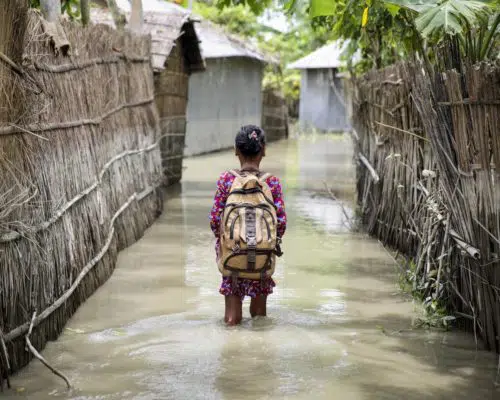
Last year, Bangladesh and China celebrated 50 years of diplomatic partnership. The latter is leading the global clean energy transition, green technology manufacturing and renewable energy project financing, while Bangladesh is among the countries suffering most from its reliance on fossil fuel imports and urgently needs to improve energy security and affordability.
The close ties between the two countries allow Bangladesh to capitalise on industry-leading renewable energy technology, establish local battery assembly facilities in partnership with Chinese companies and access know-how and capital. While China has announced its readiness to back Bangladesh through policy coordination, technology transfer and financing, the support won’t be unwavering. Instead, it would depend on Bangladesh’s willingness to back its targets with the necessary policy and structural market reforms.
by Viktor Tachev
Viktor has years of experience in financial markets and energy finance, working as a marketing consultant and content creator for leading institutions, NGOs, and tech startups. He is a regular contributor to knowledge hubs and magazines, tackling the latest trends in sustainability and green energy.
Read moreOur Publications