War in Middle East Threatens Bangladesh’s Energy Security
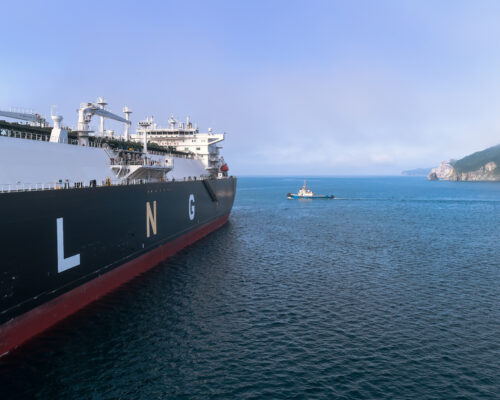
Photo: Shutterstock / Clare Louise Jackson
18 March 2026 – by Eyamin Sajid
The energy security of Bangladesh is under major threat once again as an escalated war in the Middle East disrupts the global gas supply through the Strait of Hormuz. The conflict poses a massive energy crisis for Bangladesh, as one-third of its total gas supply comes from Qatar and Oman in the form of liquefied natural gas (LNG).
The energy crisis is also expected to strain the South Asian nation’s financial resources as it buys fuel from an already volatile international market. A global fuel price hike will further drain Bangladesh’s foreign reserves, leaving the country with a heavy subsidy burden.
Meanwhile, the country has turned to the spot market to purchase LNG at expensive rates to keep the local gas supply at a tolerable level. The nation has not learned enough from the global energy crisis following the Russian invasion of Ukraine, when it was forced to stop buying LNG from the global open market due to price volatility.
To avoid future energy shocks, authorities should focus on diversifying the energy supply and developing renewable energy infrastructure to ensure stable prices and a reliable supply.
Businesses Worry as US-Iran War Prolongs
Currently, Bangladesh has a daily demand of 4,000 million cubic feet (mmcf) of gas, while the supply remains below 2,700 mmcf. Of the total supply, LNG accounts for 800 mmcf, according to data from the Bangladesh Oil, Gas and Mineral Corporation(Petrobangla).
As the war broke out and continued for two weeks, the Bangladesh government further reduced gas supplies as a precautionary measure.
“As a precaution, we have reduced gas supply by 150 mmcf to 200 mmcf compared to last month. With these measures, we will be able to keep the gas supply at a tolerable level,” said Md. Arfanul Hoque, Chairman of Petrobangla.
For the RMG (Ready-Made Garment) and textile industries, an uninterrupted gas supply is compulsory for operations, as textile machinery is predominantly gas-based. Factories use gas for captive power generation, spinning machines, and running steam boilers.
The reduced gas supply has significantly hurt the RMG sector, which accounts for over 80% of national exports. A lack of adequate supply and gas pressure disrupts production, resulting in “dual costs”—damaged raw materials and wasted energy.
Textile Industry of Bangladesh
Many textile mills have long suffered from low gas pressure. Production in some mills has dropped to just 30% to 40% of capacity solely due to the energy crisis. Combined with long-standing supply issues, US trade barriers have dealt a further blow to the industry. The sector saw 13.21% fall in exports in February compared to the previous month, according to Export Promotion Bureau (EPB) data.
“The volume of exports may fall further if the energy shortage persists for a prolonged period,” said Mahmud Hasan Khan, President of the Bangladesh Garment Manufacturers and Exporters Association (BGMEA).
For years, RMG factory owners used diesel as an alternative fuel for generators during gas shortages or grid interruptions. However, the scope for using diesel is now limited as the Bangladesh Petroleum Corporation (BPC) has set daily sales limits for filling stations.
“The biggest crisis for businesses in Bangladesh will be the fuel shortage. If the supply falls further, some companies will be unable to run their factories, which will ultimately impact exports,” said Mohammad Hatem, President of the Bangladesh Knitwear Manufacturers and Exporters Association (BKMEA).
Bangladesh’s Growing LNG Dependency
Until 2018, Bangladesh was completely dependent on domestic gas, though supply struggled to keep up with the energy-hungry industry, power plants, fertiliser factories, and household demand.
Before entering the expensive and volatile LNG regime, Bangladesh produced around 2700 million cubic feet (mmcf) of gas per day. Many power plants could not run at full capacity, and some fertiliser plants remained shut for months due to an actual supply gap of 800 mmcf.
Amid declining domestic production and industrial outcry, Bangladesh started importing LNG in August 2018, injecting 500 mmcf into the national gas grid. LNG supply capacity was expanded to 1,000 mmcf per day with the addition of a second regasification facility the following year.
Qatar and Oman found a long-term consumer in Bangladesh, as the country signed two separate Sales and Purchase Agreements (SPA) for 15 years and 10 years, respectively. Initially, shifting to LNG was seen as a blessing, scaling the total supply to over 3,200 mmcf per day. However, that benefit faded as domestic production continued to decline.
Bangladesh then began importing LNG cargoes from international spot markets in September 2020 to meet the growing demand from RMG industries and power plants. While these contracts slightly improved supply, Bangladesh’s reliance on LNG placed it under significant financial strain.
LNG Imports Drive Repeated Price Hikes
The fiscal impact of imported LNG is substantial. While it constitutes only about one-third of the total supply, it is far more expensive. Local gas production costs only Tk 3 per cubic meter, while imported LNG costs nearly Tk 55 per cubic meter—18 times higher.
Consequently, Bangladesh’s dependence on imported LNG has become a “white elephant” for its economy. To afford these costs, the government has increased gas tariffs several times over the last few years. The highest price hike occurred in January 2023, when tariffs were raised across different sectors by 14% to 179%.
This massive hike stunned industry owners. Despite this, authorities raised prices again—by 2.5% to 5.36% for the power sector and captive plants in February 2024, and by 33% for industries in April 2025.
Mounting Subsidy Burden
Repeated price hikes have still failed to cover the LNG import bill. Importing at high prices and distributing at lower rates has left a massive price gap that remains a liability for the state-run Petrobangla.
Between the start of LNG import in 2018 and 2025, the Bangladesh government spent Tk 35,215 crore on subsidies. This figure could rise further this fiscal year as global markets remain volatile following Middle East tensions. For the 2025-26 fiscal year, the initial subsidy allocation was Tk 6,000 crore, but Petrobangla has already proposed increasing this to Tk 26,000 crore to cope with rising costs.
Renewables as a Solution to Vulnerability
The energy crisis in Bangladesh peaks during the summer, when electricity demand jumps by 3,000MW due to temperature and irrigation. During this time, the authorities struggle to supply gas to both the industrial and power sectors, often rushing to the global fossil fuel market for emergency imports.
Bangladesh faced similar challenges during the 2022 energy crisis, when LNG prices spiked to $70 per mmBtu and petroleum reached $139 per barrel. To protect foreign reserves, Bangladesh suspended spot market purchases, leading to hours of daily load shedding.
Energy economists suggest the government must diversify toward sustainable sources. “The vulnerability of fossil fuel dependency has been exposed time and again. Bangladesh can potentially tackle this by choosing cheaper domestic energy sources instead of expensive imports,” said climate-finance expert Zakir Hossain Khan.
The country could establish 50,000 MW of solar power plants using only 1% of its total agricultural land. While solar was historically expensive in Bangladesh, advances in technology now enable it to be produced more cheaply than LNG and oil-fired plants.
Solar power offers multiple cost benefits: it requires no fuel costs over its lifetime and is immune to price volatility. Citing a study from the University of Surrey, Euronews reported that solar energy is now the cheapest source of power, outranking wind, coal, and gas. In sunnier countries, solar costs as little as €0.023 per unit. Furthermore, with lithium-ion battery prices falling 89% since 2010, solar-plus-storage systems are now as cost-effective as gas power plants.
Locally, the average cost of furnace oil-fired electricity was Tk 17 per unit in 2023, while gas-fired electricity was approximately Tk 4, and coal-fired was Tk 6.
Zakir Hossain Khan believes Bangladesh could install 5,000 MW of capacity within one year at a production cost of $0.05 to $0.06 per unit. While many nations shifted toward renewable infrastructure following the pandemic and the Russia-Ukraine war, Bangladesh has yet to adopt these lessons fully. Currently, renewable energy accounts for only 5.24% of the country’s 32,345 MW generation capacity, much of which remains inactive.
by Eyamin Sajid
Md. Eyamin, familiar with the Eyamin Sajid byline, is an energy journalist based in Bangladesh with more than 13 years of experience. His areas of expertise range from the power and energy sector to telecommunications, the environment, and climate change.
Read moreOur Publications