Taiwan’s offshore wind slowdown holds lessons for other Asian markets
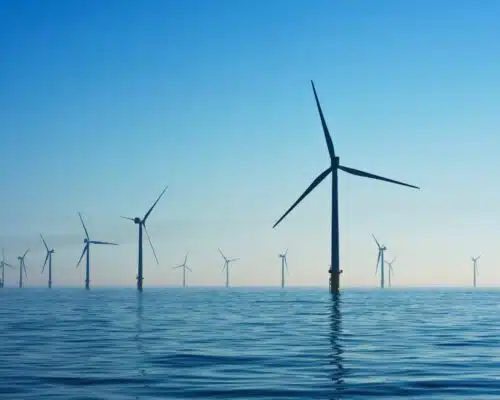
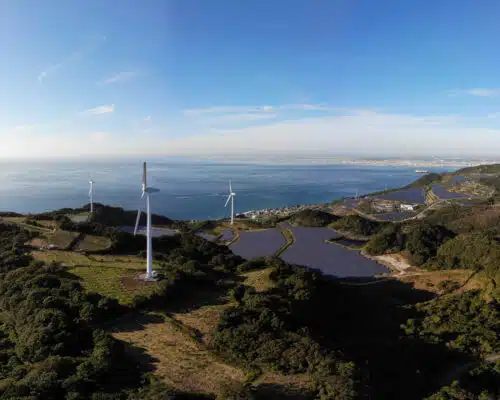
Photo: National Development Council, Taiwan.
16 October 2026 – by Wendy Lo
Across Asia, governments have announced a raft of new offshore wind targets and auctions over the past year to accelerate the sector’s growth. Taiwan, which has one of the most advanced offshore wind markets in the region, has a cautionary tale for countries looking to follow in its footsteps: financing can be challenging and developers hard to come by.
That was the key takeaway from industry executives gathered at the 19th Asia Offshore Wind Day in Taipei on Oct. 13. While Taiwan has installed about 5 GW of offshore wind in less than a decade, the model behind that rapid expansion is beginning to strain, as zero-subsidy auctions and a shrinking pool of developers leave fewer projects able to reach financial close.
Niels Steenberg, Executive General Manager for Offshore Wind in Asia-Pacific at Siemens Gamesa, said no other country had matched Taiwan’s pace of installing more than 515 turbines in less than a decade, establishing it as Asia’s most developed market for offshore wind outside mainland China. He attributed that growth to five years of stable policy and strong political backing.
But the next phase is proving much harder.
Taiwan’s zero-subsidy model faces a financing test
Taiwan’s Round 3.3 auction, which closed on Sept. 30, sought 3.6 GW of capacity but attracted only two bids, from Copenhagen Infrastructure Partners and Ørsted, each for projects of roughly 840 MW to 1.15 GW.
Hui Min Foong, Senior Analyst for Offshore Wind at Westwood Global Energy Group, said the outcome showed that Taiwan could still attract established developers under an almost zero-subsidy model based on corporate power purchase agreements (CPPAs), an approach she described as unusual among global offshore wind markets.
However, the number of developers capable of delivering new projects has narrowed significantly. Taiwan has no shortage of project sites but may now have only three or four credible developers left, Steenberg said, too few to support the government’s target of adding around 2 GW of offshore wind each year.
Steenberg estimated that only about four of the 12 projects awarded under Rounds 3.1 and 3.2 may ultimately be built. Taiwan, he said, is increasingly becoming a market where only one project a year reaches financial close. Fengmiao 1 was the only project to do so last year.
A central challenge is Taiwan’s reliance on CPPAs to secure project financing. Taiwanese corporate buyers pay unusually high prices for offshore wind power, reportedly around NTD 6 to 6.5 (USD 0.19 to 0.21) per kWh, Steenberg said. But the pool of potential buyers is limited, as is the capacity of local lenders to finance multiple large projects at the same time.
Developers are experimenting with new commercial structures, said Wen Huang, Director of Renewables and Sustainability Advisory for Asia-Pacific at NIRAS. Fengmaio 1 has signed contracts with several corporate buyers, while power from Formosa 4 and 6 is being sold through electricity retailers. Even so, buyers remain uncertain about how much contracted supply will ultimately be delivered as projects face delays and financing risks.

Niels Steenberg of Siemens Gamesa speaks at the 19th Asia Offshore Wind Day in Taipei, where he said Taiwan has plenty of offshore wind sites but too few developers left to build them. By Wendy Lo.
Japan and South Korea adjust offshore wind strategies
Japan is adjusting its offshore wind model after the cancellation of its Round 1 projects. The government is now using long-term decarbonization power source auctions to provide capacity payments for offshore wind. Steenberg said the mechanism should help six projects that had previously won zero-bid auctions move forward.
He described Japan as the most attractive offshore wind market in the region on that basis, although most awarded projects are not expected to begin operating until 2030 or later.
Beyond expanding renewable power generation, offshore wind could also help Japan reduce its dependence on imported fossil fuels. According to a Zero Carbon Analytics report, a 1 GW offshore wind farm could displace around 0.8 billion cubic meters of natural gas needed to generate the same amount of electricity.
But technical conditions remain another obstacle. Guillain Chapelon, Global Head of Market and Business Development at Skyborn Renewables, described Japan as a “question mark” because of the challenging conditions at many of its offshore wind sites.
South Korea is pursuing a different model. The government has set out a roadmap covering 55 GW of auction capacity over the next decade and plans to move towards government-designated offshore wind sites from 2029.
Steenberg said government-backed offtake gives South Korea an advantage over Taiwan’s CPPA-dependent system, while its large shipbuilding industry could position it to become Asia’s first major floating offshore wind market.
Emerging markets look to regional cooperation
The Philippines and Vietnam remain at an earlier stage of offshore wind development, with greater uncertainty over when projects will reach construction.
Foong placed both among Asia’s longer-term offshore wind markets, where project certainty remains lower. In 2025, Vietnam set ambitious offshore wind targets of 6 to 17 GW by 2030 to 2035. The Philippines has also launched its first offshore wind auction, offering 3.3 GW for delivery between 2028 and 2030, but Foong described that timetable as extremely tight. A more realistic development cycle, she told Energy Tracker Asia, would be around 8-10 years.
As these markets seek to accelerate deployment, regional cooperation could help address some of the challenges. Chung-Hsien Chen, Deputy Director-General of the Energy Administration at Taiwan’s Ministry of Economic Affairs, said Taiwan hopes to share its offshore wind experience with countries including the Philippines and Vietnam.
The importance of regional cooperation was also highlighted at a Global Wind Energy Council (GWEC) session during the ASEAN Energy Business Forum in Manila earlier in October.
Damon Sunderland, offshore wind lead for Australia, New Zealand and Southeast Asia at engineering group Arup, said an ongoing study the firm is conducting for GWEC across 12 Asia-Pacific markets has identified demand visibility, coordination, workforce development and investor confidence as greater barriers than technical challenges.
He pointed to the region’s complementary strengths, including Taiwan’s project delivery experience, South Korea’s shipbuilding industry, the Philippines’ large maritime workforce, and Vietnam’s fabrication yards, which already export foundations and offshore structures for wind farms in other markets. Rather than each country developing a complete domestic supply chain, Sunderland argued that regional markets should build on these strengths.
by Wendy Lo
Wendy Lo is a journalist covering renewable energy and industrial decarbonization across the Asia-Pacific. Her reporting examines the policies and market dynamics shaping the region’s energy transition.
Read moreOur Publications