SE Asian energy execs start questioning data center pace
Photo: S&P Global Energy.
03 November 2026 – by Wendy Lo
As Southeast Asia races to attract data center investment, energy industry leaders are questioning how much of the announced pipeline can realistically be built, given the region’s power infrastructure constraints.
At Singapore International Energy Week (SIEW), held Oct. 26-30, speakers warned that data center development is outpacing the generation and grid capacity needed to support it. Governments and lenders are becoming more selective about which projects can proceed, while regulatory requirements are emerging as a stronger driver of renewable energy procurement than corporate climate commitments.
Announcements outpace infrastructure
Zulfikar Yurnaidi, head of energy modelling and policy planning at the ASEAN Centre for Energy, said data centers could account for about 30% of Malaysia’s electricity demand by 2030 if all announced projects proceed, rising to 50% under some scenarios.
A data center can be built in about two years, Yurnaidi said, while the generation and grid infrastructure needed to supply it can take four to ten years.
Thailand is already rethinking its approach to data center expansion. Bob Fox, chair of the digital economy committee at the Joint Foreign Chambers of Commerce Thailand, said the government had previously viewed attracting more data center floor space as a path to becoming a regional digital hub. New rules expected around January will instead grandfather projects already under construction, review partly approved projects case by case and impose stricter requirements on new applicants.
Lenders are changing their approach, too. Ernest Aw, vice president of infrastructure finance at the bank HSBC, said power availability was little more than a box-ticking item in due diligence 18 months ago. Banks now scrutinize whether projects have secured enough power and whether they can be energized in time to meet hyperscalers’ required delivery dates.
Storage gains ground on gas
Gas is still expected to supply about two-thirds of the additional power required by data centers in Indonesia and Malaysia, according to Vince Heo, director of Southeast Asia power and renewables research at S&P Global Energy. But bringing new gas capacity online is taking more time: turbine deliveries now take about five years, he said, with construction adding another two.
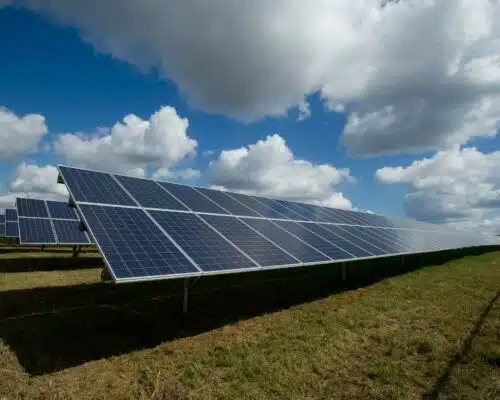
Long lead times for gas projects are strengthening the case for solar energy paired with battery storage, which can be deployed more quickly. Analysts at S&P expect battery capacity in the region to grow almost sixfold by 2030 as more governments require solar projects to include storage. Heo said solar-plus-storage is already cost-competitive for data centers in Malaysia, helped by a dedicated data center tariff introduced last year. Data centers now pay almost twice the rate charged to low-voltage residential consumers, he said.
Falling battery costs could make renewables paired with storage even more competitive. Lim Wee Seng, group head of energy, renewables and infrastructure at DBS Bank, said developers in India can increasingly build firm and dispatchable renewable projects without heavily oversizing wind or solar capacity. As battery durations increase, he said, gas could face greater competition.
That shift is already visible in project finance. Derrick Tan, executive director of structured finance at SMBC, said 70% to 80% of the bank’s renewable energy deals over the past year were hybrid projects, mostly combining solar with batteries.

Lithium-ion battery prices have fallen sharply since 2013, improving the cost competitiveness of battery storage and renewable energy projects. Source: S&P Global Energy.
Rules, not pledges, drive clean power
While battery storage is improving the economics of renewable power, the demand for clean electricity from data center operators is increasingly being shaped by government policy rather than voluntary corporate commitments.
Zhao Jiajun, vice president of business development and energy at STT GDC, a Singapore-headquartered data center operator, said customers now rank energy security and room for expansion above emissions reduction, although the priority varies by customer.
Kavickumar Muruganathan, ESG policy and planning director at Microsoft, said the company’s goal of reaching 100% carbon-free electricity by 2030 has become increasingly difficult without stronger support from governments and utilities.
Government requirements are beginning to fill that gap. On Oct. 7, Singapore became the first country in Southeast Asia to pass a law setting binding efficiency standards and clean energy requirements for data centers. The Digital Infrastructure Bill requires data centers with at least 3 MW of critical IT load to be licensed, comply with efficiency standards that can be tightened over time and deliver on their green energy commitments.
Singapore’s latest data center allocation round also requires at least half of electricity consumption to come from clean sources. Malaysia requires at least 30% clean energy for many new data centers, while Thailand is considering tariff discounts for clean energy users.
In Singapore, Vijayan said renewable procurement is increasingly becoming a licence to grow. The latest allocation round steered operators towards emerging options such as biomethane, hydrogen, ammonia and fuel cells, which are not yet available at scale in Singapore.
Yurnaidi said rising data center demand could provide the push towards cleaner energy that previous crises had failed to deliver. Neither the COVID-19 pandemic, the war in Ukraine nor the conflict in the Middle East had decisively accelerated ASEAN’s renewable energy transition, he said.
Data centers, however, could create a new incentive to invest in renewables, cross-border power connections and more efficient electricity use.
by Wendy Lo
Wendy Lo is a journalist covering renewable energy and industrial decarbonization across the Asia-Pacific. Her reporting examines the policies and market dynamics shaping the region’s energy transition.
Read moreOur Publications