The lessons of a Malaysian solar pioneer for cross-border power
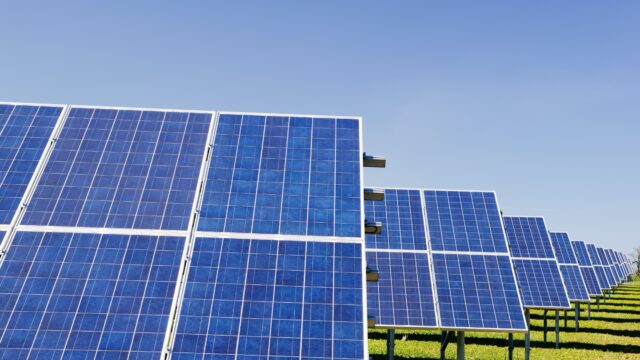
Ditrolic Energy, a Malaysian commercial and industrial solar developer, is expanding into cross-border renewable electricity trade with Singapore. Photo: Ditrolic Energy.
05 November 2026 – by Wendy Lo
A 600-megawatt renewable electricity project linking Malaysia and Singapore is testing the commercial viability of cross-border power trade in Southeast Asia. Its biggest challenge is connecting two fundamentally different electricity markets.
Behind the Southern Johor Renewable Energy Corridor (SJREC) is Ditrolic Energy, one of Malaysia’s largest commercial and industrial solar developers. Having helped pioneer direct renewable electricity sales to corporate customers in Malaysia, the company is now attempting to extend that model across the border.
The project has attracted strong interest from potential buyers, but its progress hinges on more than demand. Ditrolic must establish a viable pricing and financing structure across two electricity systems with different regulations, market designs and cost structures. How it resolves those challenges could offer lessons for the wider ASEAN Power Grid.
From domestic to cross-border trade
Ditrolic founder and group CEO Tham Chee Aun has spent years navigating Malaysia’s evolving renewable energy regulations, building the company from a rooftop solar developer into a supplier of green electricity to corporate customers.
Its Energreen product was among the first in Malaysia to take advantage of the country’s third-party access framework, allowing Ditrolic to develop solar farms and sell electricity directly to customers at different locations rather than relying solely on rooftop installations.
Malaysia’s gradual shift from rooftop self-consumption to large-scale solar and third-party access enabled this business model, said Tham in a recent interview with Energy Tracker Asia on the sidelines of Singapore International Energy Week. As other ASEAN markets consider similar reforms, Tham stressed the importance of setting transparent and predictable charges for energy companies to access the system from the outset.
“The determination of wheeling charges, or system access charges, is very important,” Tham said. “Ultimately, the cost will be borne by the consumer.”
Recent electricity tariff reforms have made those calculations more transparent. Malaysia has separated tariffs into energy, network and capacity components, giving developers and customers greater visibility over the economics of solar-plus-storage projects.
According to Tham, four-hour battery systems paired with large-scale solar are already competitive with retail electricity tariffs in Malaysia. Eight-hour storage, which is required for exports to Singapore, remains more expensive, although falling battery costs and rising electricity prices are narrowing the gap.
Cost savings have also become a stronger driver of corporate renewable energy demand. While sustainability commitments initially led the market, Tham said buyers now place equal importance on electricity costs and are increasingly unwilling to pay a green premium without tangible savings on their bills.

Tham Chee Aun (right), founder and group CEO of Ditrolic Energy, at Singapore International Energy Week. Photo: Ditrolic Energy.
One corridor, two markets
SJREC represents Ditrolic’s attempt to apply its domestic experience on a much larger scale. The project received conditional approval in August to export 600 MW of renewable electricity from Johor to Singapore, with a development model designed to serve customers on both sides of the border.
Rather than building separate infrastructure for domestic and export markets, the corridor aims to aggregate demand from Singaporean buyers and Malaysian customers, particularly data centers. By sharing generation and transmission infrastructure, Ditrolic hopes to achieve economies of scale and lower the delivered cost of electricity for both markets.
“One corridor serving two markets is the idea behind the project,” Tham said. “Both economies are doing well. There is a lot of demand for power.”
Ditrolic has been engaging potential customers for close to six months, with expressions of interest covering nearly 90% of the project’s green electricity capacity. However, converting that interest into binding agreements depends on establishing the full cost of delivering electricity across the border.
The final price must account for generation costs in Malaysia, domestic network and capacity charges, interconnector infrastructure and cross-border charges that remain under discussion with governments and regulators. Until those components are determined, Ditrolic cannot offer customers an all-in electricity price or finalize power purchase agreements.
“What we’ve seen is that interest is very high,” Tham said. “To turn that interest into contracts, we need clarity on the cost structure in Malaysia and Singapore, as well as the interconnector.”
The challenge reflects a broader obstacle to cross-border electricity trade in Southeast Asia. Strong demand and competitive renewable energy costs alone cannot make projects bankable without clear arrangements for trading power across borders.
Fundamentally different markets
Beyond the immediate pricing negotiations, SJREC must address a more fundamental difference between the electricity systems it seeks to connect.
Singapore operates a liberalized electricity market in which generators compete to sell power, while Malaysia retains a vertically integrated structure centred on a single-buyer model. Cross-border trade between the two therefore requires commercial and regulatory arrangements that accommodate different approaches to electricity procurement, pricing and network access.
For Tham, the challenge is not necessarily to harmonize the two markets, but to establish an interface through which they can trade electricity despite their structural differences.
The distinction has implications beyond the Malaysia-Singapore corridor. The ASEAN Power Grid envisions greater electricity trade across a region where national power systems vary considerably in market structure, regulation and the roles of state-owned utilities. If successful, SJREC could provide a reference for other bilateral projects facing similar challenges.
The stakes are particularly high for Singapore, which relies heavily on imported natural gas for electricity generation. According to a recent report by Ember, interconnectors could meet around 49% of Singapore’s electricity demand by 2035 if completed on schedule. A one-year delay would reduce that share to just 2.5%, leaving gas to supply more than 86% of electricity generation.
Ember estimates that such a delay would also trigger the construction of an additional 300 MW of gas-fired capacity in Singapore. Those plants could remain operational for 20 to 30 years, extending fossil fuel dependence long after the interconnectors are completed.

A one-year delay in the ASEAN Power Grid could put 7.2 GW of solar capacity on hold and lock in 300 MW of gas-fired capacity in Singapore by 2035. Source: Ember.
Ember also identifies governance as a major barrier to regional grid development. Its analysis of eight Southeast Asian electricity systems highlights the lack of a regional authority capable of enforcing cross-border decisions. Although multiple ASEAN bodies coordinate power planning, individual projects still depend on bilateral negotiations and national regulatory frameworks.
Financing is another challenge, although the overall investment required is considered manageable. The International Energy Agency estimates that the ASEAN Power Grid will require around USD 27 billion in interconnector investment by 2040. Ember argues that the capital could be mobilized through multilateral development banks and private investors, provided projects have clear regulatory and commercial frameworks.
Ditrolic is seeking to address those financing challenges early. During Singapore International Energy Week, the company signed a memorandum of understanding with DBS, the International Finance Corporation and Maybank to develop a financing framework for SJREC.
Tham said early lender involvement is particularly important for cross-border projects, where regulatory, commercial and technical risks are closely connected. Rather than waiting until the project structure is complete, investors can help identify potential obstacles and shape arrangements that will ultimately determine whether the project can secure funding.
“Bankability is not a test after you have done everything,” he said. “It should be something that you do along the way.”
Ditrolic aims to begin domestic power supply in 2028 and to export to Singapore by the end of 2029, pending regulatory, pricing and financing agreements. If successful, SJREC could provide a model for connecting different electricity markets across the ASEAN Power Grid.
by Wendy Lo
Wendy Lo is a journalist covering renewable energy and industrial decarbonization across the Asia-Pacific. Her reporting examines the policies and market dynamics shaping the region’s energy transition.
Read moreOur Publications