Extending energy crisis policies would cut fuel import bills, IEA says
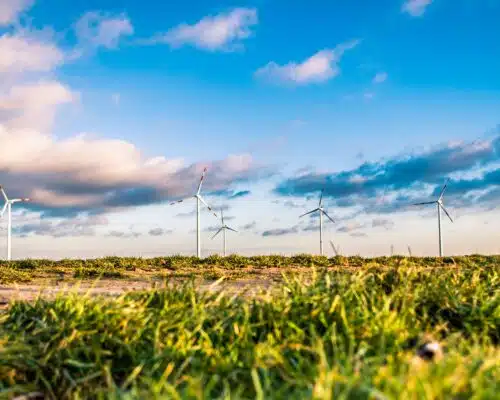
Photo: UN Climate Change - Kiara Worth.
19 November 2026 – by Wendy Lo
Southeast Asia could significantly reduce its dependence on imported fossil fuels if governments turn emergency measures adopted during the Strait of Hormuz crisis into lasting energy policies, according to the International Energy Agency’s (IEA) World Energy Outlook 2026.
The report compares two possible futures: one in which governments maintain current energy policies, and another in which they build on their crisis responses with stronger efficiency standards, faster electrification and accelerated renewable energy deployment.
Under the stronger policy response, renewable electricity generation in Southeast Asia would grow by 930 terawatt-hours (TWh) by 2035, compared with 530 TWh under current policies. Indonesia’s installed renewable capacity would be more than 2.5 times higher, while capacity across the rest of the region would be about one-third higher.
These measures would also reduce the region’s fossil fuel import bill by more than 20% compared with current policy projections. Without them, the bill is expected to rise from around USD 80 billion in 2025 to more than USD 170 billion in 2035, as Southeast Asia becomes a net importer of liquefied natural gas (LNG) by 2030.
Governments across Southeast Asia have already responded to the crisis with measures to curb fuel demand, while some have introduced price caps, tax cuts and fuel-switching initiatives. The IEA suggests that extending these responses into longer-term policies could deliver substantial energy security benefits.
The findings come as negotiators at COP31 in Antalya consider a global electrification goal. A Nov. 16 draft of the presidency-led cover decision calls on countries to contribute to raising electricity’s share of global final energy consumption to 35% by 2035, alongside existing commitments to triple renewable energy capacity and double the rate of energy efficiency improvements by 2030.

All Southeast Asian countries introduced measures to curb energy demand in response to the 2026 energy crisis. Source: IEA, World Energy Outlook 2026.
Renewables grow, but coal remains a challenge
Southeast Asia’s power sector is gradually shifting towards renewables. According to the IEA, annual investment in low-emissions electricity generation, including solar, wind, hydropower and geothermal, is projected to more than triple over the next decade compared with the previous one, while investment in fossil fuel power generation is expected to nearly halve. Making crisis responses permanent could accelerate this shift further.
Without stronger policies, however, coal-fired generation is still projected to rise by almost 30% by 2035, increasingly driven by captive power plants serving aluminum production and nickel processing in Indonesia.
This tension is also reflected in the draft COP31 decision, which calls for greater clean electrification while acknowledging that electrification can deliver benefits regardless of how electricity is generated.
“We need to electrify almost everything, powered by the wind and sun, but that must go hand in hand with actually phasing out fossil fuels,” said David Tong, global industry lead at Oil Change International.

Southeast Asia’s electrification rate is projected to rise from around 25% in 2025 to 32% by 2035 under current policies, reaching 33.5% with stronger crisis-response measures. Source: IEA, World Energy Outlook 2026.
Transport electrification accelerates
Beyond power generation, transport offers one of the largest opportunities to reduce Southeast Asia’s reliance on imported fossil fuels. Oil still supplies around 90% of the sector’s energy needs, making transport a major driver of regional oil demand growth.
Electric car sales in Southeast Asia rose 75% year-on-year in the first half of 2026, capturing nearly 30% of the regional market, a share comparable to Europe, according to a separate IEA report on Southeast Asian electrification.
By 2035, electric cars could account for around 60% of new car sales under current policies, rising to more than 65% if governments sustain their crisis responses. EVs could displace around 600,000 barrels per day of oil demand by then, reducing annual oil import costs by more than USD 15 billion.
The transition is also creating manufacturing opportunities. Regional battery manufacturing capacity is projected to rise 50-fold to around 300 gigawatt-hours (GWh) by 2035, while annual electric car production capacity could approach 4 million vehicles, or 7% of the global total.
“So much of the momentum for electrification at COP31 comes from the desire to have cheaper and more secure energy,” said Dave Jones, chief analyst at energy think tank Ember.
Grid investment and finance remain key
Realizing these gains will require investment in electricity networks and access to affordable financing.
The draft COP31 decision calls for accelerated expansion and modernization of electricity grids, including transmission and distribution networks, cross-border interconnections, storage and flexible power systems. It also highlights the need for more affordable financing, particularly in developing economies.
The draft identifies high borrowing costs, limited government budgets and debt burdens as major barriers to climate investment. The ability of developing countries to meet conditional climate targets depends on international support.
The IEA likewise warns that Southeast Asia’s growing electricity demand and renewable energy deployment will require stronger national grids and greater cross-border interconnection.
The draft COP31 decision frames its electrification and infrastructure goals as collective global efforts, leaving individual countries to determine their contributions rather than setting specific national targets. COP31 is scheduled to close on Friday.
by Wendy Lo
Wendy Lo is a journalist covering renewable energy and industrial decarbonization across the Asia-Pacific. Her reporting examines the policies and market dynamics shaping the region’s energy transition.
Read moreOur Publications