Southeast Asia at COP31: What each country is bringing to Antalya
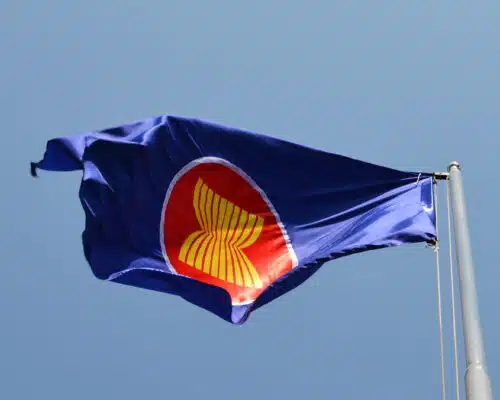
Photo: COP31 Singapore Pavilion.
11 November 2026 – by Wendy Lo
As COP31 shifts the focus from pledges to implementation, Southeast Asian governments arrive with new climate targets, unfinished plans and a shared demand for climate finance.
The 31st UN Climate Conference (COP31) opened in Antalya, Türkiye, on Nov. 9 with the presidency framing the summit around turning existing commitments into action. For Southeast Asia, that puts a practical question at the center of the talks: how governments will pay for the climate plans they have already put forward.
Across the region, much of that ambition remains tied to outside support. Several countries have made large parts of their emissions targets conditional on international finance, while the poorest ASEAN members are pressing for grant-based funding that does not add to already heavy debt burdens.
Here is a look at the plans of each country in the region.
The largest economies
Indonesia
Indonesia arrives in Antalya while battling its worst forest fires in 11 years. Its NDC 3.0, the country’s latest national climate action plan under the Paris Agreement, aims for emissions to peak by 2030, with forest restoration playing a major role. At COP31, Indonesia outlined five pillars for the country’s climate action, including the energy transition, cutting urban emissions through measures such as rooftop solar, and diversifying climate finance.
Vietnam
Vietnam is among the countries yet to submit a new nationally determined contribution (NDC), with its latest update dating from 2022. In October, the Ministry of Agriculture and Environment said it was finalizing NDC 3.0 ahead of COP31. Officials have described the draft as being built around detailed and feasible options, reflecting the challenge of securing international support while pursuing economic growth targets.
Thailand
Thailand’s NDC 3.0 targets a 47% reduction in net emissions from 2019 levels by 2035, while bringing its net zero target forward by 15 years to 2050. The government is seeking USD 6.2 billion (THB 230 billion) in international climate finance to deliver additional emissions reductions. At home, the government is still working to pass its first climate change law. The bill includes a Climate Fund to support the low-carbon transition, with parliamentary approval targeted by the end of 2026.
Malaysia
Malaysia’s NDC 3.0 projects emissions peaking between 2029 and 2034, moving beyond its previous target based solely on carbon intensity. The government continues to position natural gas as a transition fuel, raising questions about its compatibility with the country’s climate targets. Malaysia is also calling for greater access to climate finance, technology transfer and capacity building to support its transition.
The Philippines
The Philippines’ 2026 NDC commits to a 75% net reduction or avoidance of emissions between 2025 and 2035 against business-as-usual projections. However, only 7% of the projected baseline emissions reductions are covered by unconditional commitments, while the remaining 68% depend on international support. Officials described the NDC as a framework showing international partners where investment is needed, framing access to support as an issue of climate justice and equity.
The wealthier members
Singapore
Singapore was the only Southeast Asian country to submit its NDC ahead of the original deadline last year. Ahead of COP31, Singapore’s environment minister, Grace Fu, said she did not expect the summit to deliver stronger emission reduction targets, citing energy security concerns stemming from the Iran war. She instead pointed to opportunities for progress on climate adaptation and financing. On Nov. 10, Singapore launched SPIRE Asia, an initiative to mobilize climate resilience investment in Southeast Asia’s agri-food sector, including a blended finance fund targeting up to USD 500 million.
Brunei
Brunei’s NDC 3.0, covering the 2026 to 2035 period, commits to reducing emissions by 20% by 2035 relative to business as usual, using 2015 as its baseline year. To achieve this, Brunei plans to cut emissions from industry, transport and waste while expanding renewable energy.
The least developed countries
Timor-Leste
ASEAN’s newest member arrives in Antalya representing the interests of the world’s least developed countries. Timor-Leste currently chairs the Least Developed Countries (LDC) Group in the UN climate negotiations, which adopted the Dili Ministerial Declaration in September. The declaration calls for greater climate finance, particularly grants rather than loans, alongside stronger support for adaptation and loss and damage. Timor-Leste’s NDC 3.0, submitted in June, also includes commitments to develop a just transition framework.
Cambodia
Cambodia’s NDC 3.0, submitted in August 2025, commits to reducing emissions by 16% below business as usual by 2035 through unconditional measures, rising to 55% with international support. At COP31, Cambodia is seeking clarity on how the tripling of adaptation finance agreed at COP30 will be delivered. It is calling for more reliable and affordable funding, with fewer barriers to direct access.
Laos
Laos held its final national stakeholder meeting on NDC 3.0 in September, ahead of government endorsement and submission. The plan is Laos’ first to cover the entire economy, outlining measures to reduce emissions, strengthen climate adaptation and support implementation. Delivering these measures is estimated to cost about USD 25.6 billion through 2035.
Myanmar
Myanmar has yet to submit an updated NDC and has not sent a delegation to COP31.
Climate finance remains a central issue at COP31, as developing countries push for progress towards the COP29 goal of USD 300 billion annually by 2035. For Southeast Asia, delivering on climate commitments will depend heavily on international support, with countries seeking more accessible funding that does not add to their debt burdens.
by Wendy Lo
Wendy Lo is a journalist covering renewable energy and industrial decarbonization across the Asia-Pacific. Her reporting examines the policies and market dynamics shaping the region’s energy transition.
Read moreOur Publications