Articles

Grid Resilience Strategies for Asian Cities
What is grid resilience and why is it so important? Scientists note that heatwaves are...

US EPA Repeals the Endangerment Finding: Big Blow to the Fight Against Climate Change
Revoking the endangerment finding would pose far-reaching and long-lasting environmental, climate and health consequences, with not only local but also global importance. Worryingly, scientists believe this won’t be the last of the US administration’s moves to support the fossil fuel industry and attack climate action.

Expanding Japan’s Energy Storage Market
Japan’s grid is expanding solar and onshore wind, but variability is stressing real-time balance. A new REI Japan report argues that accelerating grid-scale batteries and large-capacity EV batteries could unlock clean, reliable growth—reducing the need for new fossil plants and cutting energy dependence on imports. The window is open for utilities and investors to catalyse a first-mover shift in Japan’s energy transition.

LNG Prices in 2026: From Seller’s Market to Buyer’s Advantage
Global LNG supply is set to surge in 2026, with roughly 93–150 million tonnes per annum of new capacity coming online, pushing prices downward and shifting the market from seller-led to buyer-led. Despite a welcomed demand uptick in Asia, Europe’s imports are expected to stabilise, while China’s rebound remains pivotal to absorbing the wave.

Oil Prices Surge as US–Iran War Threatens Global Energy Supply
After the war in Ukraine, the current developments in Iran are yet another, potentially even starker reminder of the inherent unreliability and vulnerability of global oil and gas supply chains. Asian countries that failed to improve the resilience of their energy systems the first time around are now poised to suffer the greatest economic damage.

Thailand’s Energy Sector in 2026
Thailand has come a long way from the discovery and domestic production of oil and natural gas. Today, LNG imports dominate its energy mix, with the country boasting the largest LNG import capacity in the region and planning to expand it further. However, experts warn this poses risks to Thailand's economy, environment, and net-zero goals.

Bridging the Gender Gap: The Benefits of Including More Women in Asia’s Energy Sector
Empowering women to participate fully and thrive economically and professionally, especially in the energy sector, is central to a just energy transition. While, globally, there has been progress, albeit slow, Asia stands out as one of the regions where gender inequality in the transition remains most severe.

New Direction for the Energy Sector After the 2026 Bangladesh Elections
Bangladesh is at a crossroads, and the direction it will choose will greatly influence the future of its energy sector, economy and population's well-being. What’s known is that the new government should prioritise leaving energy poverty and insecurity behind, and, with that, fossil fuels as well.

2026 Thailand elections: Climate and Energy Take a Back Seat
Analysts don't expect the winning party to prioritise climate and the energy transition as standalone items in its political agenda, but instead consider them enablers for economic growth. Regardless of the approach, Thailand needs to phase out fossil fuels and accelerate renewables deployment to boost energy security, alleviate air pollution and ensure massive cost cuts.

Clean Energy Drove More Than a Third of China’s GDP Growth in 2025 [Op-Ed]
Clean-energy sectors powered more than a third of China’s GDP growth in 2025, driving over 90% of investment gains and reaching a record 15.4 trillion yuan. If clean energy were a country, it would rank as the 8th-largest economy, growing at about 18% in 2025 while the broader economy expanded 5%. The outlook remains uncertain, but local governments and state-owned enterprises could keep the clean-energy boom going even as policy targets evolve.
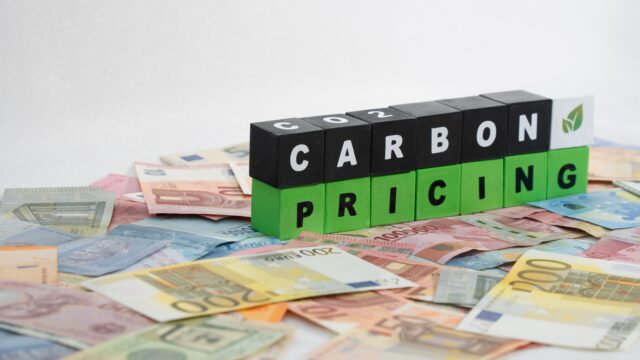
Philippines Weighs High-Stakes Carbon Pricing and Common Market Pitfalls [Op-Ed]
The Philippines is pursuing a domestic carbon pricing path with an Emissions Trading System (ETS) through the Low Carbon Economy Investment Bill, aiming to mobilise private capital for climate resilience. However, a critical policy analysis warns that without strong social and environmental guardrails—clear absolute caps, just transition safeguards, and robust governance—the proposed system could legitimise pollution and fall short on real emissions reductions. The report calls for complementary legislation and safeguards to ensure that carbon finance benefits people, ecosystems, and local communities rather than serving as a loophole for compliance without meaningful decarbonisation.

Japan’s Offshore Wind Plans Find Hope
Japan’s offshore wind ambitions face a costly, slow rollout, with only about 253 MW online and Mitsubishi withdrawing from the 1.76 GW Akita and Chiba projects slated for between 2028 and 2030. Analysts warn that without stronger policy support, clearer offtake and improved grid and supply-chain frameworks, the 2030 target of 10 GW and 2040 target of 45 GW look increasingly out of reach.
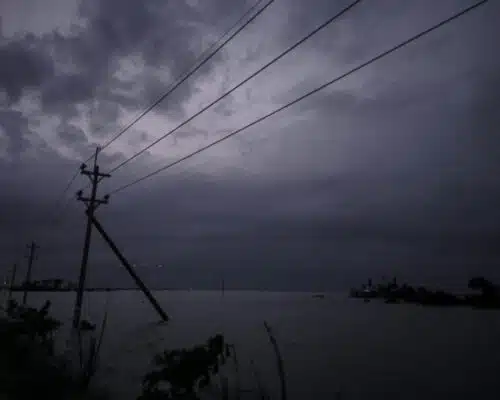
Strengthening Energy Resilience to Overcome Power Outages in Southeast Asia
As extreme weather disasters strike, causing long-lasting outages, disrupting access to essential services and threatening the health of people in affected areas, such events have been common in Southeast Asia recently. The aftermath reminds us of the importance of strengthening the energy system’s resilience. However, in most Asian countries, it remains neglected in climate change adaptation and resilience policies.

After Seizing Venezuela Oil, Trump Quits 66 International Organisations: The Impacts
Scientists, market experts public and private stakeholders argue that Trump's latest moves won't erase climate science. While they will definitely derail the global efforts to tame the climate crisis, the biggest damage would be done to the US, its economy, global stature and relationship with allies.
Most Popular


Most Popular
Categories
-
10
-
36
-
127
-
4
-
17
-
46
-
52
-
11
-
10
-
15
-
24
-
6
-
1
-
5
-
6
-
299
-
202
-
18
-
24
-
1
-
1
-
23
-
40
-
44
-
89
-
18
-
87
-
43
-
17
-
12
-
43
-
55
-
86
-
300
-
22
-
47
-
36
-
17
-
42
-
36