Region

Pakistan’s Solar Boom Shows What’s Holding Bangladesh Back
Pakistan's solar transformation has accelerated at a pace unmatched in South Asia, with solar power supplying over a quarter of its utility electricity in early 2025—driven not by government mandates but by consumer economics. Meanwhile, Bangladesh's renewable energy ambition remains stalled by misaligned financing and slow implementation, with loans for energy efficiency outpacing those for renewable energy by more than five to one. The contrast reveals a clear truth: market incentives and policy certainty drive adoption, while targets alone cannot deliver energy security.

Solar Energy Gives Bangladesh a Way Out of the Energy Crisis
The government is investing heavily in solar energy in Bangladesh to reduce dependence on fossil...

Renewable Energy in Thailand: An Alternative to LNG
Promoting electricity generation from renewables can alleviate Thailand’s energy security concerns, accelerate its decarbonisation and protect businesses and consumers from high power costs during future energy crises, which, judging by history, will continue for as long as it relies on fossil fuel imports.

The Challenges Facing Thailand’s Plans to Become ASEAN’s LNG Hub
While LNG import-dependent ASEAN nations are once again among the most affected by yet another fossil fuel crisis, the second in just five years, Thailand remains steady in its plans to become a regional LNG hub — a move with potentially costly energy security, economic and climate consequences.

Thailand’s LNG Investment Plans Risk Undermining Its 51% Renewables Target For 2037
A decision to accelerate clean energy deployment rather than LNG imports should be seen not only as a way to bring Thailand closer to its net-zero and energy transition goals, but also as an enabler of economic growth, improved energy system resilience and more competitive electricity prices.

Thailand’s Rooftop Solar Boom and the Energy Crisis
Rooftop solar systems offer Thailand a unique opportunity to achieve its renewable energy targets and reduce its dependence on fossil fuels. By addressing key existing barriers, the country can unlock the full potential of rooftop solar, paving the way for a cleaner, greener future.

Solar Power Shields Pakistan From the Hormuz Energy Crisis
The Iran war is yet another reminder that dependence on fossil fuels leaves countries exposed to global shocks, even if they aren’t directly involved. However, through the lens of Pakistan’s solar energy boom, a research by CREA and Renewables First demonstrates how countries can soften the blow on their economies and energy security.
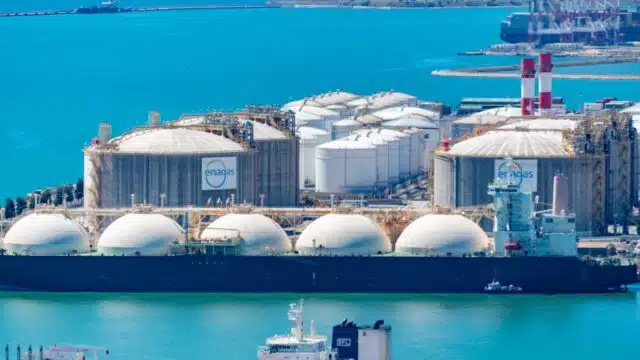
The High Cost of Thailand’s LNG Import Plans
Thailand’s plans to expand its LNG import infrastructure by building a third terminal won't help the country achieve the goals laid in its NDC 3.0, nor will they bring electricity costs down or improve the resilience of the energy system. Scaling up solar power, on the other hand, will.

War in Middle East Threatens Bangladesh’s Energy Security
Bangladesh faces a mounting energy crisis as Middle East tensions disrupt LNG supply, pushing costs and subsidy burdens higher. With LNG accounting for a third of total gas and renewable options still underutilised, the country risks slower exports and economic strain unless it accelerates diversification into affordable, domestic renewables such as solar. A rapid scale-up of solar-plus-storage could unlock 50,000 MW of capacity using just 1% of agricultural land and shield Bangladesh from volatile global fuel markets.

Expanding Japan’s Energy Storage Market
Japan’s grid is expanding solar and onshore wind, but variability is stressing real-time balance. A new REI Japan report argues that accelerating grid-scale batteries and large-capacity EV batteries could unlock clean, reliable growth—reducing the need for new fossil plants and cutting energy dependence on imports. The window is open for utilities and investors to catalyse a first-mover shift in Japan’s energy transition.

Thailand’s Energy Sector in 2026
Thailand has come a long way from the discovery and domestic production of oil and natural gas. Today, LNG imports dominate its energy mix, with the country boasting the largest LNG import capacity in the region and planning to expand it further. However, experts warn this poses risks to Thailand's economy, environment, and net-zero goals.

New Direction for the Energy Sector After the 2026 Bangladesh Elections
Bangladesh is at a crossroads, and the direction it will choose will greatly influence the future of its energy sector, economy and population's well-being. What’s known is that the new government should prioritise leaving energy poverty and insecurity behind, and, with that, fossil fuels as well.

2026 Thailand elections: Climate and Energy Take a Back Seat
Analysts don't expect the winning party to prioritise climate and the energy transition as standalone items in its political agenda, but instead consider them enablers for economic growth. Regardless of the approach, Thailand needs to phase out fossil fuels and accelerate renewables deployment to boost energy security, alleviate air pollution and ensure massive cost cuts.

Japan’s Offshore Wind Plans Find Hope
Japan’s offshore wind ambitions face a costly, slow rollout, with only about 253 MW online and Mitsubishi withdrawing from the 1.76 GW Akita and Chiba projects slated for between 2028 and 2030. Analysts warn that without stronger policy support, clearer offtake and improved grid and supply-chain frameworks, the 2030 target of 10 GW and 2040 target of 45 GW look increasingly out of reach.
Most Popular


Categories
-
10
-
37
-
127
-
4
-
17
-
46
-
52
-
11
-
15
-
10
-
24
-
6
-
1
-
5
-
6
-
302
-
202
-
18
-
24
-
1
-
1
-
23
-
40
-
44
-
89
-
18
-
87
-
43
-
17
-
13
-
43
-
55
-
86
-
301
-
22
-
48
-
36
-
17
-
42
-
36